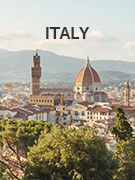
Walking vacations in Umbria

Explore a wild, green Italy where you’ll have to perform a calculated balancing act juggling your walking and sightseeing: both are excellent.

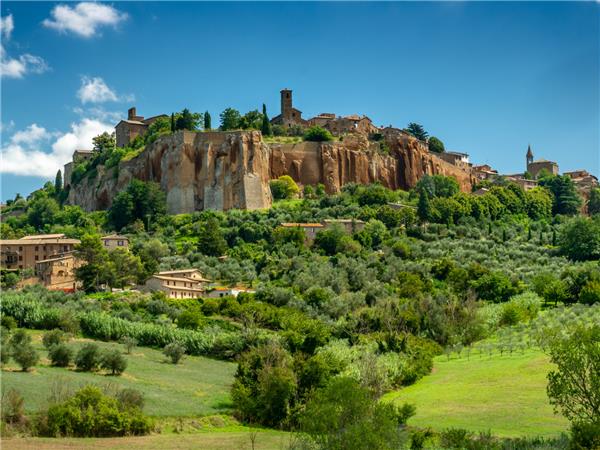
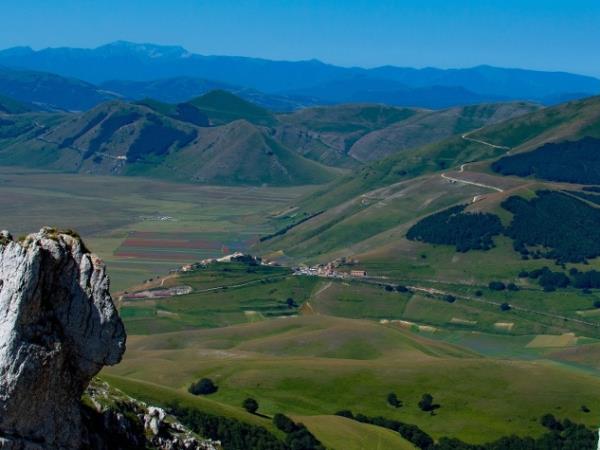
Silent holm oak forests, old olive groves, lentil fields awash with poppies, stone towns baking on hilltops – so far, so Mediterranean. What sets Umbria apart is its understated attitude to its beautiful sites. Known as Italy’s ‘green heart’, this landlocked region is forested and stays green all summer. There’s great cuisine and countless hilltop towns – some containing remarkable religious art – but the region keeps a relaxed pace that’s community, rather than tourist-focused.

“Umbria is not as famous as Tuscany or as the Cinque Terre. That's true. And it's not as well organised. But on the other hand, it's very real.” Patrizia Spada, co-founder of our specialist Umbria partner Italian Delights, lives just outside Perugia, the region’s capital and its largest city.

“It's very relaxing and safe, but never boring, you know,” says Patrizia. “It’s not full of tourists.”

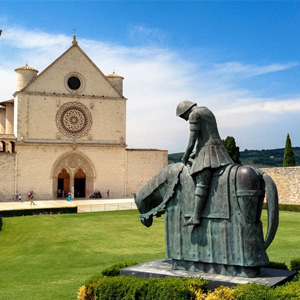
Whilst neighbouring Tuscany’s towns and cities are world famous, with the visitor numbers to match, Umbria only really gets busy in the town of Assisi, a popular pilgrimage site. Umbria is enjoyed primarily by Umbrians. And you, if you go on one of our Umbria walking vacations.
It was like looking on at a show in the theatre
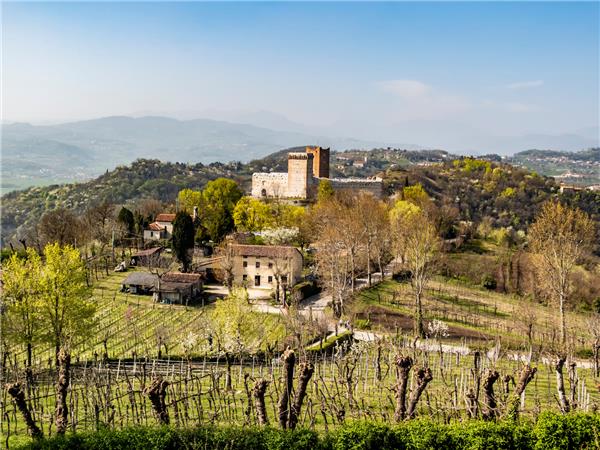
“The landscape is wonderful,” says Patrizia, whose family is originally from the area. She moved back here from Rome move than 40 years ago, and lives with her extended family. “It's the real Mediterranean landscape,” she says. “With soft hills, vineyards, olive groves, and lots of small rural houses with vegetable gardens, it's all very nice to watch while you walk.”

Umbria is often described as ‘wilder’ than its neighbours: hilly and wooded, you might be lucky enough to stumble upon wildlife and birdlife – the region is home to everything from weasels to wolves, boars and badgers.

You can walk for hundreds of kilometres and there are indeed multiple pilgrim paths that do just that. The Via Francigena crosses through here, as does the newer Via di Francesco (St Francis Way), which runs from Florence to Rome via Assisi in Umbria – St Francis’ birthplace. But the real joy arguably comes from shorter walks, giving you plenty of time to relax in the villages and towns that make the region special.

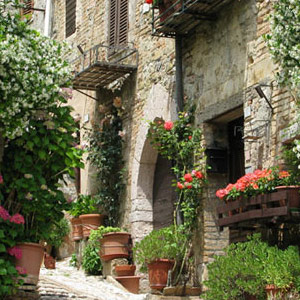
“You arrive from a small village at another small village, and there’s always some cultural heritage,” says Patrizia. “The old church, the small theatre, the small houses: some of them are really important.”

Another reason to reach the villages? The food. Umbrian cuisine, like many of Italy’s culinary scenes, is a celebration of local ingredients. This is a pork-producing region. Pigs are reared in the valleys and air-cured ham is a specialty in Norcia. There are some of Italy’s oldest olive trees in Umbria’s groves, truffles in the hills, grains and vegetables grown in its fields and specialities like pecorino cheese produced from its flocks.

Umbria has been a breadbasket since the Roman times, and its future as a producer is an issue close to our partners’ hearts. Patrizia and her husband are agronomists, and Patrizia designs projects for her charity, TAMAT, which she set up 30 years ago. They are looking at agroecology – the management of sustainable food systems – for Umbria and in the wider world, to secure farming’s future on a warming planet, and keep this traditional agricultural landscape thriving for as long as possible.

Contact Us

Responsible Travel, Travel Team

Call us for a chat about our vacations. We are happy to discuss your vacation and help in any way we can. No bots, queues or awful hold music.

Responsible Travel, Travel Team

Where to go walking in Umbria

Cammino dei Borghi Silenti

‘The walk of the silent villages’ is a five-day, 90km circular walk that starts and finishes in Tenaglie, a ridgetop village near Orvieto, and connects a circlet of villages around Monte Croce di Serra, the highest point in the Amerini Mountains. Walk its ravines and woodlands via mule tracks and other paths. From its high point on Mount Croce, you can see all the way from landlocked Umbria to the Tyrrhenian Sea. Experience it on our week-long self guided Umbria vacation.

The Path of Olives

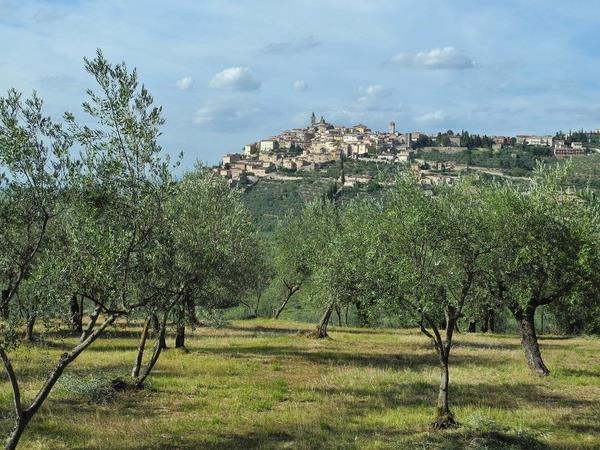
Umbrians were among Italy’s first olive growers, supplying the essential oil for cooks all the way back in Roman times. One of the oldest olive trees in Italy is here, a tree that’s 1,800 years old. The Assisi-Spoleto olive belt extends west of Spoleto, providing a silvery contrast to the wilder landscapes to the east. There’s a 75km path through the groves from Spoleto to Assisi. Walk the final 13km leg from Spello to Assisi on our vacations.

Upper Tiber Valley

The Alta Valle Tiberina, through which the River Tiber flows on its way down to Rome, comes down from the north of Umbria and contains part of the long-distance St Francis Way. The green valley, with its slow food restaurants and special agriturismi, is the site of our wild and wooded North Umbria walking vacations. A highlight is the Valle del Niccone, which provides a secret, green corridor between Tuscany and Umbria.

Orvieto loop walk

A 56km loop from Orvieto through the town of Bolsena and village of Civita di Bagnoregio and back to beautiful Orvieto again can be done in three days on our walking in Umbria short break.

Way of St Francis

An environmentalist long before the word existed, St Francis lived in and around Assisi for most of his life. His pilgrim route links Florence, Assisi and Rome, and travels on steep up and down paths through the Central Apennines. Far less known or walked than Spain’s caminos, it’s also a lot more challenging, but our walking vacations occasionally follow in its footsteps.

Practicalities of walking in Umbria

Popular walks involve going from town to town. As you may have noticed, many of the towns are on hilltops in this mountainous, forested region. This means downhill starts and uphill finishes – with a few undulations along the way. Booking organised walks through us can take some of the pain out of travel – whether you do a tailor made trip with baggage transfers, a center based trip, or a small-group walk with a guide. Public transport is not frequent in the rural parts of Umbria. “Umbria is not easy to travel by public buses or trains,” says Patrizia. However, you can reach towns like Orvieto and cities like Perugia from Rome or Florence by train. Whilst there are lots of walking routes, not all are maintained. “You follow a sign and then for 3km there is no sign,” explains Patrizia, who tests all the routes with her family every spring. Our walks come with detailed trip notes.

When to walk in Umbria

Walk in spring or autumn. Umbria experiences an exuberant spring, particularly in the lentil fields of Castelluccio di Norcia where the annual bloom (fioritura) is a massive tourist draw. The region stays green through the summer, but it’s still very hot and getting hotter due to climate change, as is the rest of Italy. Patrizia doesn’t suggest guests walk in August, and June and July can be hot too: though you’ll get lovely sunflower fields from June to August. Autumn is great for seasonal produce, like truffles and mushrooms, as well as the grape harvest. Some guests come in winter, a special time, thanks to Christmas markets and the chance of snow on high ground.
Written by Eloise Barker
Photo credits: [Page banner: Tanocanario] [Intro: Sterling Lanier] [Cammino dei Borghi Silenti: Tanocanario] [Olive groves: Timothy A. Gonsalves]