Best places to see orcas in the wild

“One unforgettable moment for me was watching orcas from the bluff at one of our camps,” says Breanne Quesnel, co-owner and guide at our partner Spirit of the West Adventures. “I couldn’t see them because it was pitch-dark out, but I could hear them, and then as they got closer, I could make out their silhouettes because of the bioluminescence. Magical is an understatement.”

To add to the magic, it’s likely that any behaviours you observe in wild orcas – whether that’s glow-in-the-dark orca trails or acoustic chatter – are unique to the place you’re in. There’s always the chance to witness something extraordinary, whether you’re seeing them from Vancouver Island or off the Antarctic Peninsula.

“Orcas have remarkably intricate social structures and pass on so much to their offspring, including hunting techniques, dialects and specific behaviours,” says Breanne.

Guides like Breanne – also an environmental educator and campaigner with 20 years’ experience in the field – help you understand what’s going on in front of your eyes as you safely observe one of the most intelligent predators on the planet from land, boat or water. You’re not just traveling with people passionate about orcas; you’re traveling with people who regard them as neighbours.
I could make out their silhouettes because of the bioluminescence. Magical is an understatement.

A long way from SeaWorld

“Seeing orcas in the wild is awe-inspiring,” says Carmen Ellis, co-owner and guide at our whale watching specialists Majestic Whale Encounters. “Their remarkable intelligence, beauty and grace in their natural habitat… The sight of these animals swimming freely in the open ocean water, or gliding beneath the surface, is a humbling, unforgettable experience.”

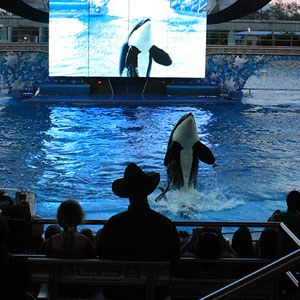
Orcas are highly social creatures with complex family structures. Viewing them in the wild allows us to appreciate their natural behaviours and interactions – a marked difference to seeing them in orca shows, which still exist despite campaigns and the damning Blackfish documentary that told the story of Tilikum, an orca captured in Iceland that killed three people while in captivity. Over 50 orcas are still held in marine parks.

Knowledge is power

Live capture isn’t the only danger killer whales face. Climate change, overfishing and habitat destruction all affect orcas – but they also affect prey, reducing numbers and causing unpredictable migration patterns that orcas can struggle to adapt to.

Pollution is one of the biggest perils, including discarded fishing lines, disorientating noise and vibrations from boat engines and deep-sea drilling, and microplastics swept from discarded beauty products into the ocean. As apex predators, the killer whales’ place at the top of the food chain makes them especially vulnerable to the build-up of toxins in their prey. Lulu, a Scottish orca that died after being entangled in fishing rope, had the dubious honour of being named the most polluted whale in the world.

“We have a strong focus on education on our tours,” says Breanne who, together with fellow Spirit of the West Adventures co-owner Rick, has been involved in planning Marine Protected Areas along the west coast of Canada. “Knowledge is power and guests leave with a better understanding of how everything is connected and what actions they can take to do their part.”

The best places to see orcas in the wild

British Columbia, Canada

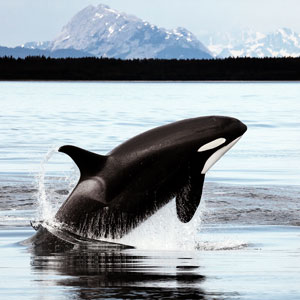
“BC’s orcas are fascinating,” says Breanne. “The Northern Vancouver Island population engages in the intriguing cultural practice of rubbing their bellies on certain beaches. It takes place underwater and within an area that is protected for the orcas – no humans or boats are allowed in this reserve.”

There are three populations you might meet while traveling along the coast of Western Canada: the northern residents and southern residents, which feed mostly on fish, and the Biggs or transient killer whales, which feed on mammals. The offshores sometimes turn up too – another genetically distinct population with unique behaviours and food preferences.

Kayaking tours are one of the best ways to see orcas, especially when led by local specialists such as Spirit of the West Adventures, who are passionate about preserving the whole ecosystem on which orcas – and people – rely. They minimise noise pollution, use biodegradable cleaners in camp, and campaign to protect prey such as wild salmon.

“Kayaking and camping provide the perfect means to see orcas,” says Breanne. “These activities compel us to slow down and get in sync with the rhythms of nature. Being a neighbour to orcas offers a unique opportunity not only to observe them but also to gain a deeper understanding of their world.”

When: July and August
Our top trip: Canada orca kayaking and camping tour
All our trips: Canada wildlife vacations

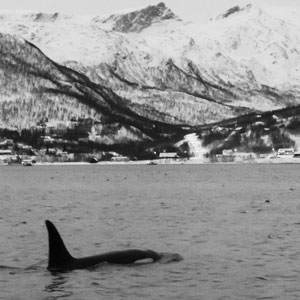
Troms & Finnmark, Norway

In Norway, killer whale watching trips come with a twist: you can choose to swim in the water where orcas roam. This is no SeaWorld; here, in the open fjords of northern Norway, orcas can choose if they’d like to approach, offering you a rare chance to observe them at eye-level and connect with their environment in a low-impact way. Away from the vessel and decidedly un-seal-like, you’re barely a blip on the killer whales’ radar.

It’s not the only way to see killer whales here. If you’d prefer to keep your feet dry (and warm), then wildlife watching boats can take you out with expert crews and conservationists. The setting doesn’t hurt, either. The orcas’ seasonal migrations take them along the northerly Norwegian coast, dipping in and out of fjords in search of herring – all during winter, when the skies are often alive with the Northern Lights.

“Observing them in their natural habitat is a remarkable experience,” says Carmen, who runs our swimming with orcas and Northern Lights trip. “They exhibit specialised feeding behaviour, including carousel feeding, and have distinct dialects, showcasing cultural variation within their populations.”

When: October to January
Our top trip: Northern Lights and whale watching sailing cruise in Norway
All our trips: Norway wildlife vacations

Alaska, USA

It’s promising when one of the stops on a cruise itinerary is called Orca Point Lodge – and it’s just one of the many remote lookouts where you can keep your eyes peeled for killer whales in south-east Alaska. Here, you might meet some of the 700 or so southern Alaska residents. These orcas are unusually sociable, sometimes forming multi-pods of up to 150 individuals, thought to occur to strengthen social bonds, for mating and for youngsters to learn new skills from their community.

Killer whales also pop up throughout the art and histories of the Haida Nation, Tlinga Nation and Tsimshian First Nations – on totem poles, jewellery and house fronts, and starring in creation stories where Killerwhale rules the underwater world. Visit the Sealaska Heritage Centre in Juneau (Dzánti K'ihéeni) to see some of the spectacular art by local master artists.

When: June-September
Our top trip: Alaska wildlife and wilderness cruise 
All our trips: Alaska wildlife vacations
We couldn’t hear anything but the killer whales interacting with each other, which was an incredible feeling.

Anvers Island, Antarctica

When in Antarctica, extraordinary wildlife encounters are a dime a dozen – but the 70,000 orcas of Antarctica are popular enough with guests that they get a special announcement over the ship’s tannoy. They can pop up anywhere, but particularly favour Fournier Bay on Anvers Island, thanks to the high concentrations of krill here.

“The first time they announced an orca sighting over the tannoy, everyone was at lunch,” says Abbie, our Travel Team specialist, “so I ran out on deck!”

Abbie spied two pods over a two-week expedition, all set against uninterrupted vistas of blue icebergs and snowy mountains.

The orcas of the Southern Ocean have learned distinctive hunting behaviours, driving whale calves into bays, beaching seals and – as famously captured in the BBC’s Frozen Planet II – working together to create waves to sweep seals and penguins off ice floes.

“It was really interesting because you could see the feeding patterns,” says Abbie. “The largest one was feeding first, who was the matriarch, and then the next, and finally the youngest… They’re really noisy. The crew shut off the engines, and we could hardly hear anything else apart from the killer whales interacting with each other, which was an incredible feeling – the privilege of hearing something you feel like you shouldn’t be listening to.”

That close, aboard a stationary boat, you can also see the green sheen that many Southern Ocean orcas carry – a tint from the algae they tote around on their white stripes.

“We sat watching them for about 45 minutes,” adds Abbie. “They kept coming back towards us, swimming under and right beside the boat… We were lucky that the water was so clear and calm, and we could see them swimming under the water. It was amazing.”

When: February and March
Our top trip: Classic Antarctica and South Shetlands cruise
All our trips: Antarctica wildlife expeditions

Orkney & Shetland, Scotland

Up to 200 orcas spend their summer amongst the northerly archipelagos of Scotland, following the herring south from Iceland and Scandinavia. Their timing is near-flawless, arriving just in time for seal pup season – who are easy snacks when cautiously testing their sea flippers.

Our account manager, Tessa, was lucky enough to spot killer whales from land in the Shetland Islands: “We had the privilege of watching them for five hours: hunting porpoise, milling about, and traveling along the Shetland coastline with their pod, so close that we could hear their blow every time they surfaced. It was the most thrilling wildlife encounter I’ve experienced in my life.”

A 10-strong pod of resident orcas once cruised the Hebrides in western Scotland too. This aging pod was thought to be more closely related to the Antarctica killer whales, but only two males have been sighted in recent years.

When: summer (especially May-July)
Our top trips: Shetland Isles wildlife vacation and Orkney and Shetland Islands self drive vacation
All our trips: Scotland wildlife vacations

Snæfellsnes, Iceland

In Iceland, orcas go where the herring go – which is usually around the Snæfellsnes Peninsula in the west. There’s a good chance of seeing the Northeast Atlantic killer whales here in winter and spring, when the herring move closer to the shore. Go in winter for the dramatic snow-capped backdrops of photogenic Kirkjufell and the Snæfellsjökull glacier – and the chance to glimpse the Northern Lights above.

The Icelandic orcas have been recorded making sounds at a far lower frequency than other orca pods (50 Hz; on the edge of human hearing), often timed with tail slaps – thought to be a local technique used to herd herring. They were also found to herd herring at night – an adaptation specific to orcas living in high latitudes under long, dark winters.

When: December-June
Our top trip: Iceland highlights, self drive vacation
All our trips: Iceland vacations

Cook Strait (Te Moana-o-Raukawa), New Zealand

Up to 200 orcas circle the New Zealand coastline, but you’re most likely to glimpse them hunting in the fjords and bays between the North Island and South Island. On the South Island, whale watching trips push off from Picton (Waitohi) – the gateway to the islands and inlets of the Marlborough Sounds and the orca haunts of the Kaikōura Peninsula. Remarkably, the busy capital city of Wellington (Te Whanganui-a-Tara) and the Kāpiti Coast on the North Island are also good spots to see killer whales in New Zealand. Here, they’ve developed a unique taste for stingrays, which they dig out of the sand in spring and summer.

When: spring and summer (September-February)
Our top trip: New Zealand classic self drive tour
All our trips: New Zealand vacations

Contact Us

Responsible Travel, Travel Team

Call us for a chat about our vacations. We are happy to discuss your vacation and help in any way we can. No bots, queues or awful hold music.

Responsible Travel, Travel Team

Orca facts: our travelers also ask…

Are orcas whales?

No... and yes. Orcas are both the largest member of the dolphin family and a subspecies of toothed whale. ‘Orca’ refers to a kind of whale in Latin.

How big is an orca?

Orcas can reach up to 10m in length, which is roughly the size of a bus. It’s their man-sized dorsal fin that makes them easy to spot on rolling oceans, and males can weigh in at 5,500kg, giving elephants a run for their money.

What do orcas eat?

Fish, squid, dolphins, sharks, whales, seals, penguins and stingrays are all fair game to hungry orcas. Specialised regional hunting techniques are passed between the group and through the generations, remaining completely unique to individual pods. Norwegian killer whales spin herring into a carousel to scoop fish off the top; the Antarctic orcas work together to create waves to wash seals off ice floes; New Zealand orcas mine for stingrays in sandy bays.

Do wild orcas attack humans?

No. Orcas are the most impressive predators in the seas, but they haven’t been known to deliberately attack humans. However, there have been increasing reports of Iberian orcas interacting with boats in the Strait of Gibraltar since 2020; it’s become known as ‘Orca Alley’ to wary sailors.

Most interactions are harmless, but three boats have been sunk by the killer whales – and more sailors have been given a good scare. Some scientists think that it could be defensive behaviour learned from an orca in the pod who suffered a collision with a boat. Others say it’s just curious play behaviour often seen passed between pods and individuals.
Photo credits: [Page banner: Nitesh Jain] [Intro: Zdenek Machacek / Unsplash+] [British Columbia, Canada: Thomas Lipke] [Anvers Island, Antarctica: Bryan Goff] [Orca facts: Mike Doherty]