Tiger photography in India
Tigers can escape the scrutiny of the photographer’s lens in more ways than one – as we found out when we got too close in Kanha National Park.
“Move back!” Catherene is shouting. “Move back!”
A tiger is walking down the verge within touching distance of our jeep. The cars behind us eventually lurch backwards, and so do we. As we reverse over the ruts and dips in the track, the tiger walks pace with us, as graceful as we are clumsy. Then, he shimmers off into the bamboo.
It is our first tiger sighting on safari at Kanha National Park, in the state of Madhya Pradesh in Central India. When the tiger has fully disappeared, I turn to my companions. Someone’s face is wet with tears; one seems to hold them back, only so that they don’t cloud their eyes.
But Catherene the naturalist is angry. “We could have had longer,” she says, frustrated, as we arrive back at camp. “If they had gone back, we could have gone back. The tiger could have walked in the road – we could have seen him on the road for ages.”
I had forgotten to breathe for the duration of the tiger sighting, and I wasn’t convinced I would have survived a longer experience. But tour naturalist Catherene Christian has been following the animals for years and knows how the tigers behave. When not accompanying jeep tours, she works at Shergarh Tented Camp just outside the Kanha Tiger Reserve.
“Those jeeps behind us had huge lenses – they didn’t have to be so close. The tiger would have walked towards us. We blocked it – it couldn’t walk in the road.”
Instead, the tiger had walked along the grass verge alongside the road for a while, negotiated a rocky outcrop, and then departed.
The long-lens photographers had placed their cameras aside, better to soak up the moment – but there had been some videographers in the jeep. I found myself returning to their videos over and over again afterwards. It was real – we saw it. We actually saw it.
“Watch it on mute,” pleads Catherene – you can hear her shouting in the background.
But the shouts add something. Their urgency shows just how close the tiger was. Too close for the expensive telephoto lenses; too close for the photographers.
“Move back!” Catherene is shouting. “Move back!”
A tiger is walking down the verge within touching distance of our jeep. The cars behind us eventually lurch backwards, and so do we. As we reverse over the ruts and dips in the track, the tiger walks pace with us, as graceful as we are clumsy. Then, he shimmers off into the bamboo.
It is our first tiger sighting on safari at Kanha National Park, in the state of Madhya Pradesh in Central India. When the tiger has fully disappeared, I turn to my companions. Someone’s face is wet with tears; one seems to hold them back, only so that they don’t cloud their eyes.
But Catherene the naturalist is angry. “We could have had longer,” she says, frustrated, as we arrive back at camp. “If they had gone back, we could have gone back. The tiger could have walked in the road – we could have seen him on the road for ages.”
I had forgotten to breathe for the duration of the tiger sighting, and I wasn’t convinced I would have survived a longer experience. But tour naturalist Catherene Christian has been following the animals for years and knows how the tigers behave. When not accompanying jeep tours, she works at Shergarh Tented Camp just outside the Kanha Tiger Reserve.
“Those jeeps behind us had huge lenses – they didn’t have to be so close. The tiger would have walked towards us. We blocked it – it couldn’t walk in the road.”
Instead, the tiger had walked along the grass verge alongside the road for a while, negotiated a rocky outcrop, and then departed.
The long-lens photographers had placed their cameras aside, better to soak up the moment – but there had been some videographers in the jeep. I found myself returning to their videos over and over again afterwards. It was real – we saw it. We actually saw it.
“Watch it on mute,” pleads Catherene – you can hear her shouting in the background.
But the shouts add something. Their urgency shows just how close the tiger was. Too close for the expensive telephoto lenses; too close for the photographers.

Kings & subjects
Tigers dictate their own sightings. In Kanha National Park, they rule the roost – and they know it. They are fully habituated to jeeps – meaning that they are used to them and unbothered by their presence. They often prefer to lie or walk in the road than in the forest.
It means that they can be a fantastic subject to photograph on a tiger photography vacation in India – but taking the perfect image isn’t without its challenges. Bengal tigers like forests and wetlands. They roam the dry deciduous teak forests of Pench National Park, and stalk the marshy grasslands and sal tree forests of Bandhavgarh and Kanha. To find them you need an expert, like our India tiger photography specialist Neelesh Agrawal from our partner India Footprints.
“Recently Kanha has been great for the wildlife encounters for me,” he says. “I’ve seen hard ground swamp deer in the Kanha and Mukki zones. I’ve seen some popular tigers like DJ, Neelanala, DB3, DB2, MV3, Neelam, Mohini, Jr. Bajrang and Z1.”
Tigers in the park are named after the area which they have claimed as their territory, which leads to these spy-like code names. It also means that cubs are nameless until they part from their mothers.
“Interestingly, most of the females in the park have cubs of all sizes, which are a great feast for wildlife photographers,” says Neelesh. “I just had a great sighting of Tigress Neelam with her three cubs in the Kanha zone. Unfortunately, she had a territorial fight on the same day and one of her cubs is missing, but the sight was an experience.”
Photographing a territorial fight might be a photographer’s dream shot, but these are rare to witness. Yet the tiger proves a magnificent subject, even when she is just lying in the road.
It means that they can be a fantastic subject to photograph on a tiger photography vacation in India – but taking the perfect image isn’t without its challenges. Bengal tigers like forests and wetlands. They roam the dry deciduous teak forests of Pench National Park, and stalk the marshy grasslands and sal tree forests of Bandhavgarh and Kanha. To find them you need an expert, like our India tiger photography specialist Neelesh Agrawal from our partner India Footprints.
“Recently Kanha has been great for the wildlife encounters for me,” he says. “I’ve seen hard ground swamp deer in the Kanha and Mukki zones. I’ve seen some popular tigers like DJ, Neelanala, DB3, DB2, MV3, Neelam, Mohini, Jr. Bajrang and Z1.”
Tigers in the park are named after the area which they have claimed as their territory, which leads to these spy-like code names. It also means that cubs are nameless until they part from their mothers.
“Interestingly, most of the females in the park have cubs of all sizes, which are a great feast for wildlife photographers,” says Neelesh. “I just had a great sighting of Tigress Neelam with her three cubs in the Kanha zone. Unfortunately, she had a territorial fight on the same day and one of her cubs is missing, but the sight was an experience.”
Photographing a territorial fight might be a photographer’s dream shot, but these are rare to witness. Yet the tiger proves a magnificent subject, even when she is just lying in the road.
Soap operas
As for my group, we had seen Neelanala – the largest male in the Mukki zone of the park. There are around 150 tigers in Kanha National Park and their lives are operatic in nature: they fight, mate, raise families and defend territories.
For a long time, the most famous tiger in the park was Munna, who was known for having the word ‘cat’ written on his head. This can’t be true, I thought, when I found out – but the pictures showing the unique pattern of the stripes on his forehead prove me wrong. The famous tiger died in 2021.
At Shergarh Tented Camp, where my group stayed on our tiger watching and cycling tour, there are whole books of tiger photographs on the coffee table. Massive, framed professional-looking photographs line the walls, all taken by guests.
For a long time, the most famous tiger in the park was Munna, who was known for having the word ‘cat’ written on his head. This can’t be true, I thought, when I found out – but the pictures showing the unique pattern of the stripes on his forehead prove me wrong. The famous tiger died in 2021.
At Shergarh Tented Camp, where my group stayed on our tiger watching and cycling tour, there are whole books of tiger photographs on the coffee table. Massive, framed professional-looking photographs line the walls, all taken by guests.
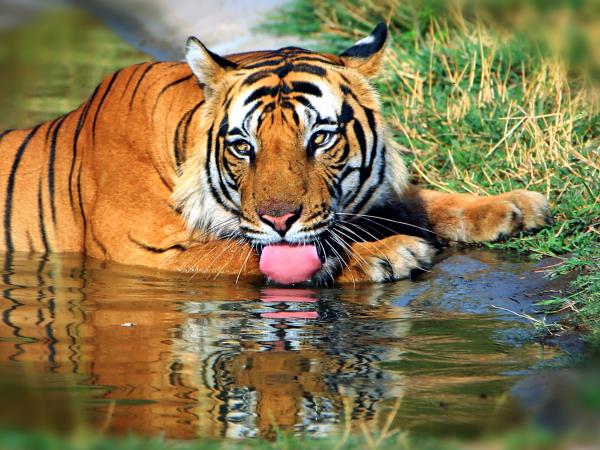
Wildlife photography vacation in India
Photograph superb wildlife & even the elusive tiger
From
£1150 to £1450
10 days
ex flights
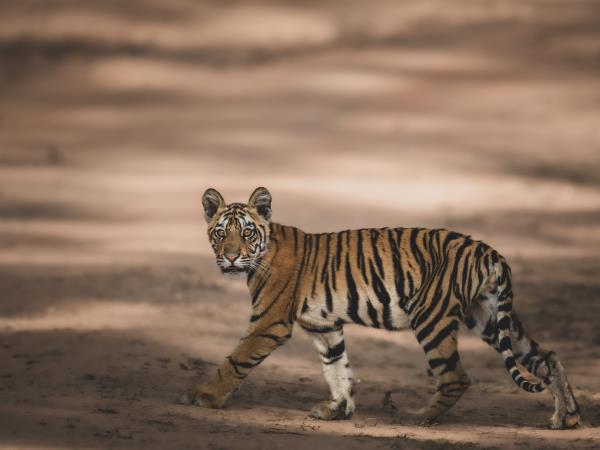
Tigers of India photography tour
Let us take you to the best spots for tiger photography.
From
US $6995
11 days
ex flights
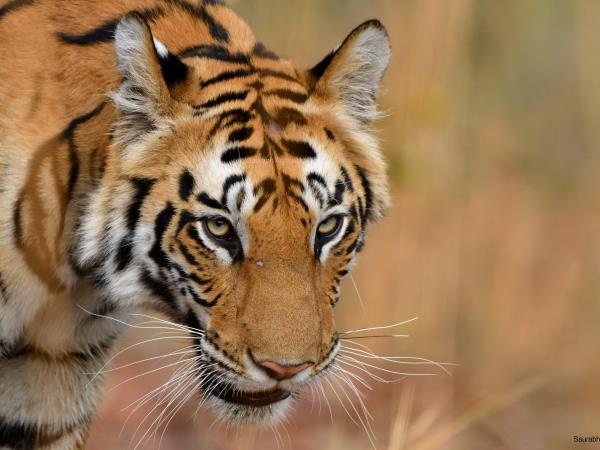
Tiger and wildlife photography tour, India
Tiger & leopard photography tour in India's best reserves
From
Rupee 350000
13 days
ex flights


Contact Us

Call us for a chat about our vacations. We are happy to discuss your vacation and help in any way we can. No bots, queues or awful hold music.

1-866-821-6866
Call toll free
Calling from outside the USA


How do you photograph a tiger?

You need to be lightning-fast with your decisions![]()

India has banned the use of mobile phones in its tiger reserves, which means that you need to bring a camera if you want to photograph tigers.
“Tiger photography is very tricky,” says Neelesh. “They are usually sighted during the low light that is dawn and dusk, so you’ll need a camera with a good ISO range [the higher the ISO, the more sensitive the image sensor is to light] and and a lens with a wide f-stop also known as a wide aperture [allowing you to let lots of light into the camera in low light].”
Parks run morning and evening safaris, as wildlife is best spotted at dawn and dusk. A morning safari can involve waking up at 5am and snuggling into the jeep with a hot water bottle on your lap under a blanket.
“For capturing the quick motions of tigers,” says Neelesh, “you need to be lightning-fast with your decisions, have a fast shutter speed, and combine that with good knowledge of the tiger’s behaviour, so you can predict and plan the shots well in advance. Here, the expertise of a naturalist is essential. They will guide and instruct you in what the tiger is likely to do next.”
I witnessed this first hand with Catherene, who knew that the tiger wanted to walk down the road and positioned our jeep so that we were in exactly the right spot. We reversed back and had him walking alongside us for the entire time. Usually, you’ll be traveling with photographer-naturalists, who have exactly the right experience in getting the perfect snap.
Photographers might prop their camera on the roll bar of the jeep – using a small bean bag below it for stability. The canny fill up their bean bags once they arrive in India to save space in their luggage!
A power bank for the long morning safari is very useful, as no one wants to be out of battery. Wear neutral, earthy clothing too – like your guide. Don’t try to outshine the tiger!
As for lenses, Neelesh recommends telephoto lenses. “A 70-200mm and a 150-600mm,” he says. Catherene left her telephoto lens on the seat when Neelanala appeared – he was just too close. But later in the morning, she took beautiful shots of a family of jackals trotting down the road 20m ahead of us.
Success rates vary. We had two tiger sightings over four safaris on the early December trip. If you are on a dedicated photography trip, doing morning and evening safaris over a course of four days, this gives you eight outings and you are likely to see multiple tigers.
“Tiger photography is very tricky,” says Neelesh. “They are usually sighted during the low light that is dawn and dusk, so you’ll need a camera with a good ISO range [the higher the ISO, the more sensitive the image sensor is to light] and and a lens with a wide f-stop also known as a wide aperture [allowing you to let lots of light into the camera in low light].”
Parks run morning and evening safaris, as wildlife is best spotted at dawn and dusk. A morning safari can involve waking up at 5am and snuggling into the jeep with a hot water bottle on your lap under a blanket.
“For capturing the quick motions of tigers,” says Neelesh, “you need to be lightning-fast with your decisions, have a fast shutter speed, and combine that with good knowledge of the tiger’s behaviour, so you can predict and plan the shots well in advance. Here, the expertise of a naturalist is essential. They will guide and instruct you in what the tiger is likely to do next.”
I witnessed this first hand with Catherene, who knew that the tiger wanted to walk down the road and positioned our jeep so that we were in exactly the right spot. We reversed back and had him walking alongside us for the entire time. Usually, you’ll be traveling with photographer-naturalists, who have exactly the right experience in getting the perfect snap.
Photographers might prop their camera on the roll bar of the jeep – using a small bean bag below it for stability. The canny fill up their bean bags once they arrive in India to save space in their luggage!
A power bank for the long morning safari is very useful, as no one wants to be out of battery. Wear neutral, earthy clothing too – like your guide. Don’t try to outshine the tiger!
As for lenses, Neelesh recommends telephoto lenses. “A 70-200mm and a 150-600mm,” he says. Catherene left her telephoto lens on the seat when Neelanala appeared – he was just too close. But later in the morning, she took beautiful shots of a family of jackals trotting down the road 20m ahead of us.
Success rates vary. We had two tiger sightings over four safaris on the early December trip. If you are on a dedicated photography trip, doing morning and evening safaris over a course of four days, this gives you eight outings and you are likely to see multiple tigers.
Order & chaos
Despite the chaos of our sighting, tiger safaris are a heavily regulated activity. The jeeps at Kanha National Park are GPS-tracked and cannot stay too long in one place. Nor can they be late leaving the park, or their occupants will be fined. Every morning and evening the jeeps queue outside the gate, the park rangers are assigned and clamber up front to sit with your driver.
The few female drivers – two or three among 50 men – take their places. Despite clear competence, Catherene doesn’t want to be a driver. As we’d seen, road rage can soar when there’s a tiger sighting.
The few female drivers – two or three among 50 men – take their places. Despite clear competence, Catherene doesn’t want to be a driver. As we’d seen, road rage can soar when there’s a tiger sighting.
Project Tiger
Kanha National Park became a tiger reserve in 1973 as part of India’s Project Tiger, a conservation effort to protect India’s Bengal tigers. The park now has around 150 tigers and is one of around 50 tiger reserves in India.
Other famous tiger reserves in the state include Pench and Bandhavgarh. Bandhavgarh is the smallest and has a high density of tigers, whilst Pench is known for its beautiful teak forests. Many tourists also visit Ranthambore in Rajasthan and Kaziranga in Assam.
Kanha is a beautiful place to see and photograph tigers in because of its meadows. These vast openings in the forest have you straining out of your seat, hoping to see a tiger creeping through the grass.
They provide grazing, light and a different habitat, and they are dotted with lakes and swamps where barasingha – hard-ground swamp deer – thrive. Thanks to a successful breeding programme, Kanha National Park, which was once the only place on earth you could see them in the wild, has helped revive their population.
Other famous tiger reserves in the state include Pench and Bandhavgarh. Bandhavgarh is the smallest and has a high density of tigers, whilst Pench is known for its beautiful teak forests. Many tourists also visit Ranthambore in Rajasthan and Kaziranga in Assam.
Kanha is a beautiful place to see and photograph tigers in because of its meadows. These vast openings in the forest have you straining out of your seat, hoping to see a tiger creeping through the grass.
They provide grazing, light and a different habitat, and they are dotted with lakes and swamps where barasingha – hard-ground swamp deer – thrive. Thanks to a successful breeding programme, Kanha National Park, which was once the only place on earth you could see them in the wild, has helped revive their population.
Lost villages
But the meadows have a controversial history – they were created by relocating as many as 28 villages out of the park area. These tribal communities have struggled outside the parks without access to the forests which had been their ancestral home. Many now rely on tourism jobs.
The verge where our tiger had passed our jeep had been cut by hand. Workers come into the park, scythes over their shoulders, to maintain the roadsides. As the tiger passed out of sight, and sat, roaring, in the undergrowth, men and women passed our jeep, on foot and unflinching, to go to work.
Lodges in the area have a requirement to ensure that a proportion of their workforce is made up of local people, but some camps are better than others at providing opportunities for local villages.
Our partner India Footprints uses a lodge run by Neelesh and partner Kirty. They were the first in the Kanha area to employ and train local people. All their drivers are local, as are most of their 20 naturalists. Local people are employed to do the laundry, rather than the lodge using washing machines.
Move back – move back – whilst more room is being made at Kanha National Park for tigers – more space is needed, too, for the unsung tribal communities, too, so they can flourish behind the scenes.
The verge where our tiger had passed our jeep had been cut by hand. Workers come into the park, scythes over their shoulders, to maintain the roadsides. As the tiger passed out of sight, and sat, roaring, in the undergrowth, men and women passed our jeep, on foot and unflinching, to go to work.
Lodges in the area have a requirement to ensure that a proportion of their workforce is made up of local people, but some camps are better than others at providing opportunities for local villages.
Our partner India Footprints uses a lodge run by Neelesh and partner Kirty. They were the first in the Kanha area to employ and train local people. All their drivers are local, as are most of their 20 naturalists. Local people are employed to do the laundry, rather than the lodge using washing machines.
Move back – move back – whilst more room is being made at Kanha National Park for tigers – more space is needed, too, for the unsung tribal communities, too, so they can flourish behind the scenes.
More Wildlife photography articles
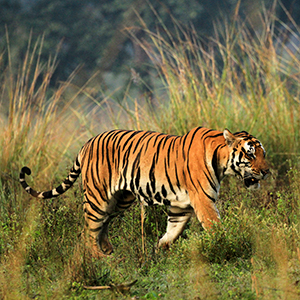
Gorillas in the mist, wolverines in the snow, bears in the stream snatching up salmon...
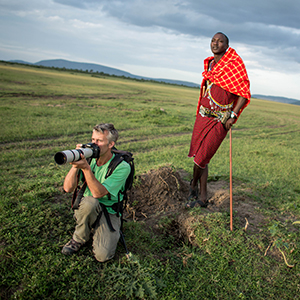
Alaska, India, Uganda, the Antarctic - you’re spoilt for choice.
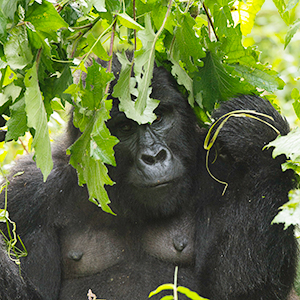
Getting up close with these incredible apes is an unforgettable experience.
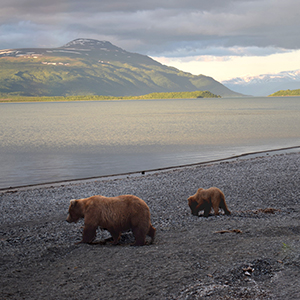
Vacation in a raw, volcanic wilderness, honing your skills with help from an expert.
Capture spectacular, up-close footage of these charismatic apes and their forest homes.
Our bird photography vacations visit highly sought-after destinations such as Iceland and Norway.