Argentina wildlife tour
Price
£9950 including domestic flights only
Duration
21 Days
Type
Small group
More info
Price based on 2 pax sharing.
Inc.
all meals &transfers in the itinerary, local guides & driver.
permits and wildlife watching activities & internal flights; exc.
flights, visa, tips.
Price depends on party size.
Contact for specific price.
Inc.
all meals &transfers in the itinerary, local guides & driver.
permits and wildlife watching activities & internal flights; exc.
flights, visa, tips.
Price depends on party size.
Contact for specific price.

Description of Argentina wildlife tour
Price information
£9950 including domestic flights only
Price based on 2 pax sharing.
Inc.
all meals &transfers in the itinerary, local guides & driver.
permits and wildlife watching activities & internal flights; exc.
flights, visa, tips.
Price depends on party size.
Contact for specific price.
Inc.
all meals &transfers in the itinerary, local guides & driver.
permits and wildlife watching activities & internal flights; exc.
flights, visa, tips.
Price depends on party size.
Contact for specific price.
Check dates, prices & availability

Travel guides
Come on a journey through the roots of Carnaval, Chamame, Salta and Patagonia in our travel guide.
The perfect introduction to getting your head around the extraordinary life on earth, and where to go to find it.
Vacation information
Diet:
We can cater for vegetarians on this vacation. Sadly we cannot offer vegan food.
Responsible Travel
As the pioneers of responsible tourism, we've screened this (and every) vacation so that you can travel knowing we've worked to maximise the benefits of your vacation to local people and places, and minimise any negative impacts.
Planet
In Argentina (as with everywhere we go) we carefully choose accommodation, suppliers and transportation that either minimise their effect on the environment or that help to contribute to its sustainable development.CARBON REDUCTION
On this trip we drive in one vehicle when making ground transfers, so to reduce emissions by not using more than one vehicle. We also use public ferries for our transfers from Bariloche to Puerto Blest.
The accommodation we use on the trip (outside of Buenos Aires) is all locally owned private homestays, guest houses and estancias. Many of these properties are now transforming their land which was farmland to re-wilding purposes. We stay at and safari around several of these private reserves, this is a great way of contributing to this re-wilding model.
Two of these properties in particular have gone even further than just opening their properties to eco tourists and tending their land to be welcoming for wildlife, and have become key ecological reserves which now specialise in the protection and breeding of endangered species. Campos del Tuyú Wildlife Reserve is now a key site for Pampas deer which we visit and also Refugio las Tarucas which is one of the key populations of northern humeul deer.
At these ecological reserves nearly all of their power is derived from solar panels, water is recycled and rain storage is common place for washing water.
Food is locally sourced where possible and vegetarian meals can be provided, although meat remains king in Argentina.
ENVIRONMENT AND WILDLIFE
As touched on above, we visit several private properties which are well established ecological reserves, some are based around certain keystone species such as pampas deer, northern humeul deer. Since these properties started to re-wild their land and protect these species the numbers have increased and now these private properties have the largest free ranging populations of these animals in the country.
Our local guides are in contact with the property owners and we contribute to their understanding of their reserves and any population studies they are conducting. This is done by providing all of our photographs and data on sightings.
By bringing people here with a professional naturalist as well as professional local guides we aim to showcase the environment in full but also to allow you to learn about the problems facing the ecosystems here and highlight the ways that continued development and human exploitation are affect the species and how cutting edge research is countering the problems as well as showing you examples of success stories. We also keep a record of all the great sightings we see on each tour and record the environmental factors, this data is used by ourselves but also given to the researchers who are working on many of these species. All the information collected in invaluable as the knowledge of some of the animals that live here are little understood. We also donate our pictures to the researchers to aid in their photo identification studies.
People
LOCAL ECONOMYAll of the accommodation we use when in Ceibas, Jujuy, Mar Chaquita and Patagonia are locally owned. Meaning that all of the money for these stays enters and stays in the local economy. With any of our tours throughout South America or elsewhere in the world we always employ local guides and drivers. We also do our best to employ as many local guides as possible, so that we can share the money from tourism around more than one regularly used guide.
On this trip our guide is from Buenos Aires Province and we hire drivers from the local area in Patagonia (north and south) and also Jujuy. The staff employed at the private, locally run estancias throughout the trip are overwhelmingly from the local area, many of them are family run and all of the staff are from the immediate local area.
This not just helps in supporting the local people with income direct from wildlife tourism but these local people often have much better local knowledge of the wildlife.
As we cover a large amount of ground on this exploration of Argentina we make various stops for supplies and these are all done at small locally owned shops, where available. There are not many places to stop for souvenirs on this trip as we visit some remote places, but where the estancias we stay at have their own homemade handicrafts and food products (honeys, preserves etc) we promote these to our clients.
EMPLOYMENT, INCLUSIVITY & DIVERSITY
All of the people employed as part of this trip are from Argentina and many of the drivers we employ are from the local communities we are visiting for wildlife (on this trip that includes a local driver in northern Patagonia, southern Patagonia, Buenos Aires province and Jujuy province).
We work hard to provide a genuine pathway from driver to guide, by helping educate English speaking as well as providing coaching and informal training on guiding techniques. We also donate equipment which can help in this progression in the form of binoculars, field guide books and torches.
This trip, like all of our trips, is LGBTQ+ friendly.
Nearly all of this trip is conducted from a vehicle, however some walking may be needed, to get closer to wildlife and this walking will be done on uneven ground and at altitude. So people with severe mobility issues will struggle, the trip is not wheelchair safe. There are also a couple of small boat trips which require people to hold on tight to the boat to get out of the lagoon into the sea which can be rough for a very short amount of time.
Popular similar vacations
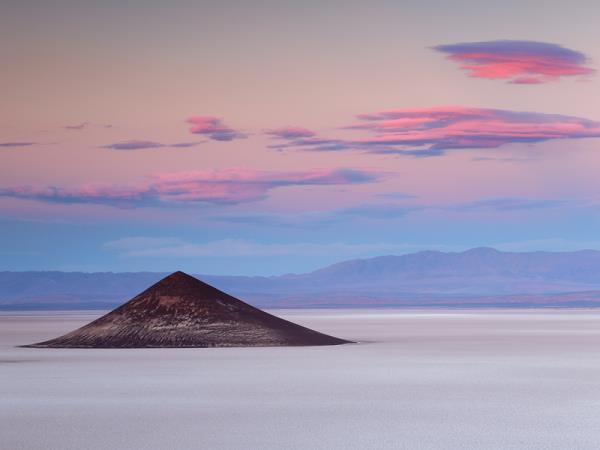
Northern Argentina luxury vacation
From £5500 - £6500 23 days excluding flights
Unique slow travel luxury adventure in North Argentina
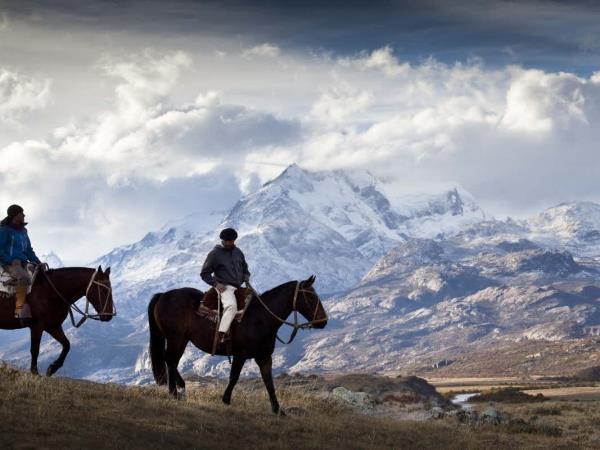
Argentina active adventure vacation
From £5200 - £5900 16 days excluding flights
Bespoke active adventure in Argentina's iconic Patagonia
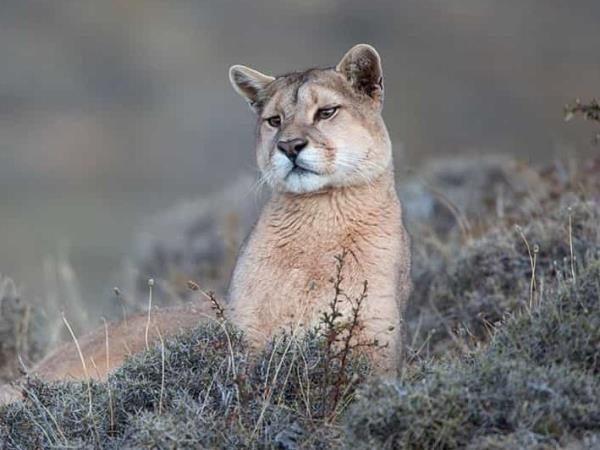
South America big cat expedition
From £7095 12 days including domestic flights only
Brazil jaguar safari & Argentina puma expedition