Tasmania self drive vacation itinerary
Before you set out on our Tasmania self drive vacation, do a little homework. Susie de Carteret, of our expert partner for Tasmania, Tasmanian Odyssey, recommends that visitors get their “wombat vision” prepared – that means looking up what some of the wildlife looks like – or even visiting a wildlife sanctuary before you pick up your car, “so you know what you are looking out for when you travel around the island independently,” she explains.
Most Australians haven’t seen a platypus in the wild. Let alone a Tasmanian devil. But that’s because most mainland Australians haven’t ventured down to the island state of Tasmania, where nearly 16,000km2 of the land is protected wilderness, and where wildlife that rarely raises its head above the parapet in the rest of Australia thrives in lost valleys and on buttongrass plains.
That’s where a Tasmania self drive vacation itinerary comes in. Going by car means that you can travel at your own pace, and drive around the entire island if you like, devoting time out on hikes to spotting creatures. But you need to get your eye in first.
Most Australians haven’t seen a platypus in the wild. Let alone a Tasmanian devil. But that’s because most mainland Australians haven’t ventured down to the island state of Tasmania, where nearly 16,000km2 of the land is protected wilderness, and where wildlife that rarely raises its head above the parapet in the rest of Australia thrives in lost valleys and on buttongrass plains.
That’s where a Tasmania self drive vacation itinerary comes in. Going by car means that you can travel at your own pace, and drive around the entire island if you like, devoting time out on hikes to spotting creatures. But you need to get your eye in first.


Have you tested your wombat vision? When you’re on the road with no phone signal, and a wombat crops up, you’re going to want to know what it is!![]()

Wombat vision
There’s another good reason to do some wildlife research before you go – and that’s so you don’t run any over. Every two minutes an animal dies on a Tasmanian road. Don’t let your first wildlife sighting be roadkill.
“Animals are being pushed more into areas where there’s human habitation, where there’s food, and on the roads – where there’s the risk of being hit with a car,” says Susie. Climate change, which is affecting Tasmania as it is the rest of Australia, is putting pressure on the environment, forcing wildlife into new areas, already occupied by humans and vehicles. “I tell guests to drive slowly, and don’t drive at night if they can avoid it. And I tell them what to do if you hit an animal – how to get it in the hands of the animal carer.”
Tasmanian animals are also being squeezed by logging, and changes to their habitat. Yet, compared to other parts of the world, Tasmania is something of a haven. Many Tasmanians are extremely protective of their paradise – and the islanders have a reputation for being influential ecological campaigners – unlike many in other Australian states. In the 1980s, Tasmania made headlines with a series of well-publicised protests against hydroelectric dams on the Franklin River, and the incident is among many examples of Tasmanian eco-mindedness. “Fifty percent of the state is protected through Wilderness World Heritage status and national park status,” says Susie, “And that wilderness is very easy to experience and very accessible.”
“Animals are being pushed more into areas where there’s human habitation, where there’s food, and on the roads – where there’s the risk of being hit with a car,” says Susie. Climate change, which is affecting Tasmania as it is the rest of Australia, is putting pressure on the environment, forcing wildlife into new areas, already occupied by humans and vehicles. “I tell guests to drive slowly, and don’t drive at night if they can avoid it. And I tell them what to do if you hit an animal – how to get it in the hands of the animal carer.”
Tasmanian animals are also being squeezed by logging, and changes to their habitat. Yet, compared to other parts of the world, Tasmania is something of a haven. Many Tasmanians are extremely protective of their paradise – and the islanders have a reputation for being influential ecological campaigners – unlike many in other Australian states. In the 1980s, Tasmania made headlines with a series of well-publicised protests against hydroelectric dams on the Franklin River, and the incident is among many examples of Tasmanian eco-mindedness. “Fifty percent of the state is protected through Wilderness World Heritage status and national park status,” says Susie, “And that wilderness is very easy to experience and very accessible.”
Proper wilderness
Some places, you go to see sights – a famous tower, a particular view. And once you’ve seen them, you’re ready to move on. Not so the Tasmanian wilderness, which invites closer and closer looks, and more and more time in its midst. You’ll wish you booked an extra day.
A fifth of Tasmania is part of a Wilderness World Heritage Area, and by car you can go to places that others don’t, “Explore the far south, far northwest and the northeast,” Susie encourages, “Most visitors head straight for Freycinet National Park and Cradle Mountain and miss these beautiful parts of the island out completely – which is their loss and your gain!” What’s fantastic about driving is that you can get off the beaten track, but in Tasmania, that’s quite literal. Susie tells guests to try the ‘road to nowhere’ – an unsealed road that goes deep into the countryside, where you’re far more likely to encounter other species than you are your own.
A fifth of Tasmania is part of a Wilderness World Heritage Area, and by car you can go to places that others don’t, “Explore the far south, far northwest and the northeast,” Susie encourages, “Most visitors head straight for Freycinet National Park and Cradle Mountain and miss these beautiful parts of the island out completely – which is their loss and your gain!” What’s fantastic about driving is that you can get off the beaten track, but in Tasmania, that’s quite literal. Susie tells guests to try the ‘road to nowhere’ – an unsealed road that goes deep into the countryside, where you’re far more likely to encounter other species than you are your own.
Bed and breakfast
When you’re on a road trip, you’re on your own – that’s the appeal. There aren’t many people in Tasmania – almost half the population lives in the capital, Hobart, which leaves just 300,000 people rattling around an area the size of Ireland. But you won’t be lonely. You can stay all around the island in B&Bs, which allow you to meet the local people. Most inspiring of all, many of them are involved in rewilding and conservation projects in their area.
And local people can help make your trip as safe as possible too, which is why our partners take advantage of their longstanding connections in the state.
“Local information is absolutely crucial if you are going to send people into the remote wilderness,” says Susie. She always uses local businesses on trips for hotels, and even for car hire. “If guests ever do find themselves in a tricky situation, that local company will come to their rescue,” she reasons, “they are literally at the end of the phone, not like a major call center.”
Sticky situations are rare in Tasmania, but it’s nice to know that there are people who care when you go.
And local people can help make your trip as safe as possible too, which is why our partners take advantage of their longstanding connections in the state.
“Local information is absolutely crucial if you are going to send people into the remote wilderness,” says Susie. She always uses local businesses on trips for hotels, and even for car hire. “If guests ever do find themselves in a tricky situation, that local company will come to their rescue,” she reasons, “they are literally at the end of the phone, not like a major call center.”
Sticky situations are rare in Tasmania, but it’s nice to know that there are people who care when you go.
Tasmania driving itinerary highlights
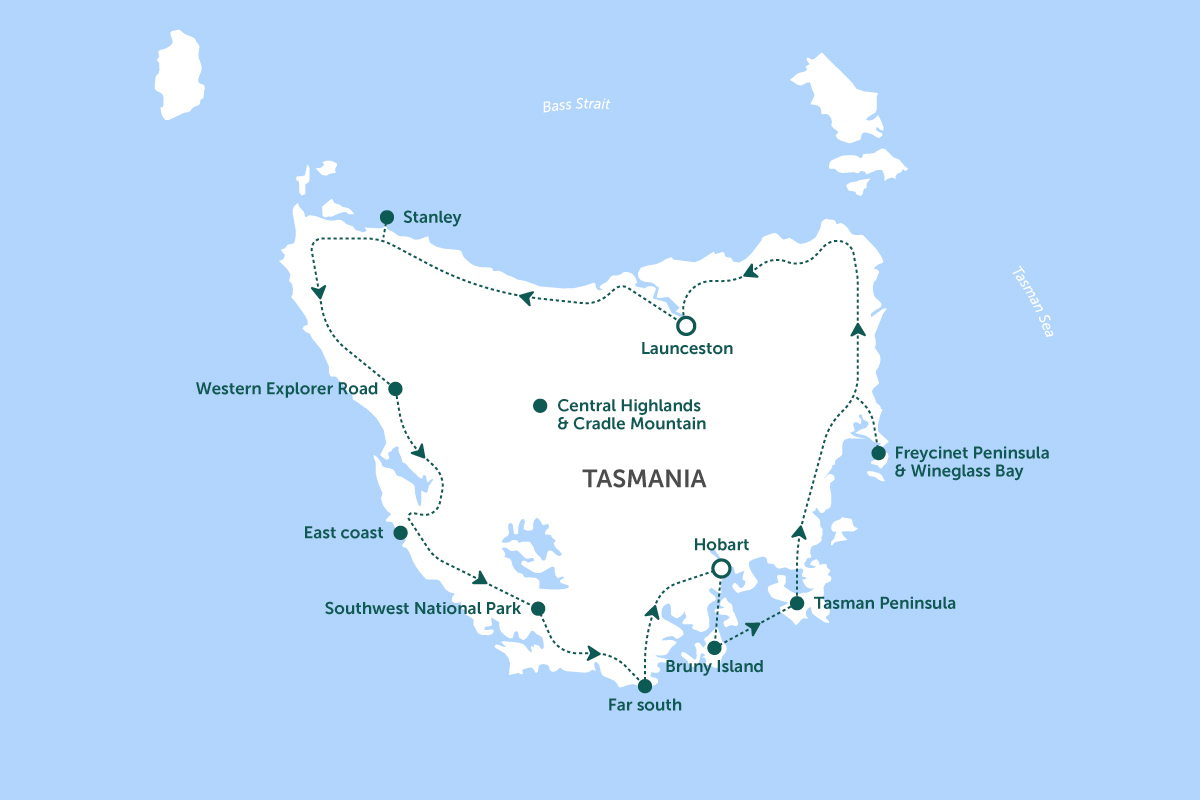
In 11 days you can do an island loop of Tasmania, starting in Launceston, its second largest city. From here venture to the far north west, to Stanley, a small fishing town on the extremity of the island. You can then head the short way to Cradle Mountain and Dove Lake, then explore the Central Highlands. Hobart, the capital, appears halfway through the route, before you go south. In southern Tasmania you’ll find the Southwest National Park on the horizon. Heading up the east coast, there are olive groves, wineries and the popular Freycinet Peninsula, where tourists flock to Wineglass Bay. End your explorations on the Tasman Peninsula, after a jaunt to Bruny Island.
As you grow fonder of your car, nothing will make you happier than seeing it, dust-covered and in pride of place, on the Fatman Barge, which can only carry one vehicle over the Pieman River at a time.![]()
Western Explorer Road
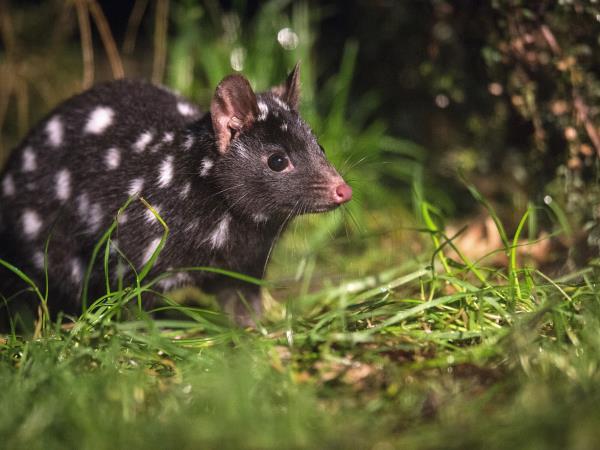
A Jurassic Park of Tasmanian creatures: the Tasmanian quoll, the Tasmanian devil, plus platypus and pademelons can all be spotted in the wilderness area of the west coast – and it was the last known location of the Tasmanian tiger. As for the driving – for a day, you’ll be going down a dirt road with no signal, slow enough to spot a quoll. The journey ends up spanning the Pieman River via a one-car-at-a-time barge crossing.Central Highlands & Cradle Mountain
Long and winding roads around mountains leads to lakes full of trout, and buttongrass plains conceal wombats until their dusk-time emergence. There are areas of the Central Highlands that can’t be reached by road, but you could step out of the car onto one of the many popular hiking routes, some at least partially undertaken on a network of boardwalks around the lakes. It’s best to do this with a local guide who knows the forecast. The weather is wild and changeable here, befitting the dramatic landscape, and during the Australian winter, the scenery gets a dusting of snow.Hobart
Famously, one of the most interesting museums in the southern hemisphere, MONA – the Museum of Old and New Art, is in Hobart, Tasmania’s capital. Ditch the car and enjoy the cultural side of the city, which is scenic and friendly – and then, when you’re hankering for wildlife again, there’s Bonorong Wildlife Sanctuary, just outside, and then Bruny Island, where penguins hide in burrows, and seals stretch out on the rocks.Far south
Fewer people make it here, beyond Hobart – and cars can only go some of the way towards the Southwest National Park – but the quiet orchards and deep valleys are worth your attention. Cockle Creek is the most southerly point you can reach by car. Squint and pretend you can see Antarctica in the distance. At 43 degrees latitude, you’re so far south here that sometimes you can spot the Southern Lights.East coast
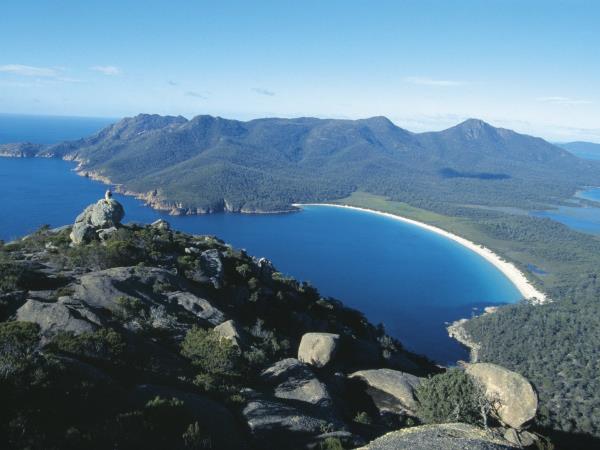
The east coast is known for beautiful beaches – of which it has many, including Wineglass Bay, which boasts the prettiest of Tasmania’s vistas. Above Hobart, there’s Maria Island National Park, the Tasman Peninsula and Freycinet National Park. The far northeast is lesser explored; the Bay of Fires, with its orange lichen-covered rocks strewn over white sand, is a particularly photogenic point of interest. A shore-hugging coast road keeps you close to the views as you drive.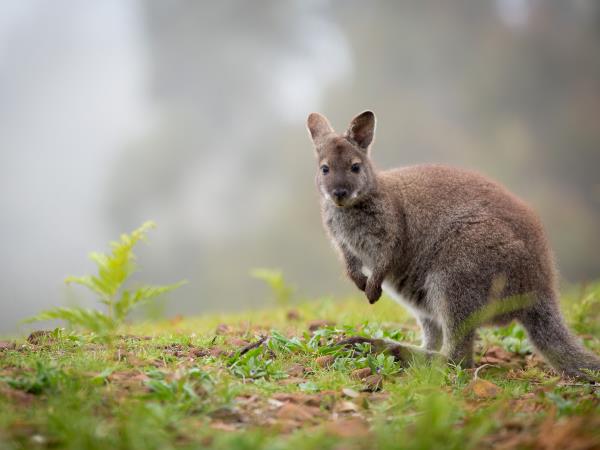
B&B self drive tour of Tasmania, meet the locals
Self-drive staying in Tasmania's most charming B&Bs
From
AU $1995 to AU $8000
10 days
ex flights
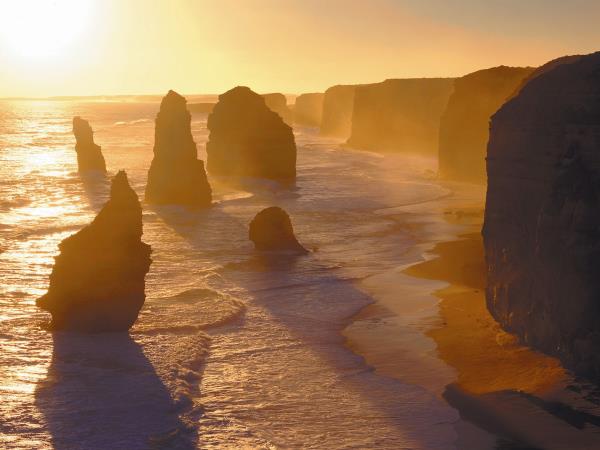
Southern Australia & Tasmania tailor made vacation
See Tasmania, Victoria and South Australia, tailor-made
From
£10900
15 days
ex flights
Vacation to Tasmania for New Zealanders
An off-beaten-track self drive round Tasmania's hidden gems
From
AU $2995 to AU $7995
21 days
ex flights
Tasmania self drive vacation for Australians
Discover the hidden paradise on your doorstep
From
AU $1495
8 days
ex flights
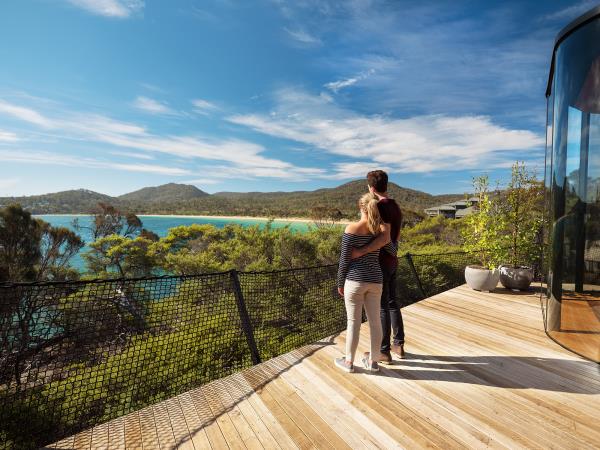
Tasmania vacation, Australia
Boutique self-drive adventure - wildlife, wine, walking & wilderness
From
AU $5000 to AU $15000
20 days
ex flights


Contact Us

Call us for a chat about our vacations. We are happy to discuss your vacation and help in any way we can. No bots, queues or awful hold music.

1-866-821-6866
Call toll free
Calling from outside the USA


Practicalities
It’s easy and relaxed driving around Tasmania, but the roads into the national parks are narrower and more winding than many of the roads on the Australian mainland. Don’t underestimate driving distances. Many people try to fit in too much and end up wishing they’d spent more time having a more relaxed trip. “We had 16 nights but could easily have had another week or more,” says our traveler Michelle Read, in her review of our self drive tour.
Tips about driving in Tasmania from our travelers
Tasmania is made for exploring, and that means getting out of the car. A well-designed self drive trip usually involves drives that are no longer than three and a half hours, and most drives are a lot shorter. As for the driving, many people find it quiet, “The traffic was minimal and the drivers mostly courteous,” says Don Elliott, who reviewed our driving tour.
However, don’t underestimate the island. “Traveling by car is slower than you might expect,” says Teri James, who did the same trip, “The roads are narrow, winding and hilly.”
However, don’t underestimate the island. “Traveling by car is slower than you might expect,” says Teri James, who did the same trip, “The roads are narrow, winding and hilly.”
How many days does it take to drive around Tasmania?
Realistically, you can drive around Tasmania in as little as a week and have a comfortable trip – but most people want more time. Doing the trip in 10-11 days gives you longer so you can reach that less-visited far south.
When is the best time to do a road trip in Tasmania?
There’s a Tasmanian saying – if you don’t like the weather, come back in five minutes. Or drive onwards; over the next hill, it might be completely different.
Tasmania has a temperate climate, meaning that in the summer it is pleasantly warm, and in the winter it does get chilly, though never too cold. The spring (September to November), summer (December to February) and autumn (March to May) are all nice for driving. Later in autumn it may get colder, and by winter there is higher chance of snow and ice on the roads in the Central Highlands.
Tasmania has a temperate climate, meaning that in the summer it is pleasantly warm, and in the winter it does get chilly, though never too cold. The spring (September to November), summer (December to February) and autumn (March to May) are all nice for driving. Later in autumn it may get colder, and by winter there is higher chance of snow and ice on the roads in the Central Highlands.
More Australia self drive articles
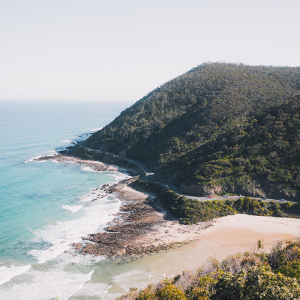
Read our guide to find out why road trips are the best way to really get to know Australia.
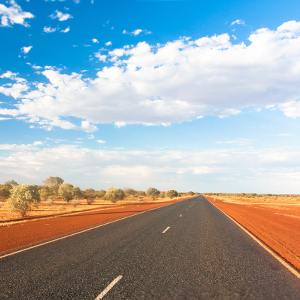
The massive state of Western Australia is best accessed with a car – and then by snorkel.
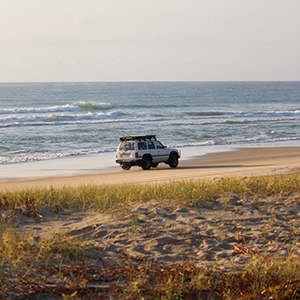
It would take something pretty special to induce many travelers to leave Sydney – like this.
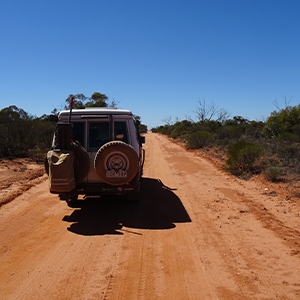
Roos on the road, pies in the servos and a playlist on the stereo – here’s all you need to know for your great Australian road trip.