Responsible Indigenous peoples vacations

Today for you, tomorrow for me![]()

‘Ayni’ is a form of reciprocity in Andean Indigenous communities. Loosely speaking it means ‘today for you, tomorrow for me’. That concept of reciprocity is at the heart of our responsible Indigenous peoples’ vacations. They’re about finding a happy balance through communication and respect; the host community has greater autonomy over how and when it engages with tourism, leading to a more authentic and ultimately satisfying experience for the visitor.
Tourism in Indigenous communities is too often exploitative, reinforcing stereotypes that dilute authentic cultural practises. Visitors are treated to dance and music performances that feel staged, or nudged towards purchasing low quality handicrafts, while hosts must interrupt their daily lives to accommodate the schedule of tour groups, which can impact on work, education or childcare. They may feel obliged to dress up in clothing or take part in activities that they would not normally, because that is what visitors expect to see.
Further, Indigenous peoples’ traditional and successful role in protecting the land they live on is frequently unacknowledged or, worse, rejected in favour of conservation schemes that disenfranchise them and sometimes even evict them from their homes.
Below, we discuss some of the most pressing issues around Indigenous peoples’ tourism, and how you as a traveler can ensure that your visit is a responsible one.
Tourism in Indigenous communities is too often exploitative, reinforcing stereotypes that dilute authentic cultural practises. Visitors are treated to dance and music performances that feel staged, or nudged towards purchasing low quality handicrafts, while hosts must interrupt their daily lives to accommodate the schedule of tour groups, which can impact on work, education or childcare. They may feel obliged to dress up in clothing or take part in activities that they would not normally, because that is what visitors expect to see.
Further, Indigenous peoples’ traditional and successful role in protecting the land they live on is frequently unacknowledged or, worse, rejected in favour of conservation schemes that disenfranchise them and sometimes even evict them from their homes.
Below, we discuss some of the most pressing issues around Indigenous peoples’ tourism, and how you as a traveler can ensure that your visit is a responsible one.
People & culture
Breaking the pattern
There are around 480 million Indigenous people in the world, across some 90 countries. Their communities tend to be disproportionately affected by extreme poverty and shorter life expectancies, while a lack of employment opportunities often leads to jobs with low pay, skills and responsibility. These problems reinforce a postcolonial pattern of discrimination, marginalisation and prejudice towards Indigenous peoples by some governments and businesses.
Respectful engagement leads to trust which can result in some unique experiences, from attending weddings or funerals, to behind-the-scenes access at festivals.![]()
Responsible tourism is a way to break this pattern. Communities can choose how to invest the income generated, whether that’s to pay for education and healthcare, or to expand tourism projects, while enjoying better paid jobs in such fields as guiding, management and providing accommodation, meals and workshops.
And, by introducing visitors to museums, heritage sites, guided tours and cultural experiences such as cookery or handicrafts workshops, responsible Indigenous peoples’ tourism can help to counter pervasive stereotypes. It enables communities to take control of how they present themselves and potentially revitalise traditional ways of life, as well as languages, that may be at risk of dying out. On our vacations to India’s Gujarat region for instance, you can visit a Rabari community and meet one of the few weavers still making the tang, an embroidered camel belt. The artform is centuries old, but now on the cusp of disappearing. Tours such as this help to keep it going.
‘Indigenous people’ do not form a single, homogeneous entity. Every community will have its own language, culture and beliefs, as well as its own political circumstances. Responsible tourism will acknowledge that each community has its own context and needs, while engaging with and respecting their preferences, so that they have agency over how and when they engage with visitors. Tour operators should arrange visits ahead of time with community leaders, so that they know when they will be welcome and when not. Respectful engagement leads to trust which can result in some unique experiences, from attending weddings or funerals, to behind-the-scenes access at festivals.
And, by introducing visitors to museums, heritage sites, guided tours and cultural experiences such as cookery or handicrafts workshops, responsible Indigenous peoples’ tourism can help to counter pervasive stereotypes. It enables communities to take control of how they present themselves and potentially revitalise traditional ways of life, as well as languages, that may be at risk of dying out. On our vacations to India’s Gujarat region for instance, you can visit a Rabari community and meet one of the few weavers still making the tang, an embroidered camel belt. The artform is centuries old, but now on the cusp of disappearing. Tours such as this help to keep it going.
‘Indigenous people’ do not form a single, homogeneous entity. Every community will have its own language, culture and beliefs, as well as its own political circumstances. Responsible tourism will acknowledge that each community has its own context and needs, while engaging with and respecting their preferences, so that they have agency over how and when they engage with visitors. Tour operators should arrange visits ahead of time with community leaders, so that they know when they will be welcome and when not. Respectful engagement leads to trust which can result in some unique experiences, from attending weddings or funerals, to behind-the-scenes access at festivals.
Decolonising language and imagery, making sure you respectfully communicate, is hugely important and must be done with the community’s input and consent.![]()
Communication of expectations
So much of responsible tourism depends on effective communication – between hosts and visitors, between tour operators and their travelers, between NGOs looking for the most effective ways to give people the support they need and tourist boards needing to successfully market an experience, a destination or a community.
Integral to good communication is the language used in tourism marketing such as travel guides, brochures or posters. “Decolonising language is hugely important,” says Dr. Anke Winchenbach, a senior lecturer and researcher in tourism from Surrey Business School who has co-produced a toolkit for maximising the benefits of Indigenous people from tourism. “Tourism sometimes commodifies Indigenous communities through the way it talks about them. But the way language is used needs to be co-developed, with a community’s consent as it can vary between different places and contexts.”
Respectful and collaborative engagement is vital not only in the language we use in tourism, but also the imagery. Not all Indigenous people wish to be portrayed in traditional forms of dress, like loincloths, feathers and paint, if they feel that it stereotypes them. Not all Inuit people know how to fish through ice, and not all Maasai people wear the red shuka robe. Our expectations of authenticity can actually lead to the opposite, when Indigenous people feel obliged to dress or act in a certain way because that is the image that has been ‘sold’ and that visitors expect to see.
At its worst, unregulated or poorly regulated tourism represents almost an existential threat to some Indigenous traditions. In Oaxaca, Mexico, many local people feel that the Day of the Dead celebrations, when the souls of those who have passed are honoured, are becoming superficial due to tourism. The event has taken on a hedonistic atmosphere, and there is a risk that its spiritual roots will be lost. Intimate cemetery rituals become inundated by curious tourists, not all of whom act respectfully.
Our Indigenous peoples’ vacations visit and engage respectfully on each community’s terms. Before bringing visitors, we talk to the host community, understand what they hope to gain from tourism, and what they want to share, whether that be a meal, a bed for the night or just a short musical performance. This is also an opportunity to set boundaries. For instance, many Indigenous communities are completely ‘dry’ – no alcohol is allowed to be sold or consumed.
On our volunteering vacations in India’s Nilgiri Hills, tasks are created to meet needs that the Kurumba, Kattunaickan and Paniya communities in the area have themselves identified, as Phillida Purvis, co-founder of our partner The Plenti Project, explains. “People come and volunteer their skills and experience [but] we’re not there painting schools, we’re trying to give value added support. We don’t go into the villages except very occasionally when it’s relevant to the project because it’s not appropriate that we do that... It is their project and we’re just trying to facilitate things they couldn’t readily do themselves – connect to the outside world, fundraise, promote their projects externally.”
Integral to good communication is the language used in tourism marketing such as travel guides, brochures or posters. “Decolonising language is hugely important,” says Dr. Anke Winchenbach, a senior lecturer and researcher in tourism from Surrey Business School who has co-produced a toolkit for maximising the benefits of Indigenous people from tourism. “Tourism sometimes commodifies Indigenous communities through the way it talks about them. But the way language is used needs to be co-developed, with a community’s consent as it can vary between different places and contexts.”
Respectful and collaborative engagement is vital not only in the language we use in tourism, but also the imagery. Not all Indigenous people wish to be portrayed in traditional forms of dress, like loincloths, feathers and paint, if they feel that it stereotypes them. Not all Inuit people know how to fish through ice, and not all Maasai people wear the red shuka robe. Our expectations of authenticity can actually lead to the opposite, when Indigenous people feel obliged to dress or act in a certain way because that is the image that has been ‘sold’ and that visitors expect to see.
At its worst, unregulated or poorly regulated tourism represents almost an existential threat to some Indigenous traditions. In Oaxaca, Mexico, many local people feel that the Day of the Dead celebrations, when the souls of those who have passed are honoured, are becoming superficial due to tourism. The event has taken on a hedonistic atmosphere, and there is a risk that its spiritual roots will be lost. Intimate cemetery rituals become inundated by curious tourists, not all of whom act respectfully.
Our Indigenous peoples’ vacations visit and engage respectfully on each community’s terms. Before bringing visitors, we talk to the host community, understand what they hope to gain from tourism, and what they want to share, whether that be a meal, a bed for the night or just a short musical performance. This is also an opportunity to set boundaries. For instance, many Indigenous communities are completely ‘dry’ – no alcohol is allowed to be sold or consumed.
On our volunteering vacations in India’s Nilgiri Hills, tasks are created to meet needs that the Kurumba, Kattunaickan and Paniya communities in the area have themselves identified, as Phillida Purvis, co-founder of our partner The Plenti Project, explains. “People come and volunteer their skills and experience [but] we’re not there painting schools, we’re trying to give value added support. We don’t go into the villages except very occasionally when it’s relevant to the project because it’s not appropriate that we do that... It is their project and we’re just trying to facilitate things they couldn’t readily do themselves – connect to the outside world, fundraise, promote their projects externally.”
Helping traditional ways of life survive & thrive
Tourism can help sustain cultural practises that may be at risk of dying out. On our vacations in India you can take part in block printing classes in Gujarat, spending a day with women from a low caste, marginalised community to learn how they are able to support their families through selling their handicrafts to tourists. In the Andes you can join a Quechua-led weaving workshop, and on the outskirts of Marrakech in Morocco you can visit rug-making cooperatives to learn the fascinating intricacies and meanings of ancestral patterns. You’ll prize your ‘handmade’ souvenirs even more when you met the people who created them or had a hand in making them yourself.
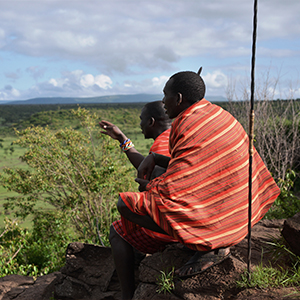
Steven Ronkoi Nkumum is a guide for our partner Basecamp Saruni, which runs safaris on private conservancies in conjunction with the land’s Maasai owners. “Tourism is one of the main social and economic activities for local people. [But] we’re still keeping our culture and our livelihoods and our lifestyle. We are pastoralists, so just because we signed the land into conservation doesn’t mean we are doing away with our cows from our land.”
While there is plenty of interest in visiting Indigenous communities, this often results in well-worn ‘tourist circuits’ where some places see many visitors – perhaps more than they can sustainably handle – while others go entirely overlooked, simply because they’re not quite in the right location. “Our goal is to get people off the circuit – just a little bit off it – to get a bit of money away from where tourism usually goes. Just a lunch if they want, or something longer that lets them see a Peru that’s not quite as developed as a tourism product,” says Amanda Zenick of our partner Ayni Peru, of their cultural homestays which can be combined with the Inca Trail.
Steven Ronkoi Nkumum is a guide for our partner Basecamp Saruni, which runs safaris on private conservancies in conjunction with the land’s Maasai owners. “Tourism is one of the main social and economic activities for local people. [But] we’re still keeping our culture and our livelihoods and our lifestyle. We are pastoralists, so just because we signed the land into conservation doesn’t mean we are doing away with our cows from our land.”
While there is plenty of interest in visiting Indigenous communities, this often results in well-worn ‘tourist circuits’ where some places see many visitors – perhaps more than they can sustainably handle – while others go entirely overlooked, simply because they’re not quite in the right location. “Our goal is to get people off the circuit – just a little bit off it – to get a bit of money away from where tourism usually goes. Just a lunch if they want, or something longer that lets them see a Peru that’s not quite as developed as a tourism product,” says Amanda Zenick of our partner Ayni Peru, of their cultural homestays which can be combined with the Inca Trail.
It’s beautiful when tourism helps Indigenous communities take pride and ownership over their culture, even revive it, but it has to be driven by the community. It can't be imposed by tour operators or anyone else.![]()
In some Indigenous communities there are strict hierarchies, such as those defining gender roles. Tourism can empower women and other marginalised groups by giving them a role in creating income. It may not bring in a fortune, or true equality, but it can give people a greater standing and more influence than they enjoyed previously.
But if a culture is kept frozen because tourism expects it to look a certain way, then it loses its authenticity. Communities and cultures must be able to evolve on their own terms, and tourists should visit on that basis. A lot of Indigenous communities are very keen to modernise – many younger people especially choose not to take on traditional occupations like farming or fishing when they can earn more in other roles.
“It’s beautiful when tourism helps Indigenous communities take pride and ownership over their culture, even revive it, but it has to be driven by the community,” says Anke. “It can't be imposed by tour operators or anyone else.”
What you can do
Our Indigenous peoples’ vacations are organised with the input and consent of the community, so that they have power over the direction and form they would prefer tourism to take. They also avoid interrupting everyday life. If you arrive during harvest season, no-one will drop tools to welcome you in – although you might be invited to pick one up and pitch in with the work.
The value of visiting an Indigenous community with a local guide cannot be overstated. And if they’re actually from that community themselves, their presence is invaluable. As well as making introductions, translating conversation and explaining the nuances of what you’re seeing, they can reliably advise on everything from appropriate dress to cultural norms. Don’t base decisions for your tour on price. Very cheap tours are an indication that someone isn’t getting a fair deal, and more often than not it will be the host community.
Stay longer, if you can. Many Indigenous communities offer the option for tourists to sleep overnight in homestays. Often these will be run by the community as a whole to ensure everyone benefits. The longer you stay, the more you learn and the greater the financial benefit to local people. Buy locally made souvenirs from as close to the source as you can, too, so that you can be sure the producer will receive as much of the profit as possible.
Try to avoid preconceptions. And remember that if the people you are visiting wear shorts and t-shirts, use mobile phones or drive cars, that has no bearing on the authenticity of their culture.
But if a culture is kept frozen because tourism expects it to look a certain way, then it loses its authenticity. Communities and cultures must be able to evolve on their own terms, and tourists should visit on that basis. A lot of Indigenous communities are very keen to modernise – many younger people especially choose not to take on traditional occupations like farming or fishing when they can earn more in other roles.
“It’s beautiful when tourism helps Indigenous communities take pride and ownership over their culture, even revive it, but it has to be driven by the community,” says Anke. “It can't be imposed by tour operators or anyone else.”
What you can do
Our Indigenous peoples’ vacations are organised with the input and consent of the community, so that they have power over the direction and form they would prefer tourism to take. They also avoid interrupting everyday life. If you arrive during harvest season, no-one will drop tools to welcome you in – although you might be invited to pick one up and pitch in with the work.
The value of visiting an Indigenous community with a local guide cannot be overstated. And if they’re actually from that community themselves, their presence is invaluable. As well as making introductions, translating conversation and explaining the nuances of what you’re seeing, they can reliably advise on everything from appropriate dress to cultural norms. Don’t base decisions for your tour on price. Very cheap tours are an indication that someone isn’t getting a fair deal, and more often than not it will be the host community.
Stay longer, if you can. Many Indigenous communities offer the option for tourists to sleep overnight in homestays. Often these will be run by the community as a whole to ensure everyone benefits. The longer you stay, the more you learn and the greater the financial benefit to local people. Buy locally made souvenirs from as close to the source as you can, too, so that you can be sure the producer will receive as much of the profit as possible.
Try to avoid preconceptions. And remember that if the people you are visiting wear shorts and t-shirts, use mobile phones or drive cars, that has no bearing on the authenticity of their culture.
Environment & Wildlife
Community-led conservation
Indigenous peoples own or manage between a quarter and a fifth of the world’s land surface on every continent bar Antarctica. These lands either contain or overlap with nearly half of all the world’s protected areas, and are home to around 80 percent of Earth’s remaining biodiversity. Furthermore, at least 25 percent of the carbon stored in all of the planet’s tropical and subtropical forests is on land stewarded by Indigenous people. Evidence is mounting that if the world is to meet its conservation targets, then recognising and protecting the rights of Indigenous people to their land is vital.
Protecting Indigenous peoples’ rights to live on, access and manage their land is essential not only to their dignity and survival, but humanity’s ability to cope with a warming climate.![]()
For some Indigenous groups, their connection with the land is not only physical and historical, but also spiritual. Many communities have a store of knowledge, refined over centuries, of how to respectfully coexist with nature and use natural resources sustainably. They may draw their housing, food and income from the land, but also their language, their stories and beliefs and their religions.
Reciprocity should underpin the way these lands are managed. In an ideal world, all inhabitants would take what they need and nothing more, and give back to nature through mechanisms like planting trees, controlled burning to improve soil health and raising pollinators such as bees. This ideal is desperately out of reach for most of the planet, but there are some Indigenous groups who have managed to maintain this balance. As an example, in Ixcan, Guatemala, rural families supported by the EcoLogic Development Fund utilise ancient knowledge of pollinating bee behaviours to create more resilient ecosystems while also supplementing their income.
It is widely recognised that Indigenous-owned or -managed land tends to have higher levels of biodiversity and stronger ecosystems, and that a lot of useful lessons can be drawn from them. Indigenous fire management techniques in Australia, for instance, are considered among the most effective in the world, but were routinely dismissed until recently.
Reciprocity should underpin the way these lands are managed. In an ideal world, all inhabitants would take what they need and nothing more, and give back to nature through mechanisms like planting trees, controlled burning to improve soil health and raising pollinators such as bees. This ideal is desperately out of reach for most of the planet, but there are some Indigenous groups who have managed to maintain this balance. As an example, in Ixcan, Guatemala, rural families supported by the EcoLogic Development Fund utilise ancient knowledge of pollinating bee behaviours to create more resilient ecosystems while also supplementing their income.
It is widely recognised that Indigenous-owned or -managed land tends to have higher levels of biodiversity and stronger ecosystems, and that a lot of useful lessons can be drawn from them. Indigenous fire management techniques in Australia, for instance, are considered among the most effective in the world, but were routinely dismissed until recently.
Communities vs tourism
There is a stereotype that Indigenous people always live in harmony with nature, and there is another, opposing stereotype that humans are always a threat to nature. Both are employed by conservationists at times to suit different purposes.
Indigenous communities are frequently marginalised, or threatened, by modern conservation practises and development schemes. In some places they are even evicted from their land to benefit tourism interests. San people in Botswana, for instance, have seen their ancestral hunting grounds in what is now the Central Kalahari Game Reserve closed off to them, and been punished for ‘poaching’ there.
One solution to this has been the creation of ICCA land – ICCA is an abbreviation for ‘territories or areas that are governed, managed and conserved by Indigenous people’. These places range from the biodiverse forest of Mendha-Lakha in India, where the Gond tribe have struggled toward self-rule, to Coron Island in the Philippines, where the Tagbanwa people have instituted strict regulations – only young local men are allowed to harvest eggs from birds’ nests, for example, to keep hatchling numbers at sustainable levels.
Vacations that are run in collaboration with Indigenous peoples can therefore be an important step in protecting both biodiversity and cultural practises. Many of our Indigenous Peoples trips support grassroots community conservation initiatives, for example in the cloud forest above Mae Sot in western Thailand you can spend a week with a Karen tribe, with families taking turns to provide accommodation. Your days are spent learning how to weave fabrics and baskets, perhaps helping out in the fields, or following wild elephants in the forest. These vacations help mahouts earn enough to keep their elephants in their natural habitat – otherwise the animals may end up in sanctuaries.
In Bolivia’s Madidi National Park, you can stay in an ecolodge owned and run by the Indigenous people of San Jose de Uchupiamonas. Jasmin Caballero of our partner America Tours Bolivia helped set it up. “When they were designing the park, this community ended up [inside it]. What were they going to do? They were exporters of the pelts of giant otters and they were loggers – but inside they couldn’t be doing that kind of activity. So that’s when the idea became that they should do tourism.” The Bolivian government allows gold miners into the park, a destructive practise rife with illegality that threatens the park’s very survival. “Gold has so much value for governments they destroy not only nature but communities. Ecotourism is our only option to fight against the miners,” says Jasmin.
You can also stay at a pioneering ecolodge in Ecuador’s Kapawi Amazon rainforest. Here you can wander trails with local guides from Achuar indigenous communities, learning about medicinal plants, how to hunt with blowpipes and about the spirits of the forest. Tourism here is helping to put value into preserving traditional culture, and given people other options to cattle ranching.
Indigenous communities are frequently marginalised, or threatened, by modern conservation practises and development schemes. In some places they are even evicted from their land to benefit tourism interests. San people in Botswana, for instance, have seen their ancestral hunting grounds in what is now the Central Kalahari Game Reserve closed off to them, and been punished for ‘poaching’ there.
One solution to this has been the creation of ICCA land – ICCA is an abbreviation for ‘territories or areas that are governed, managed and conserved by Indigenous people’. These places range from the biodiverse forest of Mendha-Lakha in India, where the Gond tribe have struggled toward self-rule, to Coron Island in the Philippines, where the Tagbanwa people have instituted strict regulations – only young local men are allowed to harvest eggs from birds’ nests, for example, to keep hatchling numbers at sustainable levels.
Vacations that are run in collaboration with Indigenous peoples can therefore be an important step in protecting both biodiversity and cultural practises. Many of our Indigenous Peoples trips support grassroots community conservation initiatives, for example in the cloud forest above Mae Sot in western Thailand you can spend a week with a Karen tribe, with families taking turns to provide accommodation. Your days are spent learning how to weave fabrics and baskets, perhaps helping out in the fields, or following wild elephants in the forest. These vacations help mahouts earn enough to keep their elephants in their natural habitat – otherwise the animals may end up in sanctuaries.
In Bolivia’s Madidi National Park, you can stay in an ecolodge owned and run by the Indigenous people of San Jose de Uchupiamonas. Jasmin Caballero of our partner America Tours Bolivia helped set it up. “When they were designing the park, this community ended up [inside it]. What were they going to do? They were exporters of the pelts of giant otters and they were loggers – but inside they couldn’t be doing that kind of activity. So that’s when the idea became that they should do tourism.” The Bolivian government allows gold miners into the park, a destructive practise rife with illegality that threatens the park’s very survival. “Gold has so much value for governments they destroy not only nature but communities. Ecotourism is our only option to fight against the miners,” says Jasmin.
You can also stay at a pioneering ecolodge in Ecuador’s Kapawi Amazon rainforest. Here you can wander trails with local guides from Achuar indigenous communities, learning about medicinal plants, how to hunt with blowpipes and about the spirits of the forest. Tourism here is helping to put value into preserving traditional culture, and given people other options to cattle ranching.
Defending the defenders
Despite the evidence that in many cases they are the best-qualified to look after the land they have occupied for generations, and that their knowledge can be a vital part of the fight against climate change and biodiversity loss, Indigenous peoples’ land rights are in jeopardy around the world.
The threats ranged against them include the logging, mining and agricultural industries which cause massive deforestation, the land grabbing often done illegally; inappropriate development (a four-lane highway through the Brazilian rainforest to carry traffic for a climate summit anyone?); war and poaching. Threats can also come from within, such as depopulation – communities can be hollowed out as younger people reject traditional ways of life for forms of employment that pay more but are available only in urban areas, and population growth, putting unsustainable pressure on limited resources.
Sadly, those who would stand up to these threats are often face with intimidation, violence and even murder. And the culprits rarely face punishment, even serious investigation. There is a lot more money in tearing down trees than there is in protecting them, and some of that money has a funny habit of finding its way to politicians and police.
Sometimes it’s even the ‘good guys’ at fault. In some countries the conservation industry has become almost militarised – in part due to the serious threat of organised, well-funded poachers. There have been reports of Indigenous people being persecuted, evicted from their lands, beaten, even killed, as their ways of life come into conflict with the objectives of large conservation organisations. This kind of top-down ‘colonial conservation’ sees Indigenous owners of the land as a problem rather than part of the solution, and doesn’t recognise the value of Indigenous culture to tourism, either.
What you can do
Read our article on why we need to defend the defenders. It offers advice for what we, as individuals, can do, such as supporting the work of organisations like Global Witness, and speaking out to governments, tourist boards and tour operators if you witness an injustice while traveling.
In countries such as Australia and Canada, many tour operators now acknowledge the traditional owners of the land they are passing through as an act of reconciliation and recognition of their contribution to the nation’s overall identity. Part of this work is incorporating Indigenous stories into tours, with guides from Indigenous communities providing insights into the history, culture and beliefs of their people. Look for tours that purposefully include these stories so that you gain a more rounded impression of the destination you’re visiting.
Appreciate that what may look like just a hill, a rock or a waterfall to you may have cultural or spiritual significance to another, so always tread with care wherever you go.
Reciprocity is fundamental to responsible travel. On vacations such as ours that support and empower Indigenous communities, whether you are learning handicrafts in a tiny village in India, or taking a walking safari with a San tribesperson, the ethos is always the same: a trip that fosters deeper connections with local people will always prove more satisfying and memorable.
The threats ranged against them include the logging, mining and agricultural industries which cause massive deforestation, the land grabbing often done illegally; inappropriate development (a four-lane highway through the Brazilian rainforest to carry traffic for a climate summit anyone?); war and poaching. Threats can also come from within, such as depopulation – communities can be hollowed out as younger people reject traditional ways of life for forms of employment that pay more but are available only in urban areas, and population growth, putting unsustainable pressure on limited resources.
Sadly, those who would stand up to these threats are often face with intimidation, violence and even murder. And the culprits rarely face punishment, even serious investigation. There is a lot more money in tearing down trees than there is in protecting them, and some of that money has a funny habit of finding its way to politicians and police.
Sometimes it’s even the ‘good guys’ at fault. In some countries the conservation industry has become almost militarised – in part due to the serious threat of organised, well-funded poachers. There have been reports of Indigenous people being persecuted, evicted from their lands, beaten, even killed, as their ways of life come into conflict with the objectives of large conservation organisations. This kind of top-down ‘colonial conservation’ sees Indigenous owners of the land as a problem rather than part of the solution, and doesn’t recognise the value of Indigenous culture to tourism, either.
What you can do
Read our article on why we need to defend the defenders. It offers advice for what we, as individuals, can do, such as supporting the work of organisations like Global Witness, and speaking out to governments, tourist boards and tour operators if you witness an injustice while traveling.
In countries such as Australia and Canada, many tour operators now acknowledge the traditional owners of the land they are passing through as an act of reconciliation and recognition of their contribution to the nation’s overall identity. Part of this work is incorporating Indigenous stories into tours, with guides from Indigenous communities providing insights into the history, culture and beliefs of their people. Look for tours that purposefully include these stories so that you gain a more rounded impression of the destination you’re visiting.
Appreciate that what may look like just a hill, a rock or a waterfall to you may have cultural or spiritual significance to another, so always tread with care wherever you go.
Reciprocity is fundamental to responsible travel. On vacations such as ours that support and empower Indigenous communities, whether you are learning handicrafts in a tiny village in India, or taking a walking safari with a San tribesperson, the ethos is always the same: a trip that fosters deeper connections with local people will always prove more satisfying and memorable.
More Indigenous Peoples articles
A celebration of responsible Indigenous tourism – trips, tips and beyond.