Visiting Israel and Jordan together
The Jordan river runs between the West Bank and Jordan, giving both their names. It ends in the Dead Sea – a sparkling saltwater lake, from which Israel’s high Judean plateau and Jordan’s hills can be seen on either side.
Can’t decide between Jordan’s desert archaeology and Israel’s significant cities? Make like the River Jordan and visit both on together on an Israel and Jordan tour. Here’s what to expect from both countries.
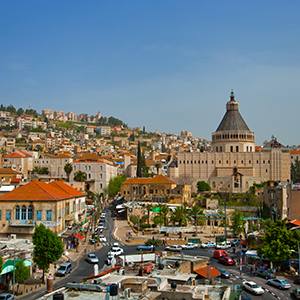
In Israel and the Palestinian territories, the eyes of the world are always watching. This area is of vital spiritual importance to three major world religions: Judaism, Islam and Christianity. People often carry a religious text to supplement their guidebook, as they navigate Bethlehem, Nazareth, Jerusalem and Galilee.
Can’t decide between Jordan’s desert archaeology and Israel’s significant cities? Make like the River Jordan and visit both on together on an Israel and Jordan tour. Here’s what to expect from both countries.
In Israel and the Palestinian territories, the eyes of the world are always watching. This area is of vital spiritual importance to three major world religions: Judaism, Islam and Christianity. People often carry a religious text to supplement their guidebook, as they navigate Bethlehem, Nazareth, Jerusalem and Galilee.

“Holy Lands, desert lands, Roman towns, Bedouin tribes – the best part of combining Israel and Jordan are the number of millennia and faith-spanning leaps you’ll make along the way.”![]()

And then there’s Jordan – a quiet country surrounded by louder, more newsworthy neighbours, where Bedouin tribes live in desert domesticity and archaeological sites are laid out as generously as market stalls displaying their wares. UNESCO-listed Petra and Wadi Rum top most travelers’ bucket lists here.
The Dead Sea is a natural place to press ‘pause’ between the two countries. You can see Israel from Jordan and vice versa across its narrow, salty sliver. After desert trekking and wadi hiking, slathering on some mineral-rich mud or bobbing buoyantly in the water should eliminate any residual stress.
The Dead Sea is a natural place to press ‘pause’ between the two countries. You can see Israel from Jordan and vice versa across its narrow, salty sliver. After desert trekking and wadi hiking, slathering on some mineral-rich mud or bobbing buoyantly in the water should eliminate any residual stress.

Why combine Israel and Jordan?
Shared histories
Israel and Jordan share more than a border. Both once fell under the Assyrian empire over 2,500 years ago, and both formed part of the Roman Empire in the 1st century AD. You can see well preserved Roman ruins across both countries today, from Jerash in Jordan to Caesarea on Israel’s Mediterranean coast. Both feature heavily in the Bible, the Torah and the Qua’ran. Mount Nebo in Jordan is said to be the place where Moses was buried, whilst the Western Wall in Jerusalem is the last remnant of the Second Jewish Temple.
Sharing platters
Bored of hummus ever since four separate people brought it to your last group picnic? In both Amman and Jerusalem you’ll find a new appreciation for this chickpea classic, whether it’s served rough and ready with half a raw onion and some bread in Israel’s hummus bars or as the base of a delicious Jordanian breakfast with fuul (creamy mashed fava beans) and a stack of flatbread.
You’ll find hummus, falafel, mint tea and pistachio pastries in markets in both countries. The differences are perhaps more interesting than the obvious similarities. Jordan’s national dish is mansaf, which shows the country’s Bedouin heritage. It’s a dish of minced lamb, spices, yoghurt and onion served with Bedouin bread and rice in a massive sharing platter. Israel has a lot of traditional Jewish dishes to bring to the table – the kind that have scored starring roles in Yottam Ottolenghi’s bougie cookery books in the UK, but have humble origins in little Jewish kitchens.
You’ll find hummus, falafel, mint tea and pistachio pastries in markets in both countries. The differences are perhaps more interesting than the obvious similarities. Jordan’s national dish is mansaf, which shows the country’s Bedouin heritage. It’s a dish of minced lamb, spices, yoghurt and onion served with Bedouin bread and rice in a massive sharing platter. Israel has a lot of traditional Jewish dishes to bring to the table – the kind that have scored starring roles in Yottam Ottolenghi’s bougie cookery books in the UK, but have humble origins in little Jewish kitchens.
Jesus’ life was lived out across the two countries, from his birthplace to his burial site. You could say that Israel and Jordan make up the Middle East’s Bible Belt.![]()
Culture, cities and people
A visit to Israel and Jordan is as much about the people as it is about history, or archaeology. You’ll be welcomed into people’s homes on tours of Israel and Jordan. You could wind up staying in a kibbutz (a collective community way of living, unique to Israel) on the West Bank, dining in the community hall. You could make your bed in a communal goat hair tent with a Bedouin tribe in Wadi Rum. Naomi Jackson is from our expert partner, Explore Worldwide. "Both countries are fairly liberal and open-minded," she says, "But as with all Middle Eastern countries it’s essential to have respect of the mix of culture and religions." She recommends taking layers that cover your shoulders and knees at a minimum, that you can don when required.
Though most cultural tours of Israel and Jordan miss out Tel Aviv in the interest of time, the beachside capital has much more in common with Amman in Jordan, than Jerusalem does. Tel Aviv is relaxed and foodie – an attitude that fits well with Amman’s own cafe culture and modern infrastructure. If you’re on a tailor made tour, you could request time to explore it.
Though most cultural tours of Israel and Jordan miss out Tel Aviv in the interest of time, the beachside capital has much more in common with Amman in Jordan, than Jerusalem does. Tel Aviv is relaxed and foodie – an attitude that fits well with Amman’s own cafe culture and modern infrastructure. If you’re on a tailor made tour, you could request time to explore it.
Choosing sides
Israel is a more difficult country to visit than Jordan, because in doing so, you could end up entering into a complicated political argument on your return. Even when you’re there, Israel isn’t always an easy visit: feeling a prickle of unease every time you see an armed soldier, and dealing with the crowds of pilgrims in the labyrinthine streets of Old Jerusalem can be exhausting for the average traveler. Jordan makes a pleasant contrast: it’s one of the safest, most peaceful places to visit in the world – let alone the Middle East.
It’s hard not to have an opinion in this polarising part of the world; it comes with the territory. Aside from your guides, it might be best to take everything you hear with a Dead Sea-level pinch of salt.
It’s hard not to have an opinion in this polarising part of the world; it comes with the territory. Aside from your guides, it might be best to take everything you hear with a Dead Sea-level pinch of salt.
Contact Us

Call us for a chat about our vacations. We are happy to discuss your vacation and help in any way we can. No bots, queues or awful hold music.

1-866-821-6866
Call toll free
Calling from outside the USA


Practicalities
Is it safe to visit Israel and Jordan?
Jordan is one of the safest countries in the Middle East. Go with a vacation company that employs local guides who are up to date with the latest travel advice. Crossing the border between Jordan and Israel is simple, though there may be some queues. You may see some army personnel in Israel, but definitely not everywhere. The Israeli Defence Force is particularly present in Jerusalem’s Old City and in Bethlehem."Although the countries are not friendly, they are civil," says Naomi, "so we’re fortunate enough to be able to travel safely across the land border crossings to take advantage of the time spent in the region and maximise on vacation time.”
Though you can visit Israel and Jordan together very happily, diplomatic relations between the two nations are complicated. The two countries entered into a peace treaty together in 1994, but not everyone is happy with it and some Jordanians are critical of Israel’s actions on the West Bank and in East Jerusalem. The result is that sometimes, Israelis can have difficulty crossing the Israel/Jordan border. Tourists will have no such problem. As you cross between Jordan, Israel and go over to the West Bank you will probably also swap guides, so that you’ll get a local guide for each area – and be able to listen to a range of viewpoints, too. Both small group and tailor made tours run to both countries, and both will employ local guides.
Crossing between Israel and Jordan is easy for most visitors. There are three crossing points between the two countries. The Allenby/King Hussein Bridge is closest to both Amman and Jerusalem. Wadi Araba Crossing/South Border is deep in the south, linking the Red Sea resorts of Aqaba (Jordan) and Eilat (Israel). Lastly, the Sheikh Hussein/Northern Border crossing is in the Galilee area. All border crossings might take a bit of time if there are queues and the Israeli border force can be particularly thorough.
In Israel you may want to politely ask for an entry stamp on a piece of paper, instead of on your passport. Sometimes, this gets done automatically anyway. Having an Israel passport stamp won’t affect your entry into Jordan, but it may affect your ability to enter a few other Muslim countries in the future.
In Israel you may want to politely ask for an entry stamp on a piece of paper, instead of on your passport. Sometimes, this gets done automatically anyway. Having an Israel passport stamp won’t affect your entry into Jordan, but it may affect your ability to enter a few other Muslim countries in the future.
How long do you need to see Israel and Jordan?
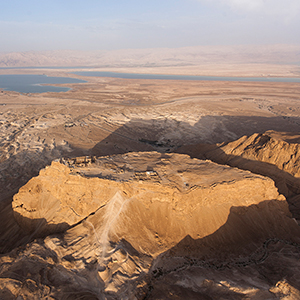
These two diminutive countries can be combined in a comfortable, if fast-paced two-week tour by road with no internal flights.A popular route between Jordan and Israel follows a ‘U’ shape – start in Amman, Jordan’s coffee-loving capital, dip south to skirt the Dead Sea, visit Petra and then reach into Wadi Rum, deep in the south of the country. Crossing the border between Jordan and Israel at Aqaba on the Red Sea, scoop back up to the Israel side of the Dead Sea, past Masada – before the land rises up to the Judean Mountain Plateau, through the Negev desert and towards Jerusalem.
If you’ve got less time than two weeks you can still see many of the key sights. An 11-day tour might start in Tel Aviv, visit Masada, Jerusalem and the Dead Sea, before crossing into Jordan to take in Jerash, Petra, and Mt. Nebo, from where Moses is said to have viewed the Promised Land.
Israel’s more varied landscape makes for a welcome break after Jordan’s relentless desert; over 90 percent of Jordan is super arid. Though the carved sandstone – both manmade and wind-whittled – at Wadi Rum and Petra make Jordan anything but monotonous, Israel’s northern climes, especially in spring, when wildflowers bloom around Lake Galilee, might come as a refreshing change.
You can visit Israel and Jordan at any time of year – you’re unlikely to encounter bad weather or particularly bitter temperatures. Small group tours tend to run in the popular spring and autumn seasons as by summer Jordan’s desert is getting very hot.
More Israel articles
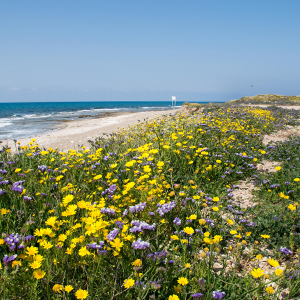
You'll feel a big difference in temperature when you drop down to the Dead Sea - climate in Israel depends where you are.
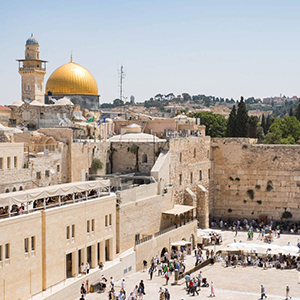
From lively Tel Aviv to ancient Jerusalem, from Nazareth to the Dead Sea, Israel is crossed with fantastic sights.
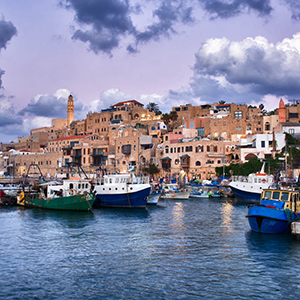
Read our three suggested itineraries, and find travel times across the country by train, by bus and on foot in our guide.
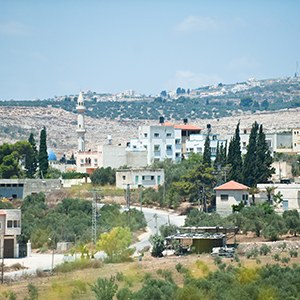
Find out how to negotiate the checkpoints, visit the West Bank and experience the sights on both sides of the border.

Floating in the Dead Sea? Magical! And staying in a kibbutz? Cool! Traveling in Israel with your kids is easy and fun.
Read advice from our friends in Israel, and from travelers just back from their trips so you can have the best vacation.
If you want to really travel right in Israel then here are the issues you should be aware of.