Norwegian fjords cruises

The boat edged closer, closer and – impossibly – closer, until we could feel icy water prickling our cheeks. Those of us on the wind-whipped deck, bundled in scarves and hats even in May, had to crane our necks to glimpse the top of the fjord, up to the silhouette of trees far above, haloed in chilly coronas.

The air temperature dropped; the light turned an eerie, dusky blue as sheer cliffs eclipsed the sun. This wasn’t a celestial spectacle, though – just the boat captain intent on putting us nose-to-nose with the waterfall that dashed down the side of the fjord.

The waterfall was the grand finale of a fjord cruise from Bergen, Norway’s second-largest city and “the heart of the fjords”.

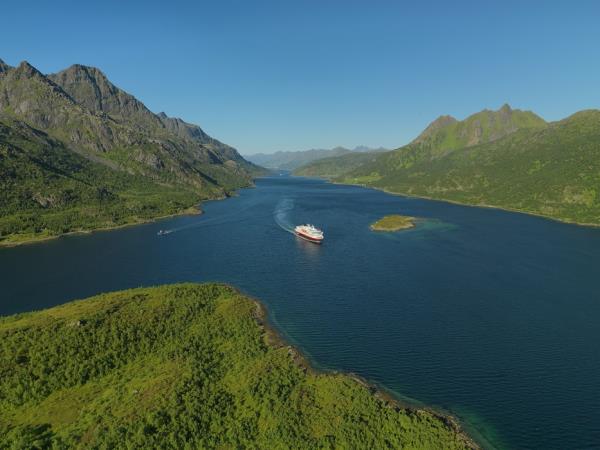
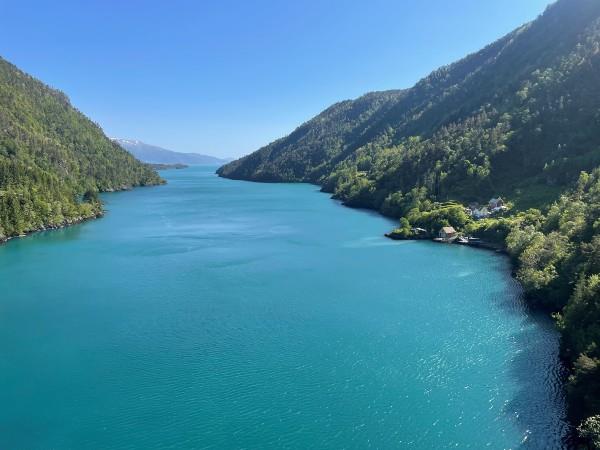
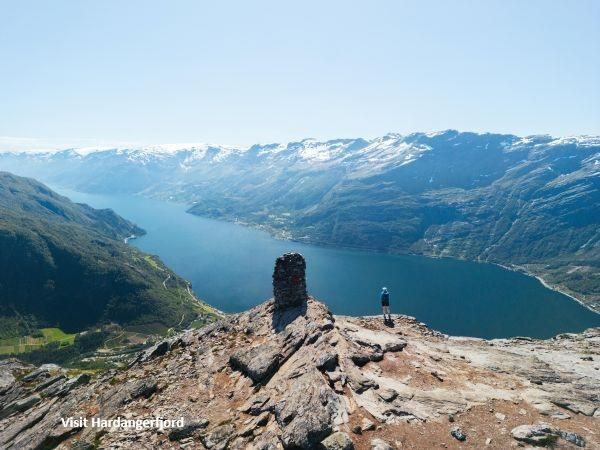
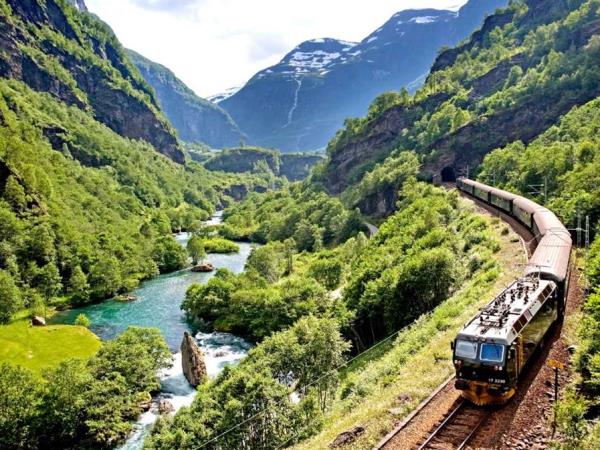
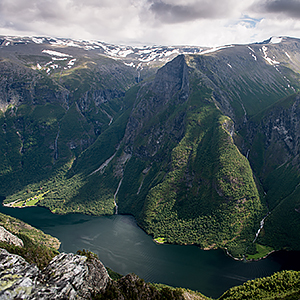
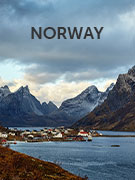
But it was far from the only wonder we’d seen en route. Our catamaran had smoothed past pine-coated cliffs and snow-speckled mountains perfectly reflected in the protected calm of the water. We’d ducked under kilometre-long bridges and passed bright red houses and churches with icicle steeples. At one point – my favorite point – the boat squeezed through an arm of the fjord so narrow that I found myself holding my breath.

We were completely surrounded by the white noise of gallons of meltwater rushing into the fjord.

Winter wonders: Northern Lights & starry nights

Responsible Travel’s Tessa O’Hara felt a similar sense of wonder while on a whale watching cruise, which sets out from northerly Tromso every winter.

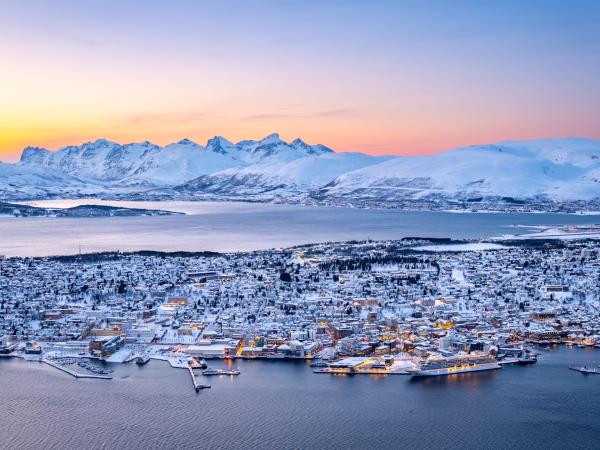
“The Arctic scenery is incredible,” says Tessa. “Everything is covered in snow. You’re there at a time of year when the sun is rising but never that high in the sky, so you get this peachy, golden glow reflecting off the snow... It’s a really soothing, romantic light.”

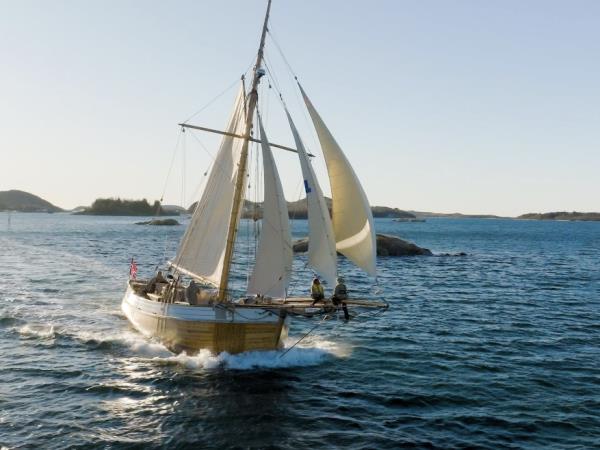
Tessa travelled aboard a liveaboard sailboat steered by a Norwegian captain and local crew. You can do a similar trip with our whale watching sailing vacation. The whole trip was shaped by their shared knowledge of the fjords – from knowing where the whales were most likely to pop up to seeking out the quiet corners unmarred by colossal cruise ships.

“A lot of the time you’re the only boat around,” says Tessa. “We would moor in remote bays in the fjords and be there ready in the morning at first light.”

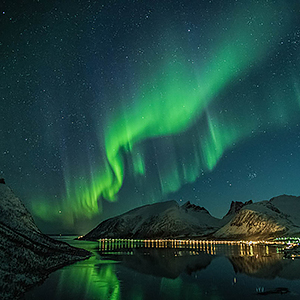
The sun starts setting around 2pm in the Arctic winter, so there’s plenty of time for Northern Lights hunting too. “We saw them pretty much every night,” says Tessa. “I was worried I was dreaming… but then I saw the photos and remembered that I wasn’t!”

Locally caught cuisine

And as for food? This is Norway, home to one of the biggest fishing industries in the world – so fish, of course. However, instead of going for seafood unearthed by damaging factory trawlers, the best cruise menus are filled with line-caught fish and invasive species.

“We were served Pacific salmon for dinner – locally caught,” says Tessa. Pink salmon is an invasive species in Norway. Introduced into the Atlantic in the 1960s, it’s made its home in the fjords and rivers, where their numbers have rocketed, endangering local species like sea trout and Arctic char.

“A lot of local people eat king crab for the same reason,” says Tessa. “It’s an invasive species that eventually took over – they kill the resident local species as they are so big.” Reindeer is another favorite, sourced from farms run by Indigenous Sámi herders in northern Norway.

Norway’s boat ban… & why small ships are key

Pacific salmon and king crab aren’t the only sea-dwellers that have taken over the Norwegian fjords in the last decade. Norway’s fjords are one of the most popular itineraries for huge cruise ships.

Over six million cruise passengers arrived in Norway’s ports in 2023 – a sharp rise in visitor numbers credited to the ever-increasing size of ships. Many Norwegian fjord cruises use vessels holding 1,000-plus passengers – ships so big that they keep voyagers at arm’s length from the scenery and overwhelm the little ports en route. And while the world’s biggest cruise liner, Icon of the Seas, hasn’t reached Norwegian shores yet, some boats arriving in Bergen and Tromso are filled with over 5,000 people.

Overtourism isn’t the only issue. Big cruise ships also leave a trail of pollution in the places they visit. On this count, the Norwegian government has given the cruise industry an ultimatum – only zero-emission ships will be permitted in the popular UNESCO-listed fjords of Geirangerfjord, Aurlandsfjord and Naeroyfjord from 2035. Cruise liners must either clean up their emissions or find alternative routes around Norway’s coast.

Norway’s public ferries, meanwhile, are nautical miles ahead with an almost all-electric fleet.

Small ships & sails

Our Norwegian fjords cruises are fathoms away from the towering cruise liners carving out the same circuit each year. These vessels are small enough to immerse you in the beauty of the fjord. They’re also run by people who care about the landscapes you cruise through, opting for sails, less polluting fuels and hybrid power.

Plus, cosier shared spaces like the galley and viewing deck make for a quickly formed camaraderie between shipmates from all over the world.

“In the evening, when it gets dark, you go below deck and warm up,” says Tessa. “People sit around looking at their photos, playing games, having a drink. The captain prepares the food... It’s a nice way to come down in the evenings. We played a lot of cards. And, when it gets dark enough – it takes a while – we’d take turns to go for a walk and look for the Northern Lights.”

The long arms of the fjord: cruises off the beaten track

The itinerary is also a changeable thing. Unlike the towering sides of the fjords, nothing on the route is written in stone, giving expert captains the ability to flex routes around the tides, weather and wildlife movements.

“The location tends to change slowly over time,” says Tessa. “Our crew used to run winter whale watching trips further down the western coast, as that was where the fish used to hang out. Now they are going further north; it’s possible that the fish are looking for cooler waters.”

The departure ports, however, usually remain the same. Most Norwegian fjords cruises start in Bergen, in the south-west, or in Tromso, north of the Arctic Circle. Together, they bracket close to 2,000km of fjord-cracked coastline.

Other expeditions, meanwhile, push off from Longyearbyen – the capital of the Svalbard archipelago. This outpost is the gateway to some of the most remote fjords in the world, best explored with our trips starring ice-strengthened research vessels or small, sleek sailing ships.

Contact Us

Responsible Travel, Travel Team

Call us for a chat about our vacations. We are happy to discuss your vacation and help in any way we can. No bots, queues or awful hold music.

Responsible Travel, Travel Team

For whales? Follow the fishing boats

Of course, they pop up wherever they like… you can see every nodule and whisker – all the close-up details – and you get a whiff of fishy breath.
Wildlife cruises often follow fishing boats – which whales have learned are the source of an easy meal.

“The fishing boats that we saw were little local fishing companies,” says Tessa. “You’d see them go out at dusk, set their nets at night, haul them in in the morning, and then leave. If you were there at sunrise, you’d see them fishing… If you’re there mid-haul, the whales are literally trying to jump into the nets to get the fish. They’re unbothered by the nets; the fishermen have to lower them to let the whales out… Sometimes, you’re surrounded by them as they’re feeding… I’ve never seen that many orcas or humpbacks.”

Our smaller ships keep you close to the water’s surface – making it easier to see the shadow of an orca or dolphin whip by below. They also respect wildlife viewing codes of conduct, staying a respectful distance away from the whales so the cetaceans can crack on with feeding.
“But, of course, they pop up wherever they like,” adds Tessa. “You’d be sat looking over some calm water. You’d see the water ripple and bubble and then these humpbacks would be breathing at the surface and you hear them exhale at the surface. It’s so special and you can see every nodule and whisker – all the close-up details – and you get a whiff of fishy breath.”

Our travelers also ask…

What is the best time of year to cruise the Norwegian fjords?

It all depends on what you want to see. November is great for glimpsing whales and the Northern Lights. Things start to defrost in April and May, when there can be plenty of sunshine and lots of spring wildflowers. Summer (May-August) is the time for clearer skies and warmer temperatures. However, it can always be chilly on the fjords, so it’s always a good idea to pack a wind-proof waterproof coat, hat, scarf, sunglasses and sun cream.

Fjords on the mainland between Bergen and Tromso rarely freeze completely. Ships can sail into almost every nook and cranny with ease all year around – as can orcas, humpbacks and fin whales, the second-largest animal on earth after the blue whale.

Fjords in the far north of Svalbard, meanwhile, thaw in the summer months between May and August. This is also when you can see humpback and minke whales, as well as polar bears, walrus and colossal bird colonies.

What side of the cruise ship is best for Norwegian fjords?

Both! There’s generally only one way in and out of a fjord, so you’ll catch great views whatever side of the boat you’re on. That said, the crew on small boats are responsive to the ever-changing surroundings; they’ll let you know if there’s a polar bear on the starboard side, so you won’t miss a thing.

Will I see the Northern Lights on a fjords cruise?

You’re very likely to seem them if cruising between November and February. The equinoxes (mid-March and mid-September) see increased solar activity, and therefore increasingly lively Northern Lights; on the flip side, shorter nights mean less time for searching them out.

However, the aurora borealis is never guaranteed. If there’s one thing that’s predictable about the Northern Lights, it’s that they’re unpredictable.

“On the boat, we were in really remote locations, in perfect conditions with no light pollution, millions of stars and the forecast for the Northern Lights was strong… and yet we barely saw any,” says Tessa. “But in Tromso, it was cloudy and there was light pollution, and yet we saw the Northern Lights loads – the opposite of how I expected it to be! After a while it became like, ah, there they are, the Northern Lights again.”

Is the sea rough in the Norwegian fjords?

In general, no. The open sea can be rough, but the fjords are more sheltered and small ships can duck into the calmest corners. That said, this is still the northern ocean, where weather conditions can change quickly, especially in the winter; there’s no harm in packing seasickness remedies just in case.
Photo credits: [Page banner: Tessa O] [Intro: Krisjanis Mezulis] [Winter wonders: Northern Lights & starry nights: Dan Russon] [Small ships & sails: Tessa O'Hara] [Follow the fishing boats: Tessa O'Hara] [Best time of year: Tessa O'Hara]