How to see the 2027 solar eclipse in Egypt

Monday 2 August 2027: a date seared like a heat stamp onto the decade. Why is it so important? Because it’s the date when the longest solar eclipse of the 21st century will take place. In Egypt, one of the destinations where our 2027 eclipse tours run, totality – the phenomenon when the sun will appear to be completely covered by the moon – lasts a record-breaking six minutes, 23 seconds.

At 13.02:09 in Luxor, the total eclipse begins. At 13.08:28, it ends. However, the full partial eclipse surrounding this six-minute marvel starts at 11.40, and will end at 14.26.

While the event is a matter of hours, the whole day of the eclipse will be one of intense excitement and build up. Plus, you’re in Egypt! Once you’ve seen the eclipse, you can focus on Egypt’s ‘regular’ world-class sites: the gold mask of Tutankhamun in the Grand Egyptian Museum is not to be outshone by the sun.

Our top trip

Egypt solar eclipse 2027 tour

Egypt solar eclipse 2027 tour

See the rare total solar eclipse in Egypt on an 11-day tour

From £5995 11 days ex flights
Small group travel:
2027: 29 Jul

Contact Us

Responsible Travel, Travel Team

Call us for a chat about our vacations. We are happy to discuss your vacation and help in any way we can. No bots, queues or awful hold music.

Responsible Travel, Travel Team

Why see the 2027 solar eclipse in Egypt?

Watching it go dark over Karnak is a bucket-list travel experience and one I urge people to witness.
This eclipse – sometimes called the Great North African Eclipse – traces a path of totality 15,000km long, and a total eclipse will be seen in nine countries in total, including much of north Africa: Spain, Morocco, Algeria, Tunisia, Libya, Egypt, Saudi Arabia, Yemen and Somalia. During the eclipse, the moon’s shadow will travel at 2,500km an hour across north Africa.

The area just south-east of Luxor in Egypt has been described as the perfect place to see the 2027 solar eclipse, with the longest period of otherworldly darkness. For comparison, in Tunisia, totality will total 5 minutes 41 seconds (in Sfax) and in Morocco, 4 minutes 50 seconds (in Tangier). In 2026, the eclipse that was viewable from parts of western Europe had its longest totality just off the coast of Iceland: two minutes and 18 seconds.

“Luxor's the big one,” says Anthony Horrobin from our eclipse watching expert partners, Encounters Travel, “Six minutes 23 seconds, the longest anywhere on land for this eclipse, and Upper Egypt in August is about as close to a cloud guarantee as you'll get – the weather risk more or less disappears. Watching it go dark over Karnak is a bucket-list travel experience and one I urge people to experience.”

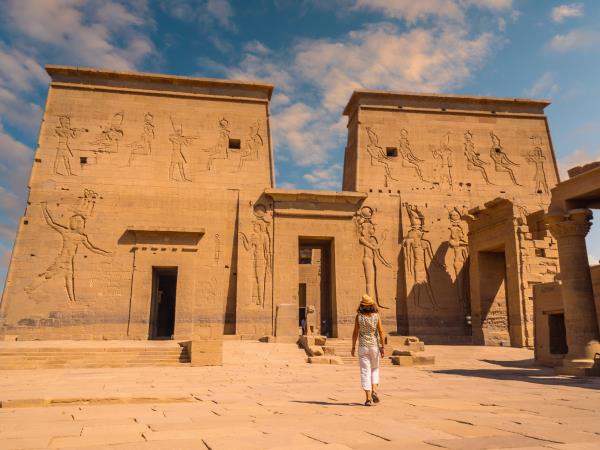
The vast Karnak complex near Luxor, an ancient site of temples and other buildings, is the second most visited historic place in Egypt. There’s something particularly special about convening here, to see a phenomenon that has inspired people for millennia, in a place where humanity has gathered for thousands of years.

Historic significance

Egypt has a long history intertwined with eclipses. In Egyptian mythology Apep, a giant snake, periodically tried to eat the sun god, Ra, who always managed to escape his coils – and any near misses were explained as eclipses. Egyptians recorded eclipse encounters, and these have been useful for historians. The world’s earliest recorded eclipse, in 1207 BCE, has been used to help date the reigns of Egyptian pharaohs Ramesses the Great and his son Merneptah.

Total totality

On our guided tours you will be with a local Egypt expert, and there may be an astronomer too, who can explain what you’re experiencing as you stand in the shadow of the moon.

Even before totality occurs, you’ll see the light change strangely – colours may seem brighter, and you may see odd ‘shadow bands’ – ripples of light on flat surfaces caused by the Earth’s atmosphere affecting the incoming light. The temperature will start to dip.

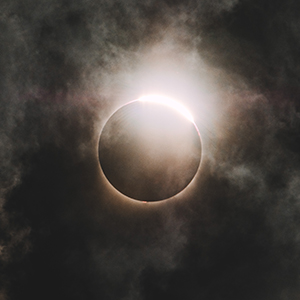
Experiencing totality is one of the strangest natural phenomena. In the dark period where the moon covers the sun, you can suddenly see the planets in the sky. Birds stop singing and eerie twilight descends. You might see sunset-like colours all along the horizon. A ‘diamond ring effect’ follows, as the sun’s light haloes the moon again, and totality ends.

Weather

North Africa is a part of the world where, in August, the chance of this eclipse being rained off, or clouded out, is extremely rare.

In Luxor in August you can expect 12 hours of sunshine a day, 13 hours of daylight, and no chance of rain. The maximum daily average is 39°C and the daily low at night is 21°C. “On weather, I wouldn't claim a tour can guarantee clear skies – nobody can,” says Ant, but they point out that if there is cloud, a group tour will have the right resources to relocate at the last minute. “What a tour does give you is vehicles, drivers and a ground team who know the area.”

How to see the solar eclipse in Egypt on a guided tour

Going on an organised tour doesn’t just give you a really good chance of seeing the eclipse, but also having a place to stay around it.

“Eclipse destinations sell out years ahead,” says Ant. “Luxor is already tight for August 2027 and it'll only get tighter. We block-book allocation well in advance at contracted rates, so when there's nothing left publicly our guests still have rooms.”

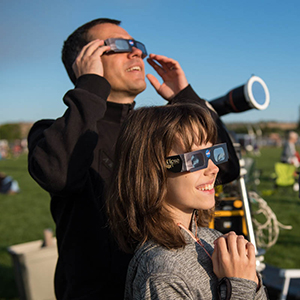
Totality in Egypt is best experienced just outside the city limits of Luxor in Upper Egypt. Our eclipse tours also get you in position in plenty of time to see the eclipse. You’ll usually arrive in Luxor at least the day before, and have the morning to prepare and get in position. We’ll provide the eclipse glasses.

Your vacation won’t just be about seeing the eclipse. Outside of being blessed in 2027 by astronomical phenomena, Egypt is an amazing destination, worthy of a wider trip. Don’t miss cruising on the Nile, visiting Abu Simbel, the new Grand Egyptian Museum in Cairo, and, of course, the Giza pyramid complex and the Great Sphinx of Giza.

Behind the scenes: What work goes into planning an eclipse tour?

You can't just turn up somewhere because it looks nice.
Behind the scenes, a lot of planning goes into a single day of eclipse viewing.

“Site scouting is the most important part,” says Ant. “Exact GPS points, sun angle at totality, what's on the horizon that could get in the way. You can't just turn up somewhere because it looks nice.”

“Transport is also important: coach permits, sometimes police escorts, and working out road closures inside the path. The roads in and out of these places get chaotic on the day.”

“The bit that's easy to forget is basic comfort. Long waits in the sun, shade, water, somewhere to sit – getting these things sorted makes a big difference. And we bring an astronomer along to talk people through what they're seeing, alongside the local guides.

One thing we’ve learnt is that having plenty of time built in on the day of the event is really important. For an eclipse, for example, this gives us time to deal with traffic, make any necessary changes to our position and, most importantly, means guests aren’t feeling rushed or stressed before the main event. The aim is to get everyone into position comfortably and well ahead of time, so they can simply enjoy the experience.”
Written by Eloise Barker
Photo credits: [Page banner: James Niland] [Karnak: 2H Media]