How to see the 2027 solar eclipse in Tunisia

The Great North African Eclipse. The Eclipse of the Century. Whatever you want to call it, put the date in your diary: Monday 2 August 2027. In fact, put the whole week in your diary so you can enjoy our full Tunisia solar eclipse tours. They put you in exactly the right place at the right time, as well as exploring Tunisia’s many other marvels.

We’ve had a few eclipses in recent years, so what’s different about this one? It lasts for around six minutes, which makes it the longest solar eclipse of the 21st century. We won’t see another like it on land until 2114. The path of totality – that’s the area from which a total eclipse is visible – swoops over 15,000km, so it can be seen from easily accessible land masses on its arc between Southern Spain and the Chagos Islands. The likelihood of cloudy skies (the eclipse chaser’s nemesis) is very low at this time in this region too. Visibility is due to be excellent, especially in Tunisia.

The joy of eclipse watching

I still remember seeing an eclipse in August 1999, joining what felt like half the city on a hill with wide views of the sky. It was the summer vacations. The news had been talking about it for weeks; everyone was stocked up with pinhole projectors and solar eclipse glasses. It wasn’t quite full totality from our spot, so we didn’t see the full corona of the blocked sun, but the birds went wild and the air cooled, and there was a surreal green-grey twilight that I later learned is an optical phenomenon called the Purkinje effect. Afterwards, we watched footage of people across the world experiencing the same – a shared sense of excitement and wonder that connected all of us strangers.

Contact Us

Responsible Travel, Travel Team

Call us for a chat about our vacations. We are happy to discuss your vacation and help in any way we can. No bots, queues or awful hold music.

Responsible Travel, Travel Team

Why see the solar eclipse 2027 in Tunisia?

The solar eclipse starts in the Atlantic Ocean and sets in the Indian Ocean, crossing nine countries: Spain, Morocco, Algeria, Tunisia, Libya, Egypt, Saudi Arabia, Yemen and Somalia, stopping just shy of the Chagos Islands. Technically, the area south-east of Luxor in Egypt is perfectly placed to experience the longest total eclipse. So why choose Tunisia? We round up the other factors to mull over, from weather to timing.

Clear skies

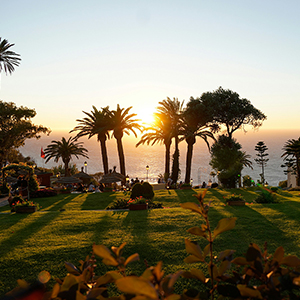
Tunisia is one of the few countries that can combine cloudless skies with a low likelihood of dust storms – especially in seaside spots like Sfax and Djerba Island, where our tours stop. Historical weather data from here reveals that we can be near-certain that the coast of Tunisia will have blue skies during the eclipse, thanks to a sirocco wind that brings hot, dry weather from the Sahara. Elsewhere, Egypt might see dust storms, the Strait of Gibraltar can be cloaked in the misty levanter wind, and Saudi Arabia and Yemen can be a little cloudier (and much hotter).

Cooler temperatures

The coast of Tunisia hits an average of 33°C – or cooler at around 9am, when the eclipse begins. Other cities on the eclipse’s path are scorching, with Jeddah hovering at 37°C, Luxor over 40°C and Mecca hitting a painful 45°C. You’ll still need suncream, plenty of water and shade breaks in Tunisia – and that’s where our small group tours come into their own. You’ll have had a good night’s sleep in a comfy hotel the night before, you’ll travel in a minivan carrying extra drinking water, and there’ll always be someone on hand to help if you need to cool off.

Duration: almost six minutes blackout

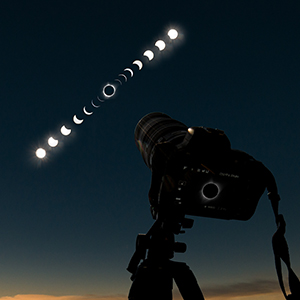
In Tunisia, you can observe a partial eclipse for a full hour before it hits totality, which lasts a remarkable 5 minutes 41 seconds in Sfax. That beats Malaga’s 1 minute 52 seconds, Gibraltar’s 4 minutes 25 seconds and even Mecca’s 5 minutes 10 seconds. In fact, it’s only 40 seconds less than the total eclipse seen in Luxor, where it’s at its longest.

It’s a total eclipse

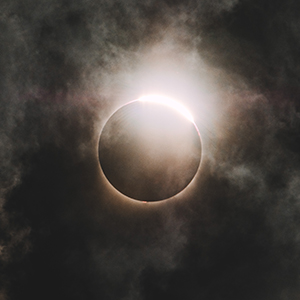
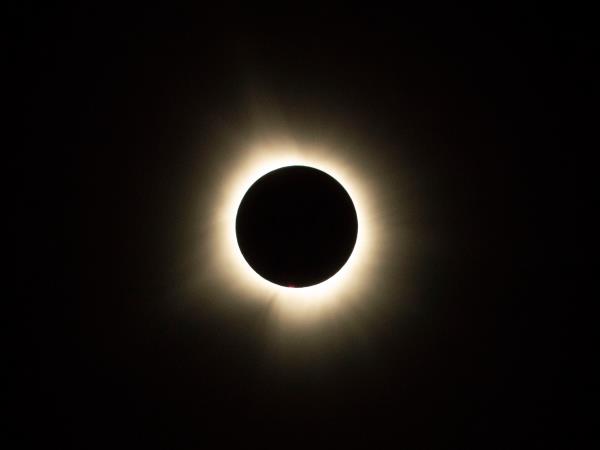
Lots of people will be able to see a partial eclipse, with cities like Tunis catching 98 percent coverage. But our trips will take you to areas where you’ll experience totality as the moon completely obscures the sun. That means you’ll witness the dramatic sight of the sun’s full corona – safely behind eclipse glasses, of course.

Sfax & Djerba

Our eclipse experts haven’t chosen this stretch of coast just for the fun. It sits right in the middle of the path of the eclipse, which is over 250km wide. From this spot, the eclipse will also be at a 56° angle, so you’ll view it high in the sky above the sea rather than obscured by skyscrapers or mountains. Our tours also reserve you a spot at a café, so you don’t have to worry about finding a great observation place.

Last but not least: it’s Tunisia

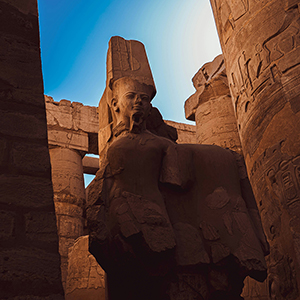
The solar eclipse is the aim and highlight – but it’s also just one day in a week-long small group or tailor made tour. You’ll also get the chance to go on a guided tour of Tunis and see the Great Mosque of Kairouan, embark on a 4x4 adventure in the Atlas Mountains, join a cooking class, drop by one of Tunisia’s biggest oases, and explore the UNESCO-listed Roman Amphitheatre of El Jem.
Photo credits: [Page banner: James Niland] [Clear skies: Yamen] [Last but not least: it’s Tunisia: A M]