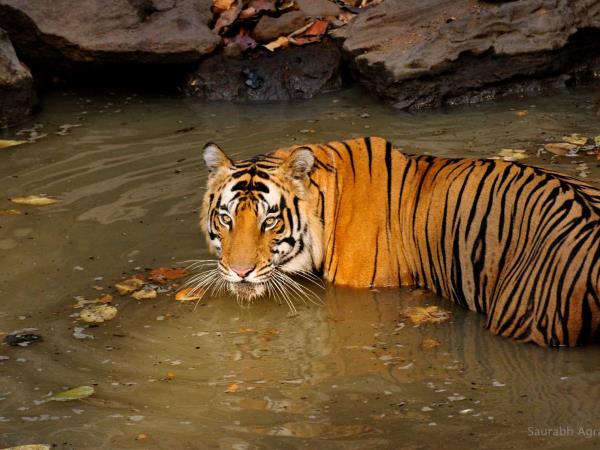
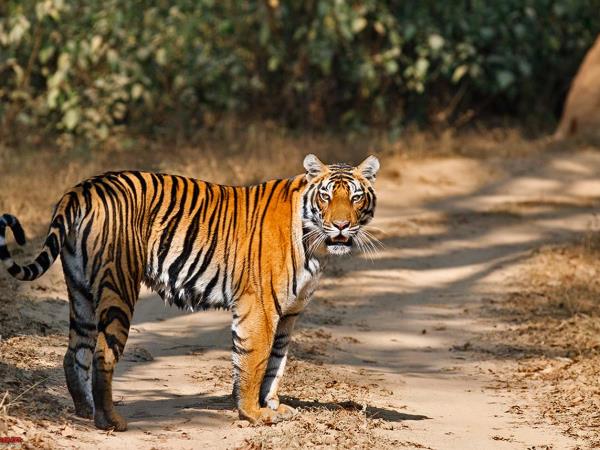
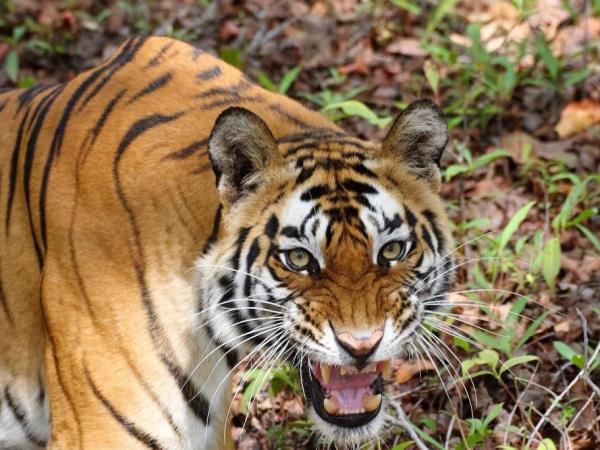
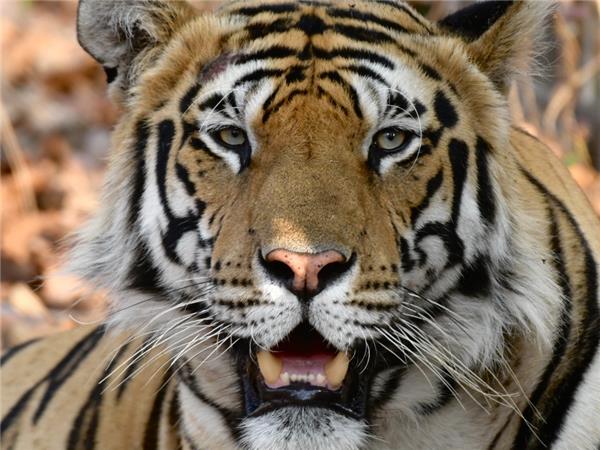
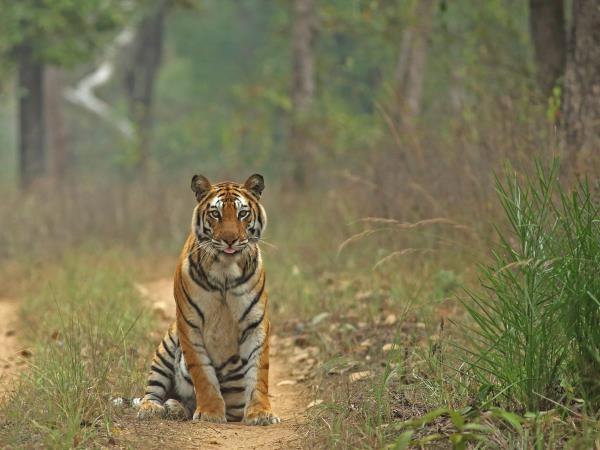
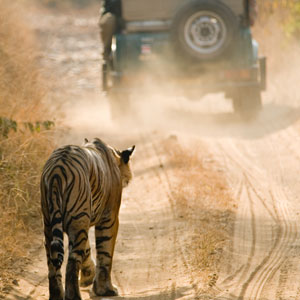
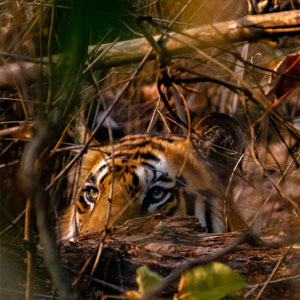
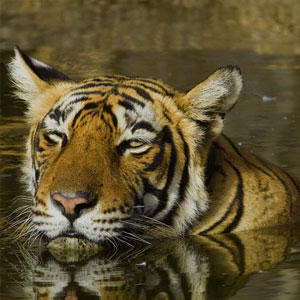
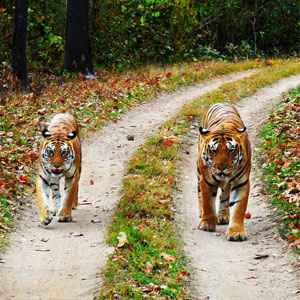
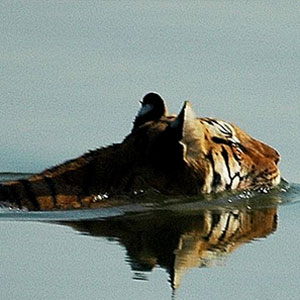
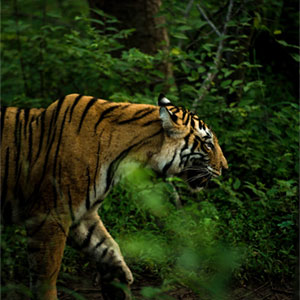
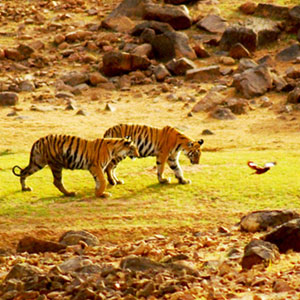
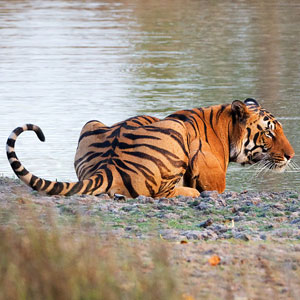
The tiger is both revered and feared. Elusive and exalted. It is the national symbol of India and yet it is, ironically, royalty, including Mughals, Maharajas and – largely – the British aristocracy, who were responsible for wiping out vast numbers of its tiger population. Hunting tigers became the favorite pastime of the rich and regal as far back as the late 1800s. Back then, there were 10,000 wild tigers on the Indian subcontinent. Today, there are fewer than 6,000 worldwide, a population still shrunk by hunting and diminishing habitats caused by deforestation and development.
There are now six subspecies remaining in the world: the Bengal tiger, Siberian tiger, South China tiger, Indochinese tiger, Malayan tiger and Sumatran tiger. You can see most of them on a tiger safari in India but also in Bangladesh, Bhutan, Nepal and Siberia. The impact of seeing a tiger is a highly emotional one, touching the psyche in multi-dimensional ways - discovering something precious you feared was lost, being transported back to your childhood dreams, witnessing poetry in motion or, for some, simply a deeply spiritual moment.
Read more about watching the most captivating big cat of all in our tiger safaris travel guide.