Walking & botany vacations in Greece
Lined with historic but well-marked trails, the Dodecanese island of Karpathos is renowned for its remarkable wildlife. You will find some of the most captivating walking and botany vacations in Greece here. The terrain on Karpathos, whether coastal or mountainous, offers moderate challenge and endless sea views, while routes thread together archaeological sites, windmills and delightfully secluded beaches.
The island’s unique culture is another unmistakable draw for the inquisitive visitor. Walking here with local guides that double as botany experts will not only help you identify different species of flower that you may not recognise, but also allow you to connect with local producers and craftspeople, as well as villagers, to understand their customs and ways of life first-hand.
Walking is the ideal way to delve deeper into the wildlife and culture of this Aegean island, which is far off the main tourist track and nowhere near as busy as neighbouring Crete or Rhodes. You might combine your walking with hands-on cookery lessons, perhaps learning how to make the classic Greek dish of makarounes with finger-rolled pasta, or foraging for wild vegetables and herbs to include in your meals.
The island’s unique culture is another unmistakable draw for the inquisitive visitor. Walking here with local guides that double as botany experts will not only help you identify different species of flower that you may not recognise, but also allow you to connect with local producers and craftspeople, as well as villagers, to understand their customs and ways of life first-hand.
Walking is the ideal way to delve deeper into the wildlife and culture of this Aegean island, which is far off the main tourist track and nowhere near as busy as neighbouring Crete or Rhodes. You might combine your walking with hands-on cookery lessons, perhaps learning how to make the classic Greek dish of makarounes with finger-rolled pasta, or foraging for wild vegetables and herbs to include in your meals.

Karpathos’ charming villages are a highlight of a stay on the island. You won’t be the only visitors here, but the tourists certainly won’t outnumber the locals as they can on some popular Greek islands and you could easily walk for hours without encountering any other foreigners. You might meet craftspeople responsible for making leather goods, or the traditional instruments that you’ll often see at festivals and weddings (time your visit right and you might even be able to attend one yourself). And of course when you purchase handmade souvenirs, or eat at locally-owned restaurants, you are injecting money directly into the Karpathos island economy – tourism income is essential for many of these small towns and villages to survive, providing employment opportunities for people that may otherwise have had to move to larger towns and cities on other islands or the mainland for jobs.
The north of the island, land and sea, forms a Regional Marine Park and Natura 2000 protected zone that is home to many endemic and endangered plant species as well as numerous species of bird, and a population of Mediterranean monk seals on the coast. Karpathos has some 18 separate habitats, from Turkish pine forests to flowering shrubberies on limestone cliffs, rivers, elevated plateaus, terraced hillsides and coastal marshy areas where plants thrive in the wind and salt spray. Many species are found nowhere else in the world, while others are limited to nearby Kasos or Crete. All of this is accessible through the island’s network of well-marked walking trails, manageable for anyone in reasonable fitness.
The north of the island, land and sea, forms a Regional Marine Park and Natura 2000 protected zone that is home to many endemic and endangered plant species as well as numerous species of bird, and a population of Mediterranean monk seals on the coast. Karpathos has some 18 separate habitats, from Turkish pine forests to flowering shrubberies on limestone cliffs, rivers, elevated plateaus, terraced hillsides and coastal marshy areas where plants thrive in the wind and salt spray. Many species are found nowhere else in the world, while others are limited to nearby Kasos or Crete. All of this is accessible through the island’s network of well-marked walking trails, manageable for anyone in reasonable fitness.
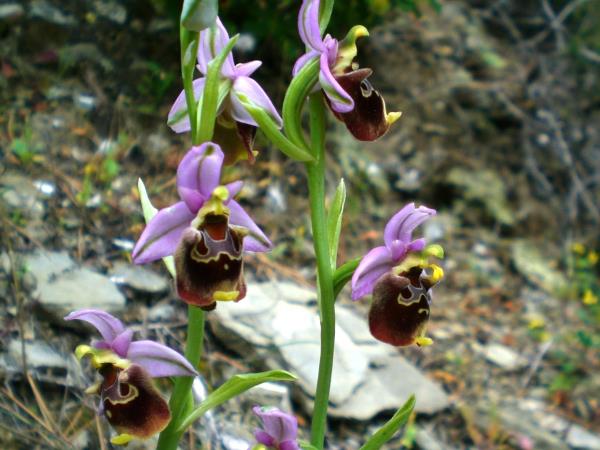
Depending on the time of year you visit (but spring is always a good bet) you might find Cytinus hypocistis in bloom, sometimes used in traditional medicines; pretty paeonia (peonies); orchids such as Ophrys eldreichi and Anacamptis pyramidalis; Helichrysum barrelieri which butterflies and flower moths love, Rubia tinctoria (common madder) which has long been used in producing dyes for leather and silk garments, its roots also used to treat ailments from sciatica to yellow jaundice.
Walks are guided by a local botany expert, able not only to identify unusual plants for you and explain any uses they may serve, but also fauna, ranging from the Pelophylax Cerigensis, a tiny, critically endangered frog endemic to Greece, to the migrating Eleanora’s falcon. Crucially, they will be flexible with itineraries to take into account changes in the weather, tiredness, or the chances of seeing a rare flower that has recently appeared in one part of the island. And naturally they will also be able to discuss Karpathos’ unique cultural heritage. Because this island is not only renowned for its historic walking trails and beautiful coastline, with dozens of beaches strung along it between peaceful fishing harbours and villages that tightly hug the hills. It also offers fascinating traditional ways of life to immerse yourself in, from impromptu musical performances at open air weddings and religious feasts, to charming age-old rituals of bread and pasta making.
Walks are guided by a local botany expert, able not only to identify unusual plants for you and explain any uses they may serve, but also fauna, ranging from the Pelophylax Cerigensis, a tiny, critically endangered frog endemic to Greece, to the migrating Eleanora’s falcon. Crucially, they will be flexible with itineraries to take into account changes in the weather, tiredness, or the chances of seeing a rare flower that has recently appeared in one part of the island. And naturally they will also be able to discuss Karpathos’ unique cultural heritage. Because this island is not only renowned for its historic walking trails and beautiful coastline, with dozens of beaches strung along it between peaceful fishing harbours and villages that tightly hug the hills. It also offers fascinating traditional ways of life to immerse yourself in, from impromptu musical performances at open air weddings and religious feasts, to charming age-old rituals of bread and pasta making.
Our top trip
Hiking and botanical vacation on Karpathos Island, Greece
A combination of cooking & walking, discover and taste!
From
€650 to €680
7 days
ex flights
Small group travel:
2027: 27 Mar, 4 Apr, 10 Apr, 17 Apr
2027: 27 Mar, 4 Apr, 10 Apr, 17 Apr
Contact Us

Call us for a chat about our vacations. We are happy to discuss your vacation and help in any way we can. No bots, queues or awful hold music.

1-866-821-6866
Call toll free
Calling from outside the USA


What do walking & botany vacations in Greece involve?
If you’re in decent physical shape and walk even fairly regularly you should have no problems with trekking on Karpathos. Trails are long-established and you will be traveling as part of a small group, keeping to a fair pace and pausing regularly to look at the vegetation of course. The best time for walking and botany vacations in Greece is unquestionably in spring, between April and May, when the flowers are in bloom and the weather is lovely without being too hot. You’ll be guided throughout by a local, and stay in small, locally owned accommodations.
It’s no secret that Greece’s economy has been in difficulties for some time now and the country places a lot of reliance on tourism. Small-scale responsible vacations such as this are fantastic not only for bringing you closer to local communities, but also vital in providing income for everyone from restaurateurs to farmers and craftspeople to winemakers, helping to keep the traditional ways of life that make Karpathos so special alive.
“We loved this vacation! ... Everything was relaxed and easy-going, even when we did some longer hikes. We learned so much about the island and the way of life as led by the people of northern Karpathos. Their self-sufficiency is amazing! The feeling of hospitality and generosity of the people will stay with us forever. Be prepared to be flexible on the itinerary. We were early in the season, and so Evangelia had to move a few things around, but for us it was perfect. Take good hiking boots, long trousers, and a sun hat.” – Janis Colville on a walking & botanical vacation on Karpathos
It’s no secret that Greece’s economy has been in difficulties for some time now and the country places a lot of reliance on tourism. Small-scale responsible vacations such as this are fantastic not only for bringing you closer to local communities, but also vital in providing income for everyone from restaurateurs to farmers and craftspeople to winemakers, helping to keep the traditional ways of life that make Karpathos so special alive.
“We loved this vacation! ... Everything was relaxed and easy-going, even when we did some longer hikes. We learned so much about the island and the way of life as led by the people of northern Karpathos. Their self-sufficiency is amazing! The feeling of hospitality and generosity of the people will stay with us forever. Be prepared to be flexible on the itinerary. We were early in the season, and so Evangelia had to move a few things around, but for us it was perfect. Take good hiking boots, long trousers, and a sun hat.” – Janis Colville on a walking & botanical vacation on Karpathos
More Greece walking articles
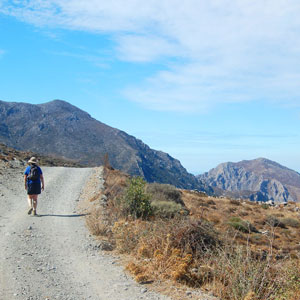
Our sea splashed Greece walking vacations guide has everything you need to know about island and mainland trails.
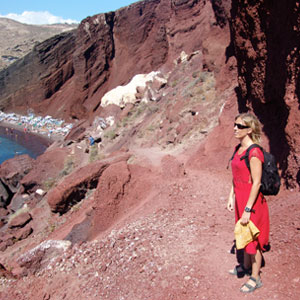
Use this page to learn the best time to go on a walking vacation in Greece.
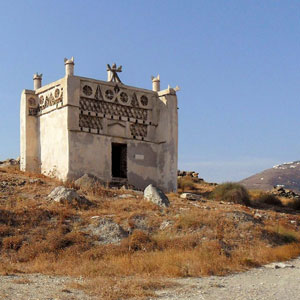
Walk landscapes that have inspired legions of Greek painters and sculptors.
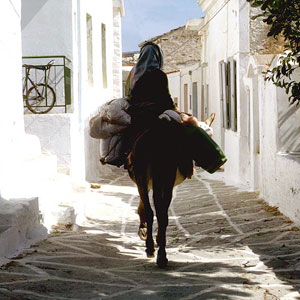
One of the best islands for walking, with a superb network of trails, and beaches only reachable on foot.
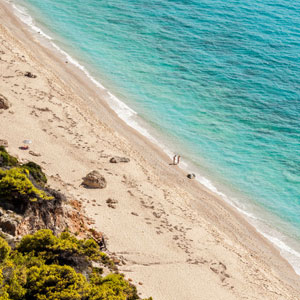
Lefkada, in the Ionian Sea, is thought by some to be the homeland of Odysseus, hero of Homer’s Odyssey.
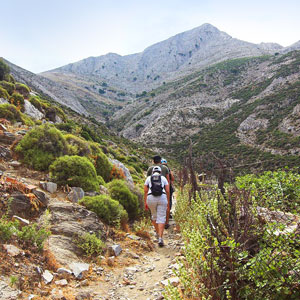
A vivid combination of Aegean sunsets and ancient ruins make Naxos picturesque and interesting.
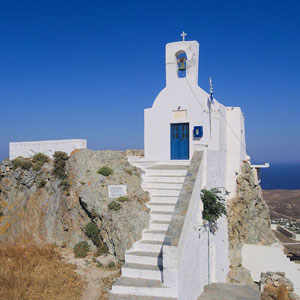
This Cyclades island is great for walkers, and you'll encounter lots of hidden gems on foot.
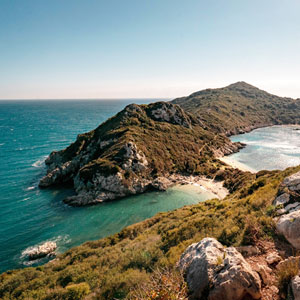
Corfu walking vacations often follow the long distance Corfu Trail on this enduringly popular Greek island.
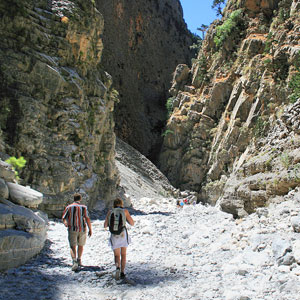
An ideal way to explore the largest and busiest Greek island, and explore its long, deep Samaria Gorge.
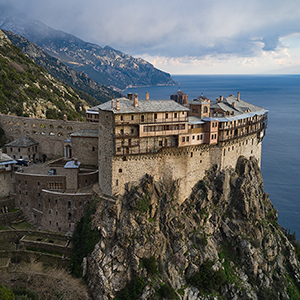
A 1,000-year rule forbids women from entering the peninsula. So, Mount Athos isn’t for everyone.