Center of Portugal
I lived in Portugal with my family for a year, and thinking back, some of my most distinctive memories are of our brief excursions into the less-visited center: my toddler son finding his feet as we pottered around castle ruins in the village of Linhares da Beira; watching jugglers and jousting on a sweltering July day at the Medieval Fair in Óbidos; a wet and windy mid-winter lunch in the seaside town of Nazaré, listening to the window shutters bang in the near-deserted streets of that legendary surf utopia.
Clearest of all is a spur of the moment daytrip to the Berlengas archipelago, off the coast of Peniche. I remember I was idly flicking through a magazine one evening when I came across a full-page advert for this place I’d never heard of, and being captivated by an image of a historic sea fort surrounded by white-tipped waves. The next morning we were there: me, my partner, our son and his grandmother, bouncing over the waves to the islands in a speedboat. We hiked grassy cliffs past old fishermen’s huts looking out over the Atlantic, licked ice creams in the cafe at the little harbour, and ate our sandwiches listening to the crackle of gulls and petrels. It was a gorgeous day out, all the more so for its impromptu nature.
Center of Portugal (Centro) is certainly not unknown – it’s popular for walking and cycling tours, too. Both inland and on the Center of Portugal’s Atlantic Coast you can find some of the country’s loveliest locales, like Aveiro, Coimbra, and Costa Nova. But this region does fly under the radar somewhat compared to other parts of the country, and we feel it deserves more attention. Read on to find out why the middle of Portugal is far from average.
Clearest of all is a spur of the moment daytrip to the Berlengas archipelago, off the coast of Peniche. I remember I was idly flicking through a magazine one evening when I came across a full-page advert for this place I’d never heard of, and being captivated by an image of a historic sea fort surrounded by white-tipped waves. The next morning we were there: me, my partner, our son and his grandmother, bouncing over the waves to the islands in a speedboat. We hiked grassy cliffs past old fishermen’s huts looking out over the Atlantic, licked ice creams in the cafe at the little harbour, and ate our sandwiches listening to the crackle of gulls and petrels. It was a gorgeous day out, all the more so for its impromptu nature.
Center of Portugal (Centro) is certainly not unknown – it’s popular for walking and cycling tours, too. Both inland and on the Center of Portugal’s Atlantic Coast you can find some of the country’s loveliest locales, like Aveiro, Coimbra, and Costa Nova. But this region does fly under the radar somewhat compared to other parts of the country, and we feel it deserves more attention. Read on to find out why the middle of Portugal is far from average.

Where to go in Center of Portugal
Aveiro
Aveiro is a city of water. Once an important seaport, it sits on a bird-filled lagoon where you can visit the salt pans from which the fragile flor de sal is drawn. Aveiro’s old canal network is no longer required for industry, and the hand-painted wooden boats, moliceiros, that were once used to harvest seaweed, now serve as charming sightseeing vessels from which to admire the city’s Art Nouveau architecture. Portugal is known for its many pastries, and Aveiro’s are called ovos moles – sweet treats made of egg yolk and sugar, set into casings that take nautical shapes like boats, fish and seashells. On some of our Center of Portugal vacations you can even learn to make your own.
Coimbra
The venerable city of Coimbra is home to some of the most ancient buildings in Portugal, including the university, which is one of the oldest in the world, and the Old Cathedral. Divided into the riverside baixa (downtown) and the historic alta (upper town), Coimbra has its own distinctive style of fado music, and some notable culinary highlights including goat stewed in red wine, and sugar-dusted sweet buns known as arrufadas.
Fátima
Fatima is one of the most significant European sites in Roman Catholicism, a place of miracles and apparitions. Millions of religious pilgrims visit every year. There are several pilgrimage walking routes around Portugal that finish in Fatima, ranging in length from a few days to several weeks. “I think the Fátima Caminos are likely to be the next boom in Portugal tourism,” says Luis Coelho, founder of our specialist partner for walking and cycling vacations, Portugal A2Z. “The Santiago de Compostela Caminos are so busy, but here the routes are very quiet. It’s a special area and wonderful for self-guided walking tours.”
Figueira da Foz
Figueira da Foz is a popular stop-off on our cycling tours through Center of Portugal. Like other coastal destinations strung along the Atlantic coast, Figueira da Foz is prime surfing territory. But it doesn’t boast the sobriquet ‘Rainha das Praias’ (Queen of Beaches) for nothing – there are plenty of calmer stretches of sand too, for those just wanting a paddle or a swim.
Nazaré
Some local women wear seven petticoats, and there is a charming story behind the tradition. It’s said to date back to when women would wait on the blustery beach for their fishermen husbands to come in. And it does get blustery – Nazaré sees some of the biggest waves in the world, and the winter season brings death-defying surfers by the dozen. On summer afternoons, snack on salty percebes (barnacles) and watch as the fishermen haul their nets up onto the beach. Their mackerel catch will then be salted and left to dry in the sun.
Óbidos
This whitewashed medieval town sits just inland, its winding streets leading up to a well-preserved Roman castle, now a Pousada, or historic hotel. Óbidos is a paradise for literature lovers. Numerous historic buildings have been converted into bookshops – an old convent has even become a book hotel, its shelves lined with tomes that guests can browse. And every October Óbidos welcomes the FOLIO Literary Festival, featuring seminars, talks with authors, concerts and exhibitions.
Peniche & the Berlengas
One of the great highlights of traveling in Center of Portugal is exploring the cuisine, and when it comes to seafood, that of Peniche takes some beating. You can see it coming off the boats in the harbour – and you can also sometimes still see the atadeiras at work, the ladies who sew the fishing nets.
It takes about 30 minutes to reach the Berlengas archipelago by ferry from Peniche, faster in a bumpy rigid-hulled inflatable. Walking and birdwatching are the most popular activities on the islands, “but the snorkelling is fantastic, too,” adds Luis. “Just last week I saw an octopus.” This is a protected marine zone, harbouring great biodiversity – it’s not uncommon to encounter dolphins, most often between June and September.
It takes about 30 minutes to reach the Berlengas archipelago by ferry from Peniche, faster in a bumpy rigid-hulled inflatable. Walking and birdwatching are the most popular activities on the islands, “but the snorkelling is fantastic, too,” adds Luis. “Just last week I saw an octopus.” This is a protected marine zone, harbouring great biodiversity – it’s not uncommon to encounter dolphins, most often between June and September.
Schist villages
With their lovely old houses made from schist rock, these villages are a familiar sight in rural parts of Center of Portugal. But they have been hollowed out as younger generations leave in search of jobs. Tourism is breathing new life into these communities, as people such as Luis buy up properties and convert them into accommodation for walkers and cyclists, creating employment opportunities as they do.
Every village has its own identity, and responsible tourism also brings cultural renewal. The villages are linked by an ancient trail network, and as you move from place to place, staying somewhere different each night, you might join local people in learning how to make traditional goat’s cheese, or bake bread in wood-fired ovens. The village of Cerdeira, in the Lousã Mountains, is particularly notable for its artistic ethos. There are workshops for woodwork, clay pottery, weaving with wool, and fine art where you can buy souvenirs from local artisans, or perhaps take a hands-on class.
Every village has its own identity, and responsible tourism also brings cultural renewal. The villages are linked by an ancient trail network, and as you move from place to place, staying somewhere different each night, you might join local people in learning how to make traditional goat’s cheese, or bake bread in wood-fired ovens. The village of Cerdeira, in the Lousã Mountains, is particularly notable for its artistic ethos. There are workshops for woodwork, clay pottery, weaving with wool, and fine art where you can buy souvenirs from local artisans, or perhaps take a hands-on class.
Serra da Estrela
There’s an all-pervading sense of calmness in the Serra da Estrela, the mountainous natural park that is one of Portugal’s most spectacular destinations for walking and cycling. Much of the time all you’ll hear is the buzzing of the insects and the harmonious jangle of goat bells. Look up, though, and you’ll sometimes see paragliders up in the blue skies, enjoying a taste of what the golden eagles and peregrine falcons see.
The region is dotted with historic villages such as Linhares de Beira, where you can taste culinary specialities like buttery sheep’s cheese flavoured with thistle, smoked sausages and heathery honey. Unlike the coast, the cuisine in the rural center of Portugal is much more meat-heavy. You find ginjinha, a sour cherry liquor, all over Portugal, but the very best comes from the Serra da Estrela.
The region is dotted with historic villages such as Linhares de Beira, where you can taste culinary specialities like buttery sheep’s cheese flavoured with thistle, smoked sausages and heathery honey. Unlike the coast, the cuisine in the rural center of Portugal is much more meat-heavy. You find ginjinha, a sour cherry liquor, all over Portugal, but the very best comes from the Serra da Estrela.
Center of Portugal Atlantic Coast
The Atlantic Coast of the Center of Portugal, formerly known as the Silver Coast, is a stunning stretch of coastline along the Atlantic shoreline that stretches some 240km from Barrinha de Esmoriz, just south of Porto, down to Santa Cruz outside Lisbon. It’s one of Western Europe’s finest coastal landscapes, ideal for leisurely cycling, with expanses of sand separating quiet fishing villages as well as popular locations such as Aveiro and Figueira da Foz. A network of cycle paths leads you through pine woods, around lagoons, and into the countryside.
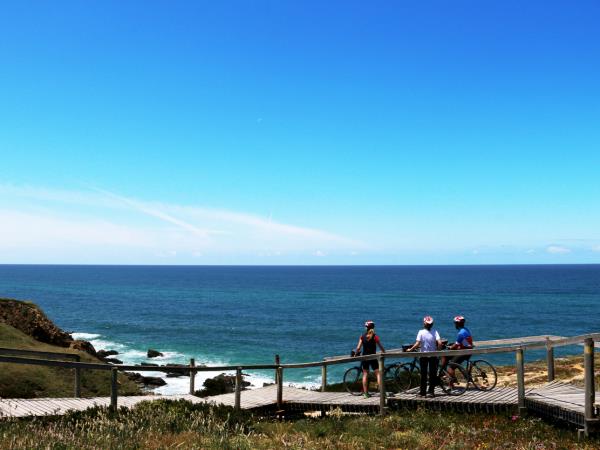
Porto to Lisbon cycling vacation, self guided
Easy flat scenic ride along beautiful coastline
From
€1019 to €1280
8 days
ex flights
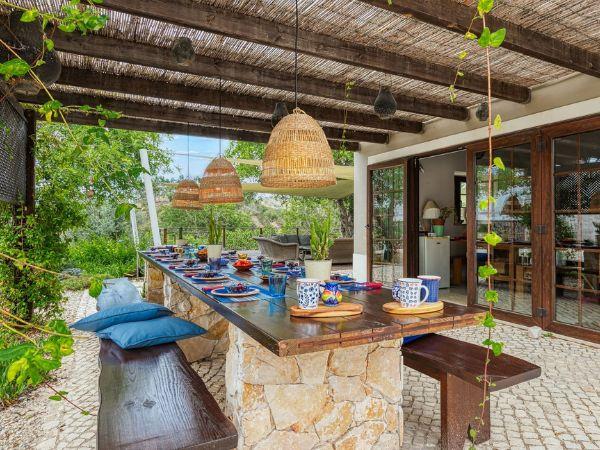
Vegetarian cooking vacation in Portugal
Explore culinary heritage, Mediterranean vegetarian delights
From
€900 to €1450
5 days
ex flights
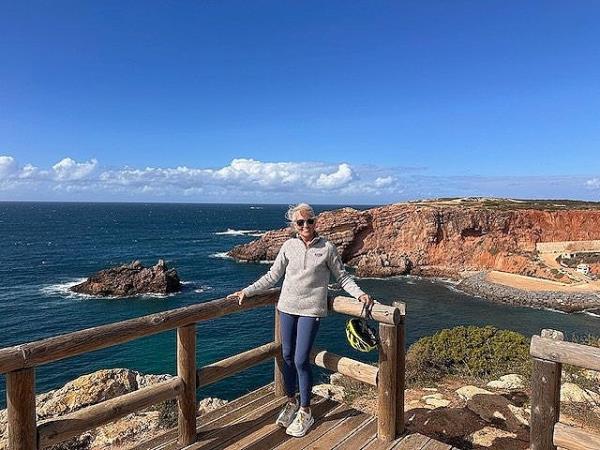
Algarve self guided cycling vacation in Portugal
Great food & wine, historical towns, breathtaking coastline
From
€975 to €1175
8 days
ex flights
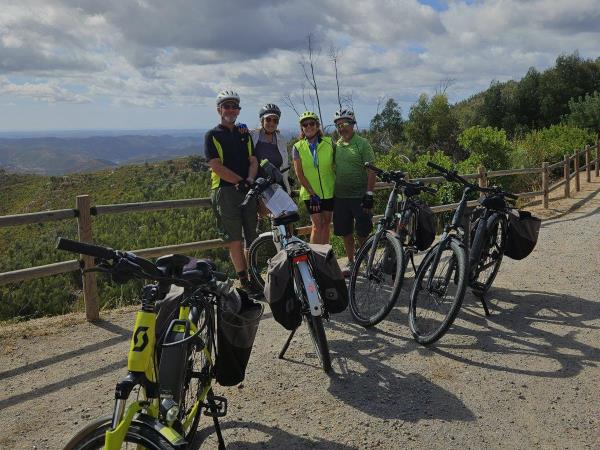
Cycling vacation in Portugal, self guided
Algarve cycling along varied landscape & breathtaking coastline
From
€975 to €1175
8 days
ex flights
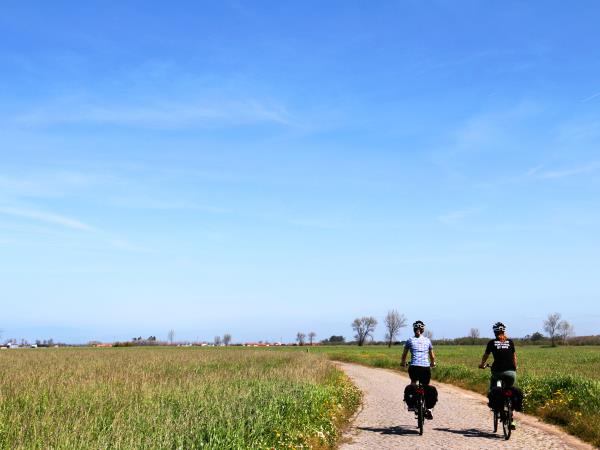
Cycle from Porto to Coimbra, Portugal
Leisurely cycling & culture along the Atlantic Coast
From
€979 to €1249
7 days
ex flights
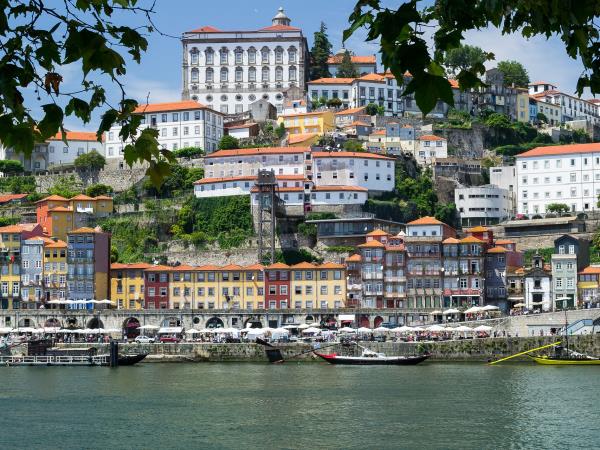
Portuguese Coastal Way walking vacation
The scenic alternative to the classic Portuguese Way
From
€1050 to €1225
8 days
ex flights


Contact Us

Call us for a chat about our vacations. We are happy to discuss your vacation and help in any way we can. No bots, queues or awful hold music.

1-866-821-6866
Call toll free
Calling from outside the USA


Things to do in Center of Portugal
Walking
Center of Portugal offers many superb options for walking vacations. There are several short pilgrimage routes to Fatima, such as the Carmelita Route (eight days) and the Nazaré Way (six days from Nazaré) which are far quieter than the Portuguese Camino.
Other vacations can take you up into the mountains of the Serra da Estrela, trails leading you through forest and pastures where shepherds watch their goats, alongside rivers, past waterfalls and historic villages. Or you can tread ancient paths between schist villages such as Cerdeira, Ferraria de São João and Gondramaz, staying in traditional stone houses that have been restored for rural tourism. If you prefer, you can also stay in one place for several days and do a series of circular walks.
Generally, these are self guided vacations, and your luggage is transferred ahead of you for convenience. Full support, including maps and detailed route notes provided. Daily distances vary, but top out at around 23km, with 475m elevation gain. Walking poles can be a useful addition to your packing list, as the terrain in the interior can be steep and rocky.
Other vacations can take you up into the mountains of the Serra da Estrela, trails leading you through forest and pastures where shepherds watch their goats, alongside rivers, past waterfalls and historic villages. Or you can tread ancient paths between schist villages such as Cerdeira, Ferraria de São João and Gondramaz, staying in traditional stone houses that have been restored for rural tourism. If you prefer, you can also stay in one place for several days and do a series of circular walks.
Generally, these are self guided vacations, and your luggage is transferred ahead of you for convenience. Full support, including maps and detailed route notes provided. Daily distances vary, but top out at around 23km, with 475m elevation gain. Walking poles can be a useful addition to your packing list, as the terrain in the interior can be steep and rocky.
Cycling
“Center of Portugal is the best place for families to cycle, because it’s the flattest part,” says Luis. “Once you get south of Lisbon it’s hilly, and there is a lot of sand. Here you can ride from one small fishing village to the next, the wind at your back, it’s very relaxed.”
One option here is to cycle the length of the Atlantic Coast from Porto to Coimbra. You can also go further on as far as Óbidos, passing through São Pedro de Moel and pine forest that was planted back in the 14th century to provide timber for the ships used in Portugal’s Age of Discovery.
You can also cycle inland. “We’ve created a new route we call the Atlantic Ring that takes you from the coast into the interior via big cities like Coimbra and Aveiro using bicycle paths,” says Luis. You follow riverside paths, take trails lined with oak and chestnut forest, and pause for picnics and paddles on little river beaches.
Expect to cover around 40-50km each day, sometimes a little more. That allows you to travel at a pleasantly relaxed pace with plenty of time to stop off, take in the views, and enjoy long, leisurely lunches.
One option here is to cycle the length of the Atlantic Coast from Porto to Coimbra. You can also go further on as far as Óbidos, passing through São Pedro de Moel and pine forest that was planted back in the 14th century to provide timber for the ships used in Portugal’s Age of Discovery.
You can also cycle inland. “We’ve created a new route we call the Atlantic Ring that takes you from the coast into the interior via big cities like Coimbra and Aveiro using bicycle paths,” says Luis. You follow riverside paths, take trails lined with oak and chestnut forest, and pause for picnics and paddles on little river beaches.
Expect to cover around 40-50km each day, sometimes a little more. That allows you to travel at a pleasantly relaxed pace with plenty of time to stop off, take in the views, and enjoy long, leisurely lunches.
Beaches
The beaches of Center of Portugal don’t tend to garner as much attention as those of the Algarve. Well-known beach towns such as Figueira da Foz and Costa Nova, with its pretty candy-striped houses, sit alongside dramatic stretches of coast beloved by surfers and kite surfers, while on other beaches the sea is calm enough for safe swimming.
Sandy beaches, rolling dunes threaded with grasses, and marshes and lagoons where birders will find dozens of waterbirds feeding, breeding and nesting, link peaceful fishing villages like Praia de Mira. If you’re walking or cycling along the coast then most nights you’ll stay by a beach where you can cool off tired feet in the sea. There are always little cafes and restaurants where you can enjoy a plate of percebes or sliced octopus, dipping toasted bread into the olive oil dressing.
Sandy beaches, rolling dunes threaded with grasses, and marshes and lagoons where birders will find dozens of waterbirds feeding, breeding and nesting, link peaceful fishing villages like Praia de Mira. If you’re walking or cycling along the coast then most nights you’ll stay by a beach where you can cool off tired feet in the sea. There are always little cafes and restaurants where you can enjoy a plate of percebes or sliced octopus, dipping toasted bread into the olive oil dressing.
Culture
Our vacations in Center of Portugal usually focus on either walking or cycling, but as you move from place to place they offer many opportunities to explore and understand the area’s cultural heritage. You could book in a few tastings in the Dão wine region, one of the oldest in Portugal, or learn about the history of fishing at the Ethnographic Museum in Praia de Mira. In Coimbra you can take a walking tour of the vast library at the historic university, or visit quirky museums like the old prison cells where university students whose post-exam celebrations got a little carried away would sleep the excitement off. Óbidos, too, has a fine literary culture, with many bookshops where you can get happily lost for a few hours.
Rural tourism is helping to revive the schist villages of Center of Portugal, but not simply as accommodation for walkers and cyclists. In some, such as Cerdeira, you can also get hands-on with traditional arts and crafts. A number of Portuguese and international artists live permanently or take residencies in Cerdeira, and teach woodwork, basketry, ceramics and more in workshops that can last a full day, or longer. If you already have an interest, or you like the thought of trying out a new hobby, our short stays in this village offer an inclusive, creative environment.
Rural tourism is helping to revive the schist villages of Center of Portugal, but not simply as accommodation for walkers and cyclists. In some, such as Cerdeira, you can also get hands-on with traditional arts and crafts. A number of Portuguese and international artists live permanently or take residencies in Cerdeira, and teach woodwork, basketry, ceramics and more in workshops that can last a full day, or longer. If you already have an interest, or you like the thought of trying out a new hobby, our short stays in this village offer an inclusive, creative environment.
When to visit
Center of Portugal is a year-round destination. Winter can be cold and wet, but sunny, dry weather is also far from rare. “People will often cycle from Porto to Lisbon in December and January,” points out Luis. However, our partners will often recommend avoiding the region in the height of summer, July and August. “It’s too hot,” says Luis, “and to be honest neither the hotels nor the restaurants need more business at that time of year. We believe it is more responsible to organise our vacations outside of peak summer.”
In parts of the Center of Portugal, where fire-prone eucalyptus is widespread, our vacations support important reforestation efforts that focus on planting resilient native species such as chestnut and cork oak. These trees are better adapted to the local climate and play a vital role in combating the effects of the climate crisis by helping to create healthier, more fire-resistant ecosystems. On some of our cycling vacations, you can even get involved by planting seeds in designated rewilding areas - making your trip both meaningful and impactful.
In parts of the Center of Portugal, where fire-prone eucalyptus is widespread, our vacations support important reforestation efforts that focus on planting resilient native species such as chestnut and cork oak. These trees are better adapted to the local climate and play a vital role in combating the effects of the climate crisis by helping to create healthier, more fire-resistant ecosystems. On some of our cycling vacations, you can even get involved by planting seeds in designated rewilding areas - making your trip both meaningful and impactful.

In partnership with Visit Portugal.
More Portugal articles

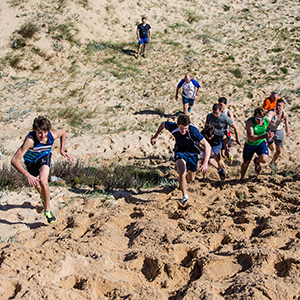
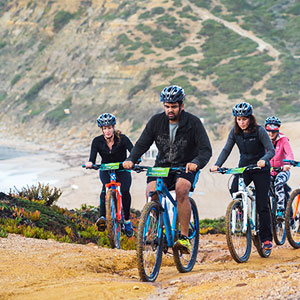
We give Portugal an ‘A’ for cycling vacations: Algarve, Azores, Alentejo, Atlantic Coast.
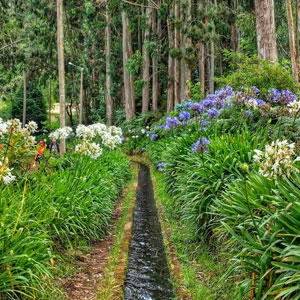
Discover the breadth of destinations across Portugal where you can hit the trail.
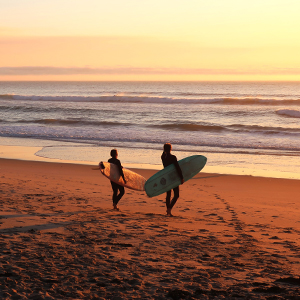

Along with some great recommendations, discover the best of culture tours in Portugal.
Portugal travel advice starts with a few tidbits from friendly folks we know and trust.

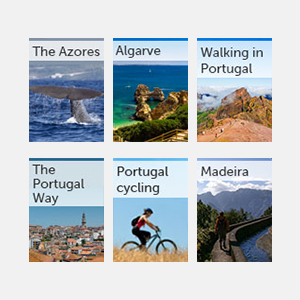
Find all of our Portugal guides conveniently in one place so you can plan your trip.