2016 Winners
There are two overall winners in the 2016 World Responsible Tourism Awards: Lemon Tree Hotel and Tren Ecuador. We want to leave a mark as to where Responsible Tourism is at present, to highlight organisations that really are taking tourism in a new and highly responsible direction for the future. The judges found it very difficult to separate the two overall winners, as both have had significant impacts at scale in their respective areas and have the potential to inspire real change - as such they are awarded jointly:
Overall winners:
Tren Ecuador, Ecuador
Ecuador is a country that just makes us happy in the world of responsible tourism. First, because it has a Ministry of Happiness and Wellbeing in its government, second because it has more protected, biodiverse magnificence tucked into one small country than anywhere else we can think of and third, it has a luxury train journey that is as much about drinking in the culture of the communities along the railway line as it is about the champagne on board. You can take that wonderful journey between Guayaquil to Quito, but if you are hungry or want to tuck up for the night you have to get off the train and tuck into local fare or sleep at a local hotel. This happiness thing is working in Ecuador, because they have just created the ultimate in Fair Train tourism.Lemon Tree Hotels, India
India really does know how to do luxury hotels. You only need to have dipped into regal Rajasthan or the glimmering Golden Triangle to see that quality of service and facilities is something that Indian hotel chains pride themselves on. At Lemon Tree Hotels, they are adding to this quality by taking a refreshing approach to employment principles and practices that has introduced a whole new fragrance of fairness throughout the company.Best innovation by a tour operator
Gold award:
Elevate Destinations, USA
Is it a social enterprise? Is it philanthropy? Is it a luxury break? No, it's super tourism, although not with super powers. Just super common sense. In short, take a tailor made trip with Elevate Destinations, and one that is responsible at that, and for every trip bought, Elevate educates. In other words, every time you take a vacation with this company, Elevate gives money towards a fund that provides school trips to a group of local children who wouldn't normally get to see or appreciate their country's natural or cultural gems. The ones that we so often take for granted. It's simple, it's educational, it's fun and, like so many of the world's best ideas, this 'Buy a Trip, Give a Trip' idea is genius.Silver award:
Viaggi Solidali, Italy
Unlike most travel companies singing about their innovations, Viaggi Solidali's cool concept is all about the country of departure, rather than the glorious destinations that they represent. Because in their home country of Italy, they are offering a series of guided city tours led by local people. The difference being, these are local people who have arrived here as immigrants. With migration becoming more and more of a heated topic around the world, this company has turned a negative into a positive, tapped into their large network of responsible tourists and showed how they could travel responsibly at home too.Best contribution to wildlife conservation
Gold award:
Sam Veasna Centre (SVC), Cambodia
One of the most highly respected wildlife watching tour operators in Cambodia, bird lovers flock to SVC to be taken on ornithological odysseys of a lifetime. Many of these are birders who may be au fait with every exquisite detail of an endemic and yet not know anything about the colourful and extraordinary journey of this company. Because so often, wildlife conservation coups are the work of one individual and Sam Veasna was certainly one of those.A local naturalist, Sam was much celebrated for discovering and mapping the country's most important sites in terms of conservation and particularly bird protection. He was, like the creatures he sought out, fairly unique and yet tragically he died of malaria aged just 33 during an expedition to the Northern Plains to seek out the wild ox, known as a kouvray, now thought to be extinct. Sam's legacy lives on, however, through this center, a non profit organisation founded in Siem Riep in his memory, which not only takes visitors into the wilds, but also trains local people as expert naturalist guides. Founded in 2006, it has spent over 10 years bringing guests into remote rural communities which have slowly but now ever so surely come on board to a sustainable wildlife watching approach to tourism.
Starting off with one village at Tmatboey, the model has now been replicated at seven other sites. In these communities, wildlife sightings are consistently high and critically endangered bird populations are seeing higher numbers again. This is thanks to the fact that participating communities are asked to sign a 'no hunting and land use agreement', monitored by Ministries of Environment and Forestry patrol teams. In return, village development funds receive money tied to the number of sightings. Ergo more bird watchers. Creating what could be described as a perfect circle of conservation really. And of course these vacations also provide vital income stream to local communities as well as an ever flowing stream of inspiring wildlife guides and naturalists, all following in Mr Veasna's footsteps.
Silver award:
Misool Eco Resort, Indonesia
In just over 10 years, two people made a marine miracle happen. After scuba diving around southern Raja Ampat, Indonesia in 2005 and being stunned by its reef rich beauty, Marit and Andrew Miners were also devastated by the evidence of the shark finning industry on a nearby beach. And so, unlike others who might just swim away and shrug it off as someone else's problem, they decided to stay and turn the tide. This resulted in a world renowned ecotourism and diving resort on this same beach on Batbitim Island, overlooking 91,000 hectares of protected No-Take Zone (NTZ), where fishing and collection of marine organisms is not permitted and which they helped create. These guys certainly don't let the sea grass grow under their feet.East African Safari and Touring Company (EASTCO), Tanzania
At first glance it seems as if every private safari company in Africa is wholly committed to wildlife conservation. Some are, but of course many aren't. However, with the simple fact that the East African Safari and Touring Company, located on lands that buffer Tanzania's Tarangire National Park, has the fastest growing population of elephants in Africa, you have to take your hat off to them. And the Tanzanian government has done just that, formally designating their land as the Randilen Wildlife Management Area. Read more.Burj Al Arab Aquarium, United Arab Emirates
Possibly the world's most photographed and iconic hotel, the famously luxurious Burj Al Arab Jumeirah in Dubai has hidden depths in terms of responsible tourism. Indeed, large, multinational hotel chains aren't usually top of the wildlife loving list these days, with a few rare exceptions. Jumeirah's funding of the Dubai Turtle Rehabilitation Project (DTRP) as part of its aquarium is an exquisite exception too, having rescued, nurtured and released over a thousand sea turtles since it was founded in 2004.Best responsible tourism campaign
Gold award:
Friends International - ChildSafe, Cambodia
This campaign is not only hard hitting, but also holistic. Because it has to be. It deals with the exploitation of children in tourism, be it through the creation of false orphanages, forced begging, unethical employment and, at worst, sex tourism. All are unthinkable but sadly they are a reality. ChildSafe has, however, from their base in Cambodia, taken on the Southeast Asian countries in a whirlwind of activity to put a stop to child exploitation. And no one escapes taking responsibility on this one as far as ChildSafe is concerned. Everyone, from corporate leaders to backpackers, can take a step to protect a child in danger and ChildCare shows us how.Silver award:
World Cetacean Alliance
For the non naturalists among us, cetaceans are the magnificent mammals of the marine world - the dolphins, whales and porpoises that we all love. The word comes from the Greek, ketos, meaning 'big fish' and when it comes to protecting these beauties, the World Cetacean Alliance really is the big fish out there. From lobbying both governments and the tourism industry, to being full on activists, the World Cetacean Alliance has achieved and continues to achieve the ultimate sea change.Best for poverty reduction and inclusion
Gold award:
Tren Ecuador, Ecuador
Ecuador is a country that just makes us happy in the world of responsible tourism. First, because it has a Ministry of Happiness and Wellbeing in its government, second because it has more protected, biodiverse magnificence tucked into one small country than anywhere else we can think of and third, it has a luxury train journey that is as much about drinking in the culture of the communities along the railway line as it is about the champagne on board. You can take that wonderful journey between Guayaquil to Quito, but if you are hungry or want to tuck up for the night you have to get off the train and tuck into local fare or sleep at a local hotel. This happiness thing is working in Ecuador, because they have just created the ultimate in Fair Train tourism.Tren Ecuador has, in fact, turned luxury train travel on its head, the usual model being to cocoon the rail travelers in a well oiled, well fed comfort zone as they make their way across dramatic landscapes giving no more than a wave to local communities, or sticking their heads out of the window from time to time to take a photo. With Tren Ecuador, a state enterprise with an inspirational inclusive vision, you still have a beautiful cocoon, with elegant carriages and superb service but, in addition, you spend the night at high end haciendas, eat at superb local restaurants, snack at one of 23 locally run station cafes, visit one of 14 artisan squares and take part in myriad cultural and natural activities. Get off the train and go hiking in the rainforest with a local guide? You got it. Take a few hours to explore a local Quichua community, Tren Ecuador has just the ticket.
In fact, the decision to turn this cocoon inside out, and spill out the benefits to everyone means that Tren Ecuador's luxury trips now sustain 5,000 livelihoods for people living in remote rural communities along the tracks. As well as that, all the associated enterprises are fully licensed and receive technical support, training and contracts based on fair-trade principles as suppliers. Because there is no such thing as tunnel vision in Ecuador. They prefer to see the light at the end of the tunnel instead, a vision that is keeping all of us, visitors, train lovers and local people, very happy.
Silver award:
Sapa O'Chau, Vietnam
As tourism grows rapidly in Vietnam, there is a section of society here that is being left out of this new economy, and that is the country's ethnic minorities. Few know that better than the founder of the tourism company Sapa O'Chau, Shu Tan, a former handicraft street vendor and tourist guide. She is from the Black Hmon ethnic minority and her company, providing guided treks in the Sapa region of Northern Vietnam, is owned and managed by people from ethnic minorities. This isn't typical of tourism in the area, where many local people aren't even able go to school. So, Shu's first step was to make that happen.!Xaus Lodge, South Africa
An oasis in the Kalahari Desert, this small lodge is located inside Kgalagadi Transfrontier Park in South Africa's Northern Cape. The original idea back in 2002 was for it to be shared, as part of a land claim settlement, between the Mier and ‡Khomani San communities giving them access to their ancestral lands. However, historical conflict between these two groups meant that managing a lodge together was never going to be an easy ride. The good news is, however, that time heals. And tourism does too.Best accommodation for responsible employment
Gold award:
Lemon Tree Hotels, India
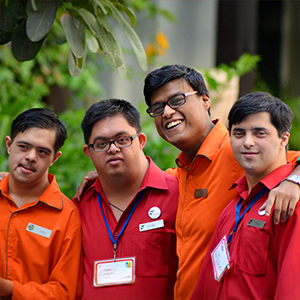
India really does know how to do luxury hotels. You only need to have dipped into regal Rajasthan or the glimmering Golden Triangle to see that quality of service and facilities is something that Indian hotel chains pride themselves on. At Lemon Tree Hotels, they are adding to this quality by taking a refreshing approach to employment principles and practices that has introduced a whole new fragrance of fairness throughout the company.The reason that Lemon Tree Hotels are standing out as leaders in responsible employment is because they have wholly committed to barrier free employment. This means they are ensuring that people employed throughout the organisation, front of house and behind the scenes, are from groups of people who, in India, are often otherwise marginalised. This is a tricky issue in India where social security does not support people with disabilities or those from deprived backgrounds. And so Lemon Tree Hotels believes that it has a responsibility to ensure that people with physical, mental, emotional and indeed financial needs are introduced into mainstream employment and well supported throughout. In other words, removing the barriers that previously prevented many people from working in tourism. In so doing, the company believes it is contributing to fair and sustainable "nation building"; something many more nations could think about when it comes to hotel employment.
In India, barrier free employment doesn't just refer to people with access needs, but also to those known as 'Opportunity Deprived Indians' such as women who have been physically abused, widowed or people living below the poverty line. Lemon Tree Hotels' fair employment record also stretches way beyond any sense of tokenistic box ticking, with 13 percent of employees having a disability or special need and nearly 500 employees coming from marginalised sections of society, which is a super impressive 25 percent of staff. A figure they plan to double in the next five years.
So, if you are staying at Lemon Tree Hotels, and your waiter, receptionist or any member of staff hands you a piece of card that makes you aware of his or her own needs or constraints, while also offering ways in which they can help you, then please smile and know that you are also playing a very important role in this fresh, fair and totally pragmatic approach to responsible employment.
Silver award:
Bushmans Kloof, South Africa
Luxury is often unfairly equated with a 'them and us' attitude but Bushmans Kloof, the only five star luxury hotel in the remote foothills of the Cederberg Mountains, has proven that this does not have to be the way. Part of the family-owned Red Carnation Hotel Collection, they have also created a family of employees on site by not only employing over 55 percent from local communities but also by housing people for free in their own Bushmans Kloof village.Winners by year
Winners by category
More Responsible tourism articles
Our guide celebrates the good that tourism can do in nature and communities.
When it comes to the future of tourism, it's essential that local people have their say.
There are certain aspects of tourism where we believe we have a responsibility to just shout ‘stop!’.
Small travel companies, big impacts - read about some of our inspiring partners.
Indulge yourself with our guide to the joy of eating local when you’re away.
Responsible tourism is not all about the bad and the ugly.
Meet this year's inspiring overall winner, LooLa Adventure Resort.

Learn who took home the Responsible Tourism awards in 2014, and why.
TUI Nederland took home the gold for its work in child protection.

This year's winners show how to tour India's slums on an ethical basis.

A small Indonesian resort made a big difference in alleviating poverty.
We celebrate a Kiwi community's amazing wildlife tourism initiative.
Worthy winner New Zealand uses tourism to make better places to live and visit.

Explore the full list of this year's winners, including the New Forest.
Ol Malo Lodge & Trust and Intrepid Travel share the glory in 2006.
Spoiler alert - Tribes Travel win for their brilliant community tourism work.
Browse the categories and the fantastic winners of our first RT awards.
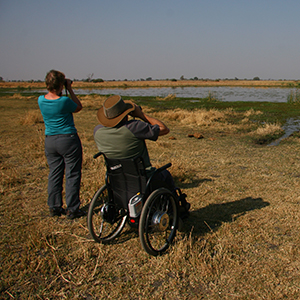
We highlight some of those doing great work to make tourism more accessible.
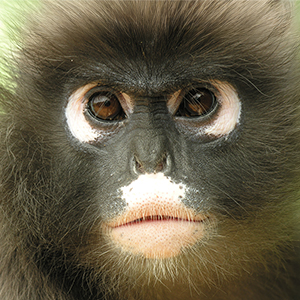
Highlighting those with a progressive ethical approach to animals in tourism.
Spotlighting brilliant bloggers who inspire people to vacation more responsibly.
Tourism can make places better to live, and to visit.