Cruising between Split & Dubrovnik
Sudurad was under the spell of a sleepy May morning, the peace barely rippling as we stepped off the boat. Most wandered off along the harbour stacked with mansions – one-time retreats for Dubrovnik aristocrats – but it was the alley leading up from the harbour and disappearing around the corner that caught our eye.
Never ones to resist a mysterious path, we followed it, ducking under peonies hanging over honey-stone garden walls. It led to an empty road, tarmac already warming in the sun. Right or left? Left – past pine forests and glimpses of olive farms and tiny wineries.
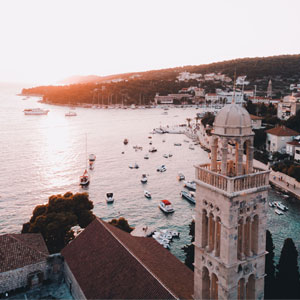
We passed three churches in less than 10 minutes, but it was the fortress-like Church of the Holy Spirit that stopped us in our tracks. Later, we’d find out that it really was a fortified church – the only one in this part of the Adriatic – built in 1577 to shelter the islanders of Sipan from attacks.
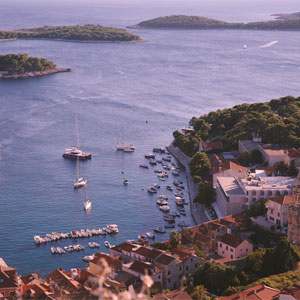
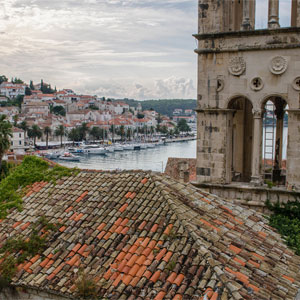
That day, the cool insides stood in absolute peace, paintwork faded to peeling shades of chalky white and blue, votive candles already burning. There was a staircase too – also irresistible. So up we went, to a rooftop with nothing but a view back down to the jumbled terracotta-topped harbour we’d left behind – and even further, to the hilly, pine-coated Elaphiti Islands we’d sailed through that morning. Lopud was up next, with its unusually sandy beaches – and then, finally, Dubrovnik.
Back in the harbour, the ship’s crew was prepping the sea bream lunch – to be eaten on deck en route to Lopud. So, in the luxuriously slow spirit of things, we meandered back to town.
Never ones to resist a mysterious path, we followed it, ducking under peonies hanging over honey-stone garden walls. It led to an empty road, tarmac already warming in the sun. Right or left? Left – past pine forests and glimpses of olive farms and tiny wineries.
We passed three churches in less than 10 minutes, but it was the fortress-like Church of the Holy Spirit that stopped us in our tracks. Later, we’d find out that it really was a fortified church – the only one in this part of the Adriatic – built in 1577 to shelter the islanders of Sipan from attacks.
That day, the cool insides stood in absolute peace, paintwork faded to peeling shades of chalky white and blue, votive candles already burning. There was a staircase too – also irresistible. So up we went, to a rooftop with nothing but a view back down to the jumbled terracotta-topped harbour we’d left behind – and even further, to the hilly, pine-coated Elaphiti Islands we’d sailed through that morning. Lopud was up next, with its unusually sandy beaches – and then, finally, Dubrovnik.
Back in the harbour, the ship’s crew was prepping the sea bream lunch – to be eaten on deck en route to Lopud. So, in the luxuriously slow spirit of things, we meandered back to town.

See Croatia differently

It’s the best and sometimes only way to get to a lot of these places.![]()

Sail slowly, stay longer & see more
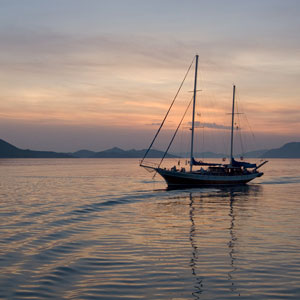
“A lot of people hate the idea of cruising,” says Powell Ettinger, from our partner The Small Cruise Ship Collection. “We have the word cruise in our name and that puts a lot of people off... We tend to appeal to people by using the wording ‘travel by boat’. It’s the best and sometimes only way to get to a lot of these places.”
The cruise between Split and Dubrovnik is one of our most popular. Spectacular (and spectacularly sought-after) cities might bookend these cruises, but it’s the places between – like stopping off at Sipan island – that are the most memorable.
“The focus of small ship cruising is to get the passengers off the ship as much as possible to experience the destination,” says Powell.
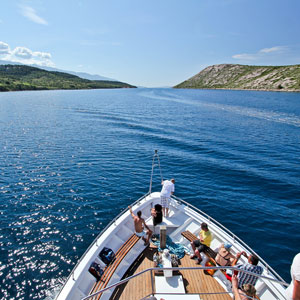
The crews on small ships encourage you to step off the boat and savour Croatia. You can opt in to excursions – rafting on the River Cetina, perhaps, or tastings at an island winery on Korcula. Or you can enjoy your free time mooching around the mooring – and even follow that mysterious path disappearing between the houses.
“The big ships focus on keeping people on board, spending money. You pay the ship for the excursion, so less of it goes to the local operator,” says Powell. “Small ship cruise passengers patronise the restaurants and shops.”
Instead of eating all meals on board, you get the chance to dine in port – and sip a glass of home-brewed, herby rakija that’s the aperitif of choice in the Croatian Adriatic. “A lot of the restaurants in Croatia have their own farms attached and grow their own food,” says Powell. “And the local fishermen catch the fish.”
You’ll often have the option to extend your stay in Dubrovnik or Split by a night or two – which means experiencing more peaceful streets after the day-trippers and cruise crowds have departed, and the chance to enjoy the beloved Croatian ritual of a morning coffee in a sunny square.
The cruise between Split and Dubrovnik is one of our most popular. Spectacular (and spectacularly sought-after) cities might bookend these cruises, but it’s the places between – like stopping off at Sipan island – that are the most memorable.
“The focus of small ship cruising is to get the passengers off the ship as much as possible to experience the destination,” says Powell.
The crews on small ships encourage you to step off the boat and savour Croatia. You can opt in to excursions – rafting on the River Cetina, perhaps, or tastings at an island winery on Korcula. Or you can enjoy your free time mooching around the mooring – and even follow that mysterious path disappearing between the houses.
“The big ships focus on keeping people on board, spending money. You pay the ship for the excursion, so less of it goes to the local operator,” says Powell. “Small ship cruise passengers patronise the restaurants and shops.”
Instead of eating all meals on board, you get the chance to dine in port – and sip a glass of home-brewed, herby rakija that’s the aperitif of choice in the Croatian Adriatic. “A lot of the restaurants in Croatia have their own farms attached and grow their own food,” says Powell. “And the local fishermen catch the fish.”
You’ll often have the option to extend your stay in Dubrovnik or Split by a night or two – which means experiencing more peaceful streets after the day-trippers and cruise crowds have departed, and the chance to enjoy the beloved Croatian ritual of a morning coffee in a sunny square.
Dubrovnik is busy all the time. But it gets that much busier when two or three of those floating blocks of flats pull in.![]()
The boutique boats of the Adriatic
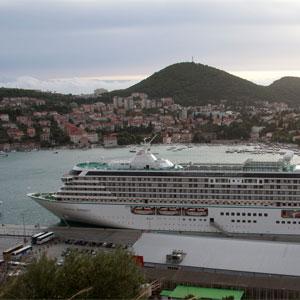
Over the last decade, Dubrovnik has become one of the famous faces of overtourism. Over 10,000 cruise ship passengers arrive in port in some of the busiest days of summer, crowding out local people. Some cruise ships measure over 320m long – about the height of the Empire State Building – and carry over 4,000 people.
“Dubrovnik is busy all the time,” says Powell. “But it gets that much busier when two or three of those floating blocks of flats pull in.”
Small ship cruises, however, offer a different experience. “In Croatia, there are 20-30 small ports and two thirds only allow ships of up to 50m inside – and quite often those small ports only have room for a few boats,” says Powell. “So instead of thousands of people visiting for a few hours, ports get 80-120 people a day.”
That’s a much better experience for local people, the environment and you. In Croatia, most small ships are owned and crewed by local people keen to share their home – and to look after it.
“Small ships also mean that you don’t need to build lot of new hotels on the islands that no one would use for the rest of the year,” says Powell. “The small ships in Croatia that we use are really small boutique hotels that happen to be on the water.”
“Dubrovnik is busy all the time,” says Powell. “But it gets that much busier when two or three of those floating blocks of flats pull in.”
Small ship cruises, however, offer a different experience. “In Croatia, there are 20-30 small ports and two thirds only allow ships of up to 50m inside – and quite often those small ports only have room for a few boats,” says Powell. “So instead of thousands of people visiting for a few hours, ports get 80-120 people a day.”
That’s a much better experience for local people, the environment and you. In Croatia, most small ships are owned and crewed by local people keen to share their home – and to look after it.
“Small ships also mean that you don’t need to build lot of new hotels on the islands that no one would use for the rest of the year,” says Powell. “The small ships in Croatia that we use are really small boutique hotels that happen to be on the water.”
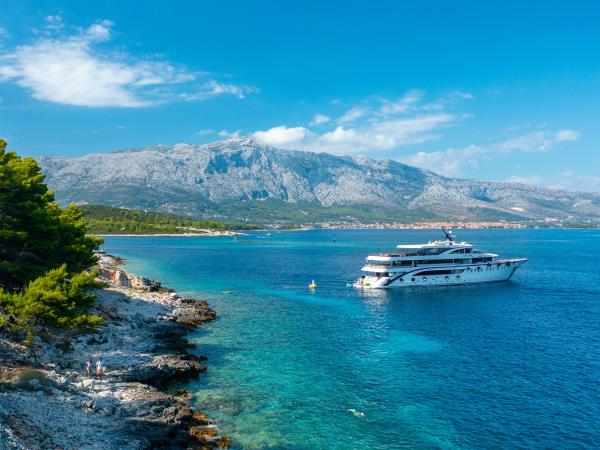
Croatian Islands motor yacht cruise
Sail the Croatian islands on a luxury small ship cruise
From
£2040 to £3135
8 days
ex flights
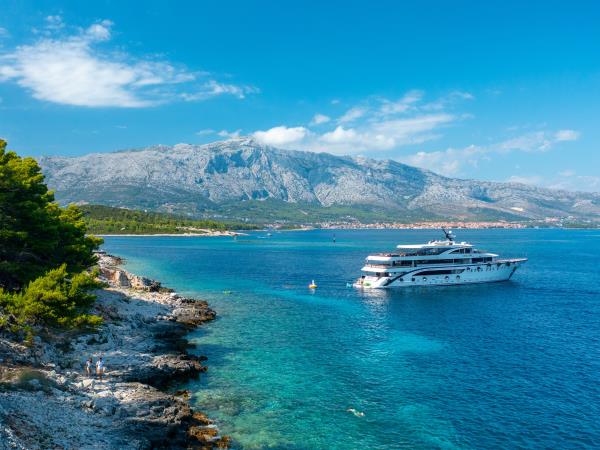
Split to Dubrovnik Luxury cruise, Croatia
Cruise Trogir to Dubrovnik in luxury via Croatia's islands
From
£1615 to £3135
8 days
ex flights
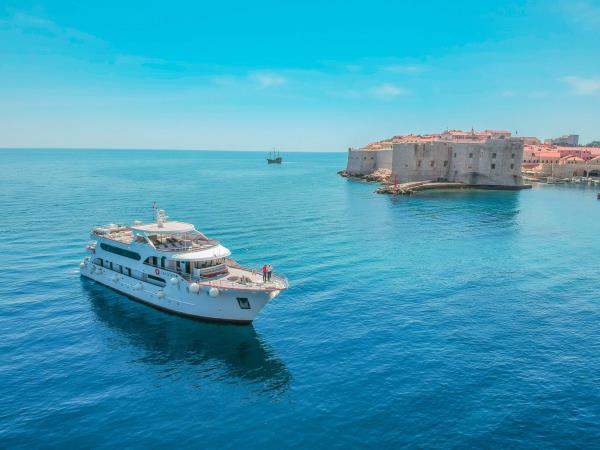
Luxury small ship cruise in Croatia
Luxury small ship cruise through Croatia's Islands
From
£1875 to £3135
8 days
ex flights
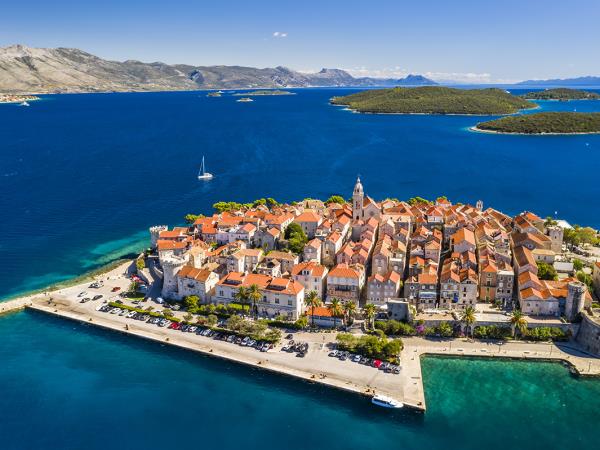
Luxury Dubrovnik cruise, Croatia
Cruise from Dubrovnik to see the best of Southern Croatia
From
£1395
8 days
ex flights
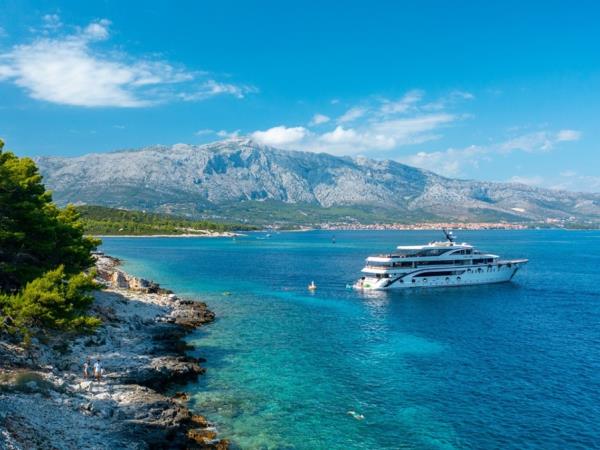
Dubrovnik to Venice luxury cruise
Cruise the Croatian Islands before a bus journey to Venice
From
£3506
11 days
ex flights
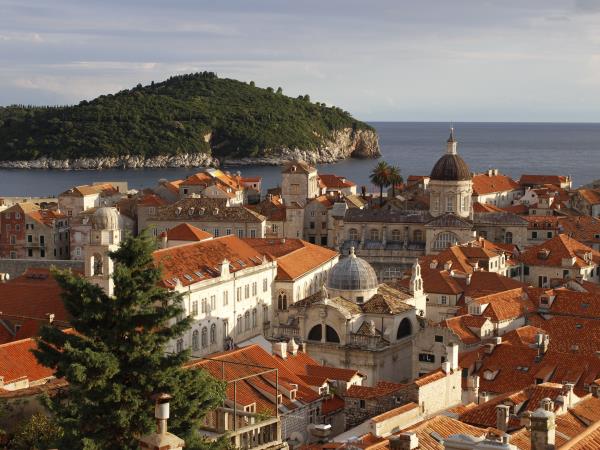
Dubrovnik to Trogir luxury 5 day cruise
Dubrovnik to Trogir 5 day highlights cruise
From
£1069 to £1655
5 days
ex flights


Contact Us

Call us for a chat about our vacations. We are happy to discuss your vacation and help in any way we can. No bots, queues or awful hold music.

1-866-821-6866
Call toll free
Calling from outside the USA


Split to Dubrovnik cruising map
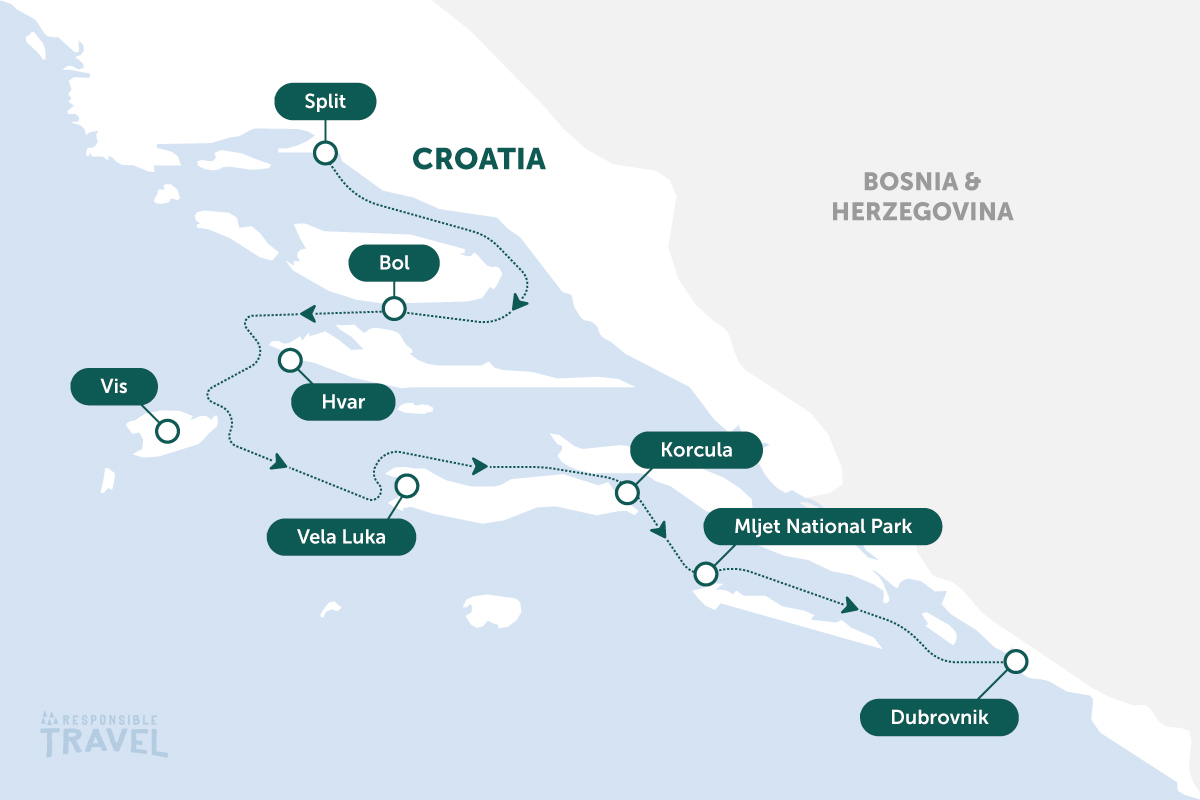
Split to Dubrovnik cruising highlights
Split
Diocletian’s Palace corners half the old town of Split – a vast fortress designed as a retirement home for the Roman emperor. Elsewhere, the cathedral shelters a Roman temple dedicated to Jupiter, the old convent has transformed into an Ethnographic Museum, and jazz and cocktail bars slot into old libraries and green-shuttered villas. Beyond the old town, Split is a working port city with a big student population, so the weekends are lively and there’s always something interesting in the events calendar.Makarska
Makarska is a relaxed town on the mainland that ducks down between the sea and the second-highest mountain range in Croatia. It’s also a great starting point for rafting adventures on the River Cetina. An overnight stay gives you the chance to explore its many churches and squares – and the sun-trap palm-fringed promenade.Brac
Most people go to Brac for Zlatni Rat beach, an arrow-shaped peninsula constantly shifting with the weather and waves. There’s life beyond the beach, though. Taste the island-made wine and olive oil (some of the tastiest in Croatia), stroll around the one-time fishing village of Bol, or explore the cool paths of the pine forests that coat much of the island.Hvar
The island of Hvar has welcomed tourists since the 19th century with its mild climes and extra sunny summers. It’s a picture postcard of pinstripe lavender fields and vineyards, plus olive groves and orchards that inform the tasty restaurant menus in the towns. Some of the best views come courtesy of the fort set high above Hvar Town – well worth the hike, especially at the very golden golden hour.Vis
A detour to Vis will take you to the furthest inhabited island from the Croatian mainland. This spot has seen many an army planted on it – most recently, the Yugoslav People’s Army, which left behind tunnels and a top-secret submarine base. These days, it’s a mellow island of quietly beautiful beaches and ports that still duck under the radar of most tourists, despite its starring role as a Greek island in Mamma Mia 2.Korcula
Korcula is almost 50km of pine forests and craggy, glassy coves. Legend has it that Marco Polo was born on the island, but the reality is much more interesting. The main town – also called Korcula – has a cathedral-topped square, half-crumbled city walls and (literally) palatial museums finished off with a crown of sea-view restaurants. Korcula is also the place to find a sunny spot for sipping a glass of grk, a dry white wine only made on this island… and yes, that is a hint of pine you can taste.Mljet National Park
Mljet is the oldest marine park in the Mediterranean, protecting the north-west corner of Mljet Island – turquoise waters, pine, oak and laurel forests, 30 species of orchid, and wild olive trees included. People have also been living here ever since the Illyrians (and, some say, Odysseus) were around over 4,000 years ago. There are shepherd tracks, a 12th-century Benedictine monastery, Roman ruins and little terracotta-roofed towns to explore.Elaphiti Islands
The Elaphiti Islands stretch out on Dubrovnik’s horizon. Sipan, Lopud and Kolocep are usually the islands of choice on cruises, with harbours big enough for ferries, yachts and fishing boats, but – thankfully – too small for big cruise ships. There are still plenty of visitors, though, especially to Lopud’s sandy Sunj Beach and the picturesque towns and villages. Kayakers also flock to the many tidal coves and caves only accessible from the sea.Dubrovnik
Dubrovnik is one of the most popular ports in the Mediterranean – but small ship cruises give you a chance to explore the marble streets, panoramic walls, cliffside bars, and long and storied history in relative peace. Statues of St Blaise keep a watchful eye over the tangled old town from their perches on the cathedral and city gates. He’s the revered patron saint of Dubrovnik, said to have fended off an attack from Venetian forces in the 10th century – and still holds a model of the city in the protective palm of his hand.Our travelers also ask…
What’s the best way to get from Split to Dubrovnik?
We might have showed our hand already – but we think the best way to get from Split to Dubrovnik is by small ship cruise. Technically, you could catch the ferry and make a direct trip in just over four hours, but spending a week drifting between the islands in-between is much more enjoyable.What route do cruises take from Split to Dubrovnik?
Most cruises broadly follow the same route between the two Adriatic cities. They start in Split, hop between the Dalmatian Islands and drop anchor in Dubrovnik. That might be the end of the journey – or you could spend a few more days meandering back to Split via different islands and ports. Alternatively, switch things up by starting in Dubrovnik and finishing in Split – and then, if you’ve got a few more days to spare, why not voyage onwards to Venice?How long are the cruises from Split to Dubrovnik?
Cruises are usually one week long. That gives you enough time to potter between the Dalmatian Islands and mainland, plus plenty of free time for swim stops and relaxing on the sun deck (with a glass of Champagne in hand, if you go for our luxury cruise).More Croatia cruising articles
Relax and allow our travel guide to gently ease you into small ship cruising vacations in Croatia.
Find out when to go on a small ship cruising vacation in Croatia by reading our tips on timings.
We suss out which of the islands, peninsulas, national parks and isthmus idylls to explore.
Read more about island hiking, culture and food while on a small ship cruise in Croatia.
It really is one of life’s lovely dilemmas, working out how to choose a small ship cruise.
Our experts and keen travelers share their Croatia cruising vacations travel advice.
Think small, think slow and think sustainable. Read on for our thoughts on responsible cruises.