What is regenerative tourism?
A radical concept, regenerative tourism differentiates itself from sustainable tourism – but can its big ideas catch on?
We all interact with tourism. In the city of Brighton, where Responsible Travel is based, you see tourists every day in summer: visitors from London on day trips, visitors on hen dos and celebratory beach breaks, teenagers on language exchanges. In living here, we have all hosted tourists. But are we good hosts? Is our city as a whole a good host? And is the tourism we get ‘good’ tourism?
When it comes to thinking more clearly about what good tourism should look like, it can be easier to start with the host community. As hosts to tourists, we are also more aware of how tourism impacts our lives: our transport system, our restaurants and therefore our food, our people and our ecology. Tourism that damages these systems is not good. Tourism that improves these systems – all of them – is.
That’s the idea behind the radical concept of regenerative tourism: the industry must contribute to resilient communities and circular economies. This must happen wherever it takes place, from seaside town to massive metropolis, to Aotearoa New Zealand’s Bay of Plenty, widely seen as a good example of regenerative tourism in action.
We all interact with tourism. In the city of Brighton, where Responsible Travel is based, you see tourists every day in summer: visitors from London on day trips, visitors on hen dos and celebratory beach breaks, teenagers on language exchanges. In living here, we have all hosted tourists. But are we good hosts? Is our city as a whole a good host? And is the tourism we get ‘good’ tourism?
When it comes to thinking more clearly about what good tourism should look like, it can be easier to start with the host community. As hosts to tourists, we are also more aware of how tourism impacts our lives: our transport system, our restaurants and therefore our food, our people and our ecology. Tourism that damages these systems is not good. Tourism that improves these systems – all of them – is.
That’s the idea behind the radical concept of regenerative tourism: the industry must contribute to resilient communities and circular economies. This must happen wherever it takes place, from seaside town to massive metropolis, to Aotearoa New Zealand’s Bay of Plenty, widely seen as a good example of regenerative tourism in action.

What are the principles of regenerative travel?

Does tourism enhance education, does tourism enhance hospital care?![]()

Regenerative tourism emerged as a concept around the 2010s. It is a radical departure from current tourism models and forms part of a whole-system regenerative economy. A regenerative system is one that doesn’t just sustain what is there, but improves it. Regenerative agriculture improves the soil, regenerative design and regenerative development improve our landscapes. Regenerative tourism should improve things too – ecology, economy and society – and touch all relevant systems. And it cannot just be about a single hotel in isolation: tourism must be regenerative through its entire supply chain.
Academic Freya Higgins-Desbiolles is regenerative tourism analyst and adjunct senior lecturer at Adelaide University, Australia.
“In my view, regenerative tourism is about tourism's role in the wider regenerative economy,” explains Freya. “It's about creating economies that are socially and ecologically sustainable into the future.”
Non-regenerative tourism might consume disproportionate energy, destroy peace and quiet, generate carbon emissions, not produce its own food, destroy rich soil, need maintenance, and be a ‘bad neighbour’.
On the other hand, regenerative tourism might consume equitable energy, preserve peace and quiet, sequester carbon, produce food, create rich soil, be self-maintaining and be a ‘good neighbour’.
“Holistic thinking is needed,” Freya explains, “Does tourism enhance the quality of life of the community? Does it enhance education? Does tourism enhance hospital care, care for the elderly and those things? How is it all interrelated?”
Academic Freya Higgins-Desbiolles is regenerative tourism analyst and adjunct senior lecturer at Adelaide University, Australia.
“In my view, regenerative tourism is about tourism's role in the wider regenerative economy,” explains Freya. “It's about creating economies that are socially and ecologically sustainable into the future.”
Non-regenerative tourism might consume disproportionate energy, destroy peace and quiet, generate carbon emissions, not produce its own food, destroy rich soil, need maintenance, and be a ‘bad neighbour’.
On the other hand, regenerative tourism might consume equitable energy, preserve peace and quiet, sequester carbon, produce food, create rich soil, be self-maintaining and be a ‘good neighbour’.
“Holistic thinking is needed,” Freya explains, “Does tourism enhance the quality of life of the community? Does it enhance education? Does tourism enhance hospital care, care for the elderly and those things? How is it all interrelated?”
Difference between sustainable and regenerative tourism
For critics, the model that regenerative travel purports to improve upon: sustainable tourism, already does much of what regenerative tourism seeks to do. The Global Sustainable Tourism Council defends sustainability, on the grounds that it, too, “focuses on increasing positive impacts alongside reducing negative ones”, whilst the former lacks practical application, or good examples.
There are some extreme interpretations of the term ‘regenerative tourism’ that take it beyond sustainable tourism. Some academics think that true regenerative tourism cannot exist in a capitalist model because it cannot be extractive. However, there are real-world examples of tourism projects that are generally acknowledged to be regenerative by many sources.
There are some extreme interpretations of the term ‘regenerative tourism’ that take it beyond sustainable tourism. Some academics think that true regenerative tourism cannot exist in a capitalist model because it cannot be extractive. However, there are real-world examples of tourism projects that are generally acknowledged to be regenerative by many sources.
Examples of regenerative tourism
Aotearoa New Zealand’s Bay of Plenty has won acclaim for its ‘regenerative approach’ to tourism – and there are great examples of Maori entrepreneurship in creating regenerative travel experiences. Nadine Toe Toe’s Kohutapu Lodge, profiled by the BBC and other press, aims to improve an economically disadvantaged community through what they call ‘real people tourism’ – welcoming tourists into the community. “I think that's a brilliant example of regenerative tourism,” says Freya. A lot of projects are small scale for now, but at its heart, this type of tourism should be about whole-system change.
New Zealand was widely seen as a hub for regenerative travel in the early 2020s, when its government placed the concept front and center in its tourism strategy. It starts with the much-publicised Tiaki Promise, which encourages tourists to think of themselves as temporary locals:
The Tiaki Promise: While traveling in New Zealand I will:
Care for land, sea and nature, treading lightly and leaving no trace.
Travel safely, showing care and consideration for all.
Respect culture, traveling with an open heart and mind.
New Zealand was widely seen as a hub for regenerative travel in the early 2020s, when its government placed the concept front and center in its tourism strategy. It starts with the much-publicised Tiaki Promise, which encourages tourists to think of themselves as temporary locals:
The Tiaki Promise: While traveling in New Zealand I will:
Beyond the stats: regenerative tourism as a holistic system
The Tiaki Promise isn’t about statistics, but emotion and connectivity. Regenerative tourism is radical. It is also holistic, so not just focused on numbers and data. In fact, in some cases, it rejects mathematical language like ‘net zero’ on the grounds that it’s easy to quibble over baselines. It is associated with Indigenous knowledge, but must not, as Freya points out in her research papers, appropriate this knowledge or leave these protected communities out of the picture. Instead, regenerative tourism has a strong community focus – whether it engages Brighton locals in the UK, or is Maori-centric in New Zealand.
This sort of tourism needs to consider the most marginalised communities. “Are we thinking about how our tourism endeavours touch their lives and bring them into decision making?” asks Freya. “Because it's also about sharing power and having that relational approach to good living for all beings within an ecology.” As an example, Freya recommends the work of Meghann Ormond, an academic in the Netherlands, who founded Migrantour Utrecht, a civic learning initiative to show how centuries of migration have shaped the city. Over a third of Utrecht residents have at least one parent born outside the Netherlands. Their team of ‘intercultural companions’ act as tour guides.
This sort of tourism needs to consider the most marginalised communities. “Are we thinking about how our tourism endeavours touch their lives and bring them into decision making?” asks Freya. “Because it's also about sharing power and having that relational approach to good living for all beings within an ecology.” As an example, Freya recommends the work of Meghann Ormond, an academic in the Netherlands, who founded Migrantour Utrecht, a civic learning initiative to show how centuries of migration have shaped the city. Over a third of Utrecht residents have at least one parent born outside the Netherlands. Their team of ‘intercultural companions’ act as tour guides.
Regenerative tourism isn’t just about the tourists
Regenerative tourism is, crucially, not something that tourists can practice anywhere they go, on their own whim – after all, what right have they to decide what good they can do? Regenerative tourism fights against the solipsism of the modern tourist who places herself at the center of everything. Holistic destination management involves NGOs, governments, tour operators, Indigenous communities – tourists are a small part of the picture.
The government-owned organisation Destination Canada’s 2023 report recommended that, when thinking about what kind of tourism they attract, that potential tourism destinations bring “people together around what they care about (and could care about) in their place, and then putting that care into action,” in other words, designing a tourism that can regenerate their communities by designing it around their own specific concerns.
The government-owned organisation Destination Canada’s 2023 report recommended that, when thinking about what kind of tourism they attract, that potential tourism destinations bring “people together around what they care about (and could care about) in their place, and then putting that care into action,” in other words, designing a tourism that can regenerate their communities by designing it around their own specific concerns.
Regenerative travel & greenwashing
Because of its holistic approach and rejection of facts and figures as the sole way to measure success, regenerative tourism could be criticised for distracting from the goal of Net Zero.
There are other problems too: regenerative tourism as a term suffers from dilution once it gets out of academic circles and starts to be used in advertising. Tourist boards – Visit Britain, for example – use it synonymously with sustainable tourism. It can become a greenwashing risk if used incorrectly. The International Centre for Responsible Tourism’s responsible tourism awards refuse to award regenerative tourism projects, “where the term regenerative is being used very loosely to differentiate the accommodation or experience from competitors in pursuit of market advantage.” Instead, it looks for projects that contribute to regenerative agriculture, reintroduce native species, strategically close areas to visitors so their ecology can recover, and regenerate urban areas using visitor funds.
In addition, regenerative travel is not always ‘green’ travel, because any tourism that involves a flight will emit a huge amount of carbon, regardless of what good it does in the destination.
There are other problems too: regenerative tourism as a term suffers from dilution once it gets out of academic circles and starts to be used in advertising. Tourist boards – Visit Britain, for example – use it synonymously with sustainable tourism. It can become a greenwashing risk if used incorrectly. The International Centre for Responsible Tourism’s responsible tourism awards refuse to award regenerative tourism projects, “where the term regenerative is being used very loosely to differentiate the accommodation or experience from competitors in pursuit of market advantage.” Instead, it looks for projects that contribute to regenerative agriculture, reintroduce native species, strategically close areas to visitors so their ecology can recover, and regenerate urban areas using visitor funds.
In addition, regenerative travel is not always ‘green’ travel, because any tourism that involves a flight will emit a huge amount of carbon, regardless of what good it does in the destination.
In conclusion: regenerative travel that builds real relationships
Freya mentions Native Nations United, a project that involves Indigenous-to-Indigenous exchange that has seen young Maori people go on cultural exchange with Aboriginal people in Australia, and First Nations communities in Canada. “There are no non-Indigenous people involved in it at all, but they're tourists,” says Freya. “They're cultural tourists to each other's countries engaged in deep cultural exchange.”
To end, let’s go back to the UK, and the language exchanges we often see in Brighton and other cities in the summer vacations: “Think of parents who send their teenagers on youth exchanges,” says Freya. “Let's say a kid from Paris will come to a family in London and stay for a month. And then that family's child in London will then go to Paris with the other family. Those families would have a relationship with each other and they would understand that as a relationship. That's the mindset we need.”
At its core, regenerative tourism’s success relies on the empathetic personal connections between us all, whether we’re on islands, in cities, or sharing the beach in our own seaside towns.
To end, let’s go back to the UK, and the language exchanges we often see in Brighton and other cities in the summer vacations: “Think of parents who send their teenagers on youth exchanges,” says Freya. “Let's say a kid from Paris will come to a family in London and stay for a month. And then that family's child in London will then go to Paris with the other family. Those families would have a relationship with each other and they would understand that as a relationship. That's the mindset we need.”
At its core, regenerative tourism’s success relies on the empathetic personal connections between us all, whether we’re on islands, in cities, or sharing the beach in our own seaside towns.
More Responsible tourism articles
Our guide celebrates the good that tourism can do in nature and communities.
When it comes to the future of tourism, it's essential that local people have their say.

There are certain aspects of tourism where we believe we have a responsibility to just shout ‘stop!’.


Small travel companies, big impacts - read about some of our inspiring partners.
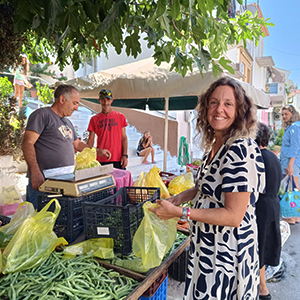
Indulge yourself with our guide to the joy of eating local when you’re away.
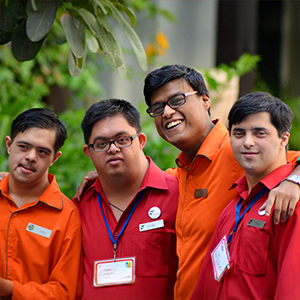
Responsible tourism is not all about the bad and the ugly.

Congrats to this year's winners: Lemon Tree Hotel and Tren Ecuador.

Meet this year's inspiring overall winner, LooLa Adventure Resort.

Learn who took home the Responsible Tourism awards in 2014, and why.
TUI Nederland took home the gold for its work in child protection.

This year's winners show how to tour India's slums on an ethical basis.

A small Indonesian resort made a big difference in alleviating poverty.
We celebrate a Kiwi community's amazing wildlife tourism initiative.
Worthy winner New Zealand uses tourism to make better places to live and visit.

Explore the full list of this year's winners, including the New Forest.

Ol Malo Lodge & Trust and Intrepid Travel share the glory in 2006.

Spoiler alert - Tribes Travel win for their brilliant community tourism work.

Browse the categories and the fantastic winners of our first RT awards.
We highlight some of those doing great work to make tourism more accessible.

Highlighting those with a progressive ethical approach to animals in tourism.

Spotlighting brilliant bloggers who inspire people to vacation more responsibly.

Tourism can make places better to live, and to visit.