Baltic national parks
Birds, bees, bogs, and Baltic beauty – the national parks of Estonia, Latvia, and Lithuania are easy to explore on our cycling or walking tours, which often link up the capitals Tallinn, Riga, and Vilnius. This kind of vacation, usually a small group tour led by a local guide, sticks mostly to the countryside and follows quiet routes through pine forests and river valleys, or along coastal tracks.
Our vacations in the Baltic national parks are available from May to September. Spring and autumn are sublime with vivid colours in the foliage, but even in summer the parks don’t get too busy – it’s never hard to find a spot for a bit of quiet reflection.
Often, you’ll be passing through the parks only briefly, perhaps to cycle a circular route or to enjoy an afternoon of kayaking on a lake. But some trips will stay for a night or two, allowing you to see and do more. Whether that’s visiting a little museum dedicated to traditional beekeeping, looking out for a will-o'-the-wisp over a boggy landscape, or birdwatching from an observation tower, the Baltic national parks prove that tours of the region should never be confined to the cities.
Our vacations in the Baltic national parks are available from May to September. Spring and autumn are sublime with vivid colours in the foliage, but even in summer the parks don’t get too busy – it’s never hard to find a spot for a bit of quiet reflection.
Often, you’ll be passing through the parks only briefly, perhaps to cycle a circular route or to enjoy an afternoon of kayaking on a lake. But some trips will stay for a night or two, allowing you to see and do more. Whether that’s visiting a little museum dedicated to traditional beekeeping, looking out for a will-o'-the-wisp over a boggy landscape, or birdwatching from an observation tower, the Baltic national parks prove that tours of the region should never be confined to the cities.

Aukstaitija National Park
In northeast Lithuania, 100km north of the capital, Vilnius, Aukstaitija National Park is an occasional stop on our cultural tours of the Baltics. You can roam full- and half-day routes by foot, bike, or kayak in this vast expanse of woodland which also contains 126 lakes. A guided kayaking trip can take you to Ladakalnis, a hill with ancient pagan significance, and from whose summit you can take in views of no fewer than six lakes.
Other activities in Aukstaitija include wild swimming, and wandering through villages, some of which date as far back as the 14th century. There are old wooden farmsteads to explore, and historic watermills, as well as thousands of ancient burial mounds set into the hillsides. The village of Stripeikiai is home to the fascinating Lithuanian Museum of Ancient Beekeeping, where you can purchase jars of the sweet stuff from local producers. Come in August for the honey festival.
Other activities in Aukstaitija include wild swimming, and wandering through villages, some of which date as far back as the 14th century. There are old wooden farmsteads to explore, and historic watermills, as well as thousands of ancient burial mounds set into the hillsides. The village of Stripeikiai is home to the fascinating Lithuanian Museum of Ancient Beekeeping, where you can purchase jars of the sweet stuff from local producers. Come in August for the honey festival.

A woodfired sauna is the perfect way to wind down after a day of hiking or kayaking.![]()

While visiting Aukstaitija National Park you can stay in the home of a welcoming local family for a couple of days, gaining an insight into traditional ways of life in this beautiful place. A woodfired sauna is the perfect way to wind down after a day of hiking or kayaking. And, of course, by staying in locally owned accommodation and enjoying home-cooked meals, you ensure that the community benefits significantly more than had you just passed through on a day trip.
Curonian Spit National Park
“We bought a house in Curonian Spit National Park to be close to nature, me for the woods, my wife to be near the beach,” says Saulius Ruzinskas, the founder of our partner Baltic Bike Tours. “We go there mainly in spring and autumn, on weekends or for longer when possible. It’s located in the smallest village in the area, almost in the forest, with the sea just two kilometres away. There we can relax, walk, and just enjoy being in quiet natural surroundings which are very different from where we live in the city of Klaipeda.”
The Curonian Spit, which Lithuania shares with Russia, is a needle-like stretch of sand 98 kilometres long, but just four kilometres at its widest. Sometimes referred to as ‘the Baltic Sahara’ for its towering dunes (up to 60m in height), the spit needs constant human intervention to prevent erosion. And the need is growing, due to the effects of our warming climate. “The biggest problem in this area is storms and strong winds eroding the sand,” says Saulius, “and these are getting stronger and more frequent.”
Our cycling vacations in the Baltics have a low environmental impact anyway, as you’re getting around by pedal power. They reduce your vacation’s carbon footprint still further by making a point of staying in hotels that use locally produced ingredients for breakfast and packed lunches. In the Curonian Spit, this is likely to mean smoked fish, fresh bread, cheeses, meats, fruit, and vegetables typical of the region and the time of year.
The national park doesn’t get a huge amount of funding from the state. All visitors must pay an entrance fee, which goes towards conservation efforts. Besides the dunes, points of interest include the ‘Hill of Witches’, an outdoor sculpture gallery showcasing the work of many local artists, and drawing on folklore for inspiration. And there is a stand of pine trees, where a large colony of black cormorants nests. There are also moose, wild boar, foxes and rabbits around. And sheep.
“The dunes are overgrowing with plants and grasses,” Saulius notes, “which means they’re losing their picturesque appeal. So, the park is introducing sheep to eat these plants, and restore the landscape to how it should be.” As solutions go, it certainly beats spraying toxic chemicals around the place.
The Curonian Spit, which Lithuania shares with Russia, is a needle-like stretch of sand 98 kilometres long, but just four kilometres at its widest. Sometimes referred to as ‘the Baltic Sahara’ for its towering dunes (up to 60m in height), the spit needs constant human intervention to prevent erosion. And the need is growing, due to the effects of our warming climate. “The biggest problem in this area is storms and strong winds eroding the sand,” says Saulius, “and these are getting stronger and more frequent.”
Our cycling vacations in the Baltics have a low environmental impact anyway, as you’re getting around by pedal power. They reduce your vacation’s carbon footprint still further by making a point of staying in hotels that use locally produced ingredients for breakfast and packed lunches. In the Curonian Spit, this is likely to mean smoked fish, fresh bread, cheeses, meats, fruit, and vegetables typical of the region and the time of year.
The national park doesn’t get a huge amount of funding from the state. All visitors must pay an entrance fee, which goes towards conservation efforts. Besides the dunes, points of interest include the ‘Hill of Witches’, an outdoor sculpture gallery showcasing the work of many local artists, and drawing on folklore for inspiration. And there is a stand of pine trees, where a large colony of black cormorants nests. There are also moose, wild boar, foxes and rabbits around. And sheep.
“The dunes are overgrowing with plants and grasses,” Saulius notes, “which means they’re losing their picturesque appeal. So, the park is introducing sheep to eat these plants, and restore the landscape to how it should be.” As solutions go, it certainly beats spraying toxic chemicals around the place.
Gauja National Park
Our Baltics cycling tours often drop in to Gauja National Park in northeast Latvia, the oldest and largest in the country. While the cycle routes are not yet as developed as they could be, the park is liberally threaded with lovely walking trails too.
Local guides on these trips are carefully chosen not only for their abilities and engaging personalities, but also because they live close to the start or end of the route and know the area well. That means they act as great windows on regional culture, and also that there’s no need for guides to travel long distances to meet their groups, which helps reduce the trip’s overall carbon footprint.
Another way in which our vacations keep things lean and green is by ensuring you stay in hotels that offer traditional dishes featuring locally grown and seasonal ingredients. Menus commonly feature options that are vegetarian or entirely plant-based.
Almost half of Gauja is forested, harbouring superb levels of biodiversity including some 150 bird species, and 50 mammal species. There is a number of fascinating geological formations including caves and caverns where you can dismount to take a peek inside. And with trips running from May through to September Gauja can be admired through several seasons – spring (May) is particularly beautiful, with bird cherry trees in full bloom spreading a white shawl across much of the park.
Local guides on these trips are carefully chosen not only for their abilities and engaging personalities, but also because they live close to the start or end of the route and know the area well. That means they act as great windows on regional culture, and also that there’s no need for guides to travel long distances to meet their groups, which helps reduce the trip’s overall carbon footprint.
Another way in which our vacations keep things lean and green is by ensuring you stay in hotels that offer traditional dishes featuring locally grown and seasonal ingredients. Menus commonly feature options that are vegetarian or entirely plant-based.
Almost half of Gauja is forested, harbouring superb levels of biodiversity including some 150 bird species, and 50 mammal species. There is a number of fascinating geological formations including caves and caverns where you can dismount to take a peek inside. And with trips running from May through to September Gauja can be admired through several seasons – spring (May) is particularly beautiful, with bird cherry trees in full bloom spreading a white shawl across much of the park.

Estonia, Latvia and Lithuania vacation
Journey through Estonia, Latvia and Lithuania in 12 days
From
US $3320 to US $3720
12 days
ex flights
Walking vacation in the Baltics and Finland
Explore national parks & history soaked cities
From
US $4030
12 days
ex flights
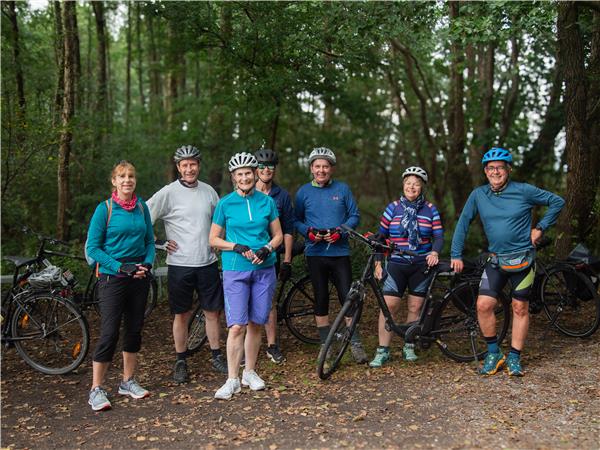
Biking vacation in the Baltics
Discover historical cities crossing Estonia, Latvia and Lithuania
From
US $3820 to US $4145
11 days
ex flights
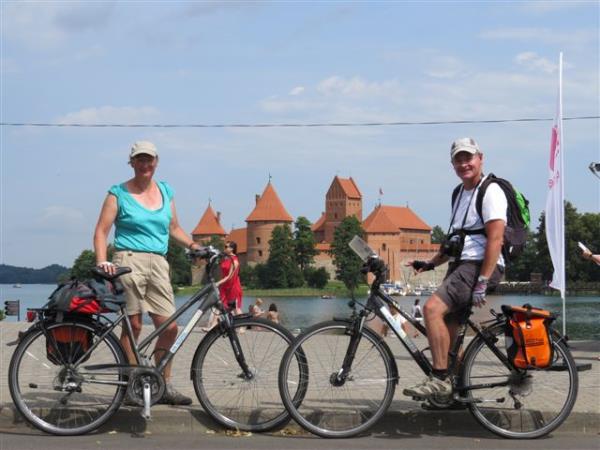
Tallinn to Vilnius cycling tour
Baltics self guided cycle tour from Tallinn
From
€1755
11 days
ex flights
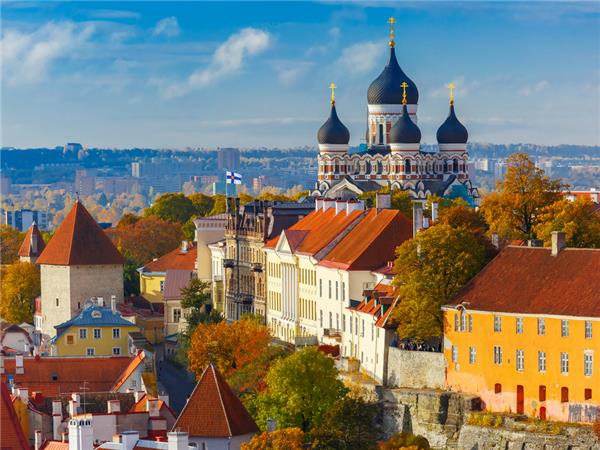
The Baltic experience tour
Experience the diverse delights of the Baltic states
From
US $3141 to US $3960
12 days
ex flights
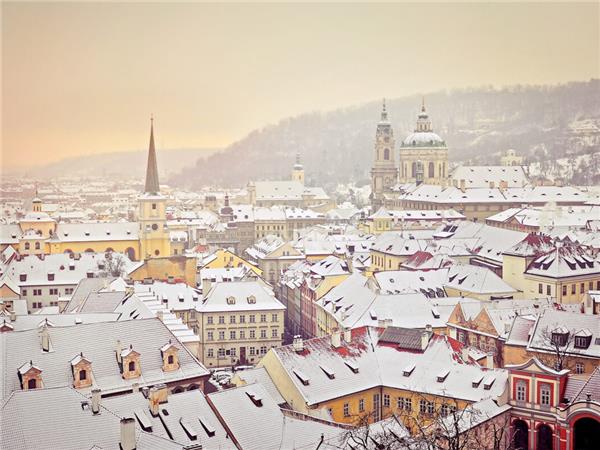
Baltics, Helsinki & Stockholm winter tour
Winter in five European capitals
From
US $3185 to US $3870
10 days
ex flights


Contact Us
Call us for a chat about our vacations. We are happy to discuss your vacation and help in any way we can. No bots, queues or awful hold music.

1-866-821-6866
Call toll free
Calling from outside the USA

Kemeri National Park
If that tree branch in the lake looks as if it’s moving, look closer. It could be a moose swimming from one side to the other. Kemeri National Park in Latvia was created to protect a landscape of wetlands, dunes, forest, and coastal lakes. If the Curonian Spit is the Baltic Sahara then Kemeri is the Baltic Everglades.
“It’s a swampy, overgrown landscape with a couple of good circular walks, a short (45km) journey from Riga,” says Saulius, and while the park boasts wildlife including white-tailed eagles, wolves, elk, and otters, it is most notable for its therapeutic waters and mud. From the 18th century patients came to Kemeri from across Europe in search of cures for their ailments, leading to many spa resorts such as Jurmala springing up. Our Baltics small group tours will frequently stay in this pleasant seaside town while exploring Kemeri and its boglands.
“It’s a swampy, overgrown landscape with a couple of good circular walks, a short (45km) journey from Riga,” says Saulius, and while the park boasts wildlife including white-tailed eagles, wolves, elk, and otters, it is most notable for its therapeutic waters and mud. From the 18th century patients came to Kemeri from across Europe in search of cures for their ailments, leading to many spa resorts such as Jurmala springing up. Our Baltics small group tours will frequently stay in this pleasant seaside town while exploring Kemeri and its boglands.
Enjoy a barefoot trail where you’ll feel pebbles, moss, sand, mud, wood chips, and clay between your toes.![]()
Walking is the best way to enjoy the park, which is home to the Great Kemeri Bog, as well as the Great Kemeri Boardwalk. The longer route (3.4km) leads to an observation tower giving some impressive views, a popular spot for photographers come sunrise or sunset, as well as birders. Stick to the path though – the bog is deep enough that a lost shoe would be the least of your problems.
Other advantageous spots for birdwatchers are the Dunduri Meadows, and lakes Kanieris and Sloka. In the Dunduri Meadows you can also see Heck cows and Polski Konik horses – these grazing herbivores are key to rewilding efforts in the park, helping to open up natural pastures that will allow other wildlife to flourish. Our vacations are led by brilliant local guides who ensure that their groups keep a safe distance from the animals to avoid causing them any disturbance.
There’s also a three-kilometre barefoot walking trail where you’ll feel pebbles, moss, sand, mud, wood chips, and clay under your feet as you go along. Walking barefoot can have many benefits including improving blood circulation and giving you a greater sense of connection to nature.
Other advantageous spots for birdwatchers are the Dunduri Meadows, and lakes Kanieris and Sloka. In the Dunduri Meadows you can also see Heck cows and Polski Konik horses – these grazing herbivores are key to rewilding efforts in the park, helping to open up natural pastures that will allow other wildlife to flourish. Our vacations are led by brilliant local guides who ensure that their groups keep a safe distance from the animals to avoid causing them any disturbance.
There’s also a three-kilometre barefoot walking trail where you’ll feel pebbles, moss, sand, mud, wood chips, and clay under your feet as you go along. Walking barefoot can have many benefits including improving blood circulation and giving you a greater sense of connection to nature.
Lahemaa National Park
There’s a saying in Estonia that ‘all roads lead to the bog’. Around a fifth of the country is made up of bogs, wetlands, and fens, and visiting Lahemaa National Park, in the north of the country, you can try bogshoeing. Very similar to snowshoeing, it involves strapping a pair of racquet-shaped soles onto the bottom of your rubber boots, enabling you to walk safely across soft surfaces without sinking in, or causing these fragile environments any harm. Try it in the company of a local guide who knows where they’re going, and at night you may catch sight of a will-o'-the-wisp, or fairy lights (sadly not actually magical beings, but a natural chemical phenomenon such as bioluminescence).
Explore the bogs (carefully) at night, and you might see a will-o’-the-wisp.![]()
Lahemaa National Park is a popular stop on our Baltics vacations, with a 50km route bringing you close to the Russian border. Situated in northern Estonia, Lahemaa enjoys the claim to fame of being the first national park of the former Soviet Union. The park is made up of bogs, thick forest, lakes, and rivers, with a coastline that is scattered with large boulders, deposited centuries ago by glaciers. Along with more than 220 species of bird, the park is also home to moose and wild boar – both of which will sometimes appear on the menu in local restaurants. Bears, lynx, and beavers are also known to inhabit these parts.
Besides bogshoeing, our vacations also explore quiet little fishing villages. These include Altja, a one-street seaside community, and Kasmu, which has a family-run museum dedicated to the area’s history of seafaring, fishing and smuggling. You’ll stay in locally owned hotels, while evening meals are taken in nearby restaurants that source much of their produce from the surrounding agricultural areas.
Besides bogshoeing, our vacations also explore quiet little fishing villages. These include Altja, a one-street seaside community, and Kasmu, which has a family-run museum dedicated to the area’s history of seafaring, fishing and smuggling. You’ll stay in locally owned hotels, while evening meals are taken in nearby restaurants that source much of their produce from the surrounding agricultural areas.
More Baltics articles
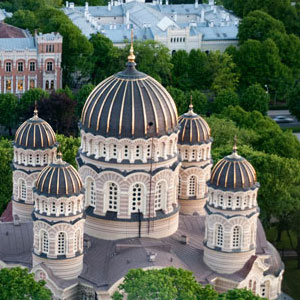
Experience all three of the Baltic states, Estonia, Latvia and Lithuania, as part of the same vacation.
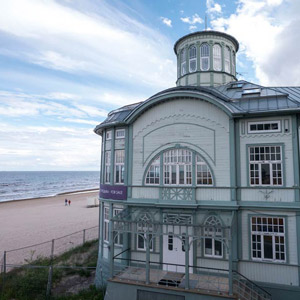
The Baltics aren't always Baltic in temperature. Visit in July and August for long, warm days.
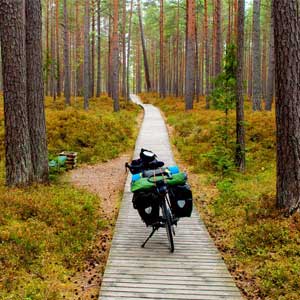
The first thing to know about cycling across these states is that it's very, very flat - brilliant for lazy pedals.
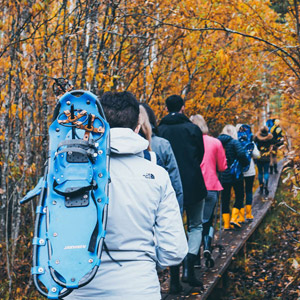
Wide expanses of untouched wilderness, forests full of beavers and bears – discover Latvia, Lithuania and Estonia on foot.
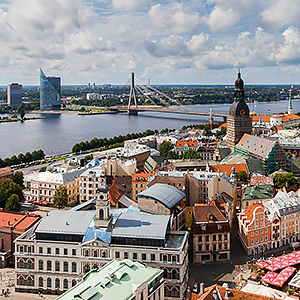
Larger than Tallinn and Vilnius, Riga is home to a UNESCO-listed Old Town.
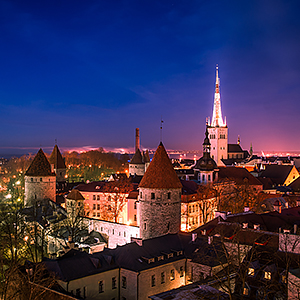
Tallinn is astoundingly photogenic – but with a history that makes it fascinating, too.
A UNESCO-listed medieval Old Town and a wealth of Second World War and Soviet history.