Walking vacations in Costa Rica
Our walking vacations in Costa Rica take a pleasantly relaxed approach. Slowing things down, they put the focus on admiring the diverse landscapes that you pass through and seeking out the animals that call them home. These trips are perfect for wildlife and nature lovers, and accessible for pretty much anyone who walks regularly.
Over the course of two weeks or so, you’ll trek in many of the most renowned locations in Costa Rica such as the Arenal Volcano, Monteverde Cloud Forest Preserve and Manuel Antonio National Park. But you can walk and explore a little further, see more, than most visitors.
“I think what I enjoy most about walking in Costa Rica is the variety,” says Tony Harpur, a tour leader for our partner Ramble Worldwide. He has accompanied groups here every year for more than a decade and considers this his favorite country to visit. “You get every type of rainforest, cloud forest, tropical forest. We go at a fairly slow pace, and our priority is to see the wildlife. If there’s a resplendent quetzal we will happily take half an hour to wait for it to appear. And we see things that you just wouldn't know about unless you had a local guide with you.”
In fact, the guides in Costa Rica are key to the whole thing. They are experts in ecology, but can also talk about Costa Rican culture and history. “People are always surprised by how detailed the guides’ knowledge is,” adds Tony. “It’s something that we as tour leaders try to provide, but there’s nothing like having a local expert. I think that's a real plus.”
Your guide will come equipped with a telescope or binoculars, ready to use at a moment’s notice should the need arise. “It is astonishing when the guide picks out a sloth on a tree 200m away, while you’re driving. They’ll bundle us all out of the coach, get the scope set up, get this magnificent view of the animal up in the trees. In all the parks, the local guides will be able to do things like find little bats that nest under great big leaves. They know exactly where to go. And that's always amazing.”

Why is Costa Rica so good for walking?
Costa Rica is fantastic for walking for several reasons. Firstly, the variety of landscapes you can enjoy on a single trip. More than a quarter of this Central American country is made up of protected areas – though it is just a fifth of the size of the UK, it has twice as many national parks (30 in total).
Secondly, across cloud forests, rainforests, tropical forests, mangrove swamps, coral reefs and wetlands are countless species waiting to be pointed out and identified by one of Costa Rixa’s superb naturalist guides. They bring excitement and vivid detail to your walks. Our guide to wildlife in Costa Rica has more details of what animals you might see.
And lastly, because Costa Rica is such a small country, you’re never more than a few hours’ drive from the next destination. One day will find you walking through coffee plantations, the next along a pristine sandy beach, the next among ancient lava formations on the slope of an extinct volcano.
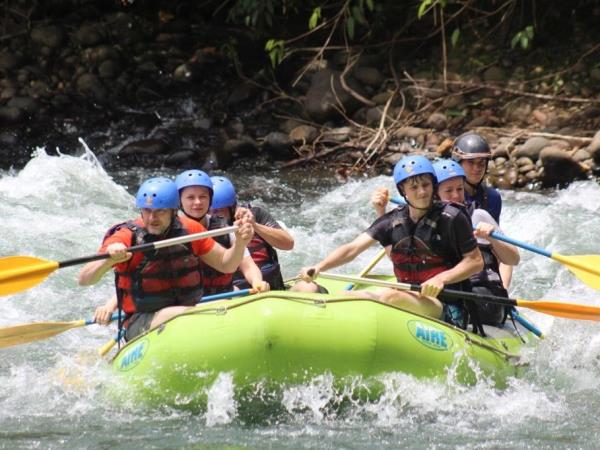
Costa Rica raft and trek adventure
Raft and Expore Corcovado National Park
From
US $3250 to US $3375
9 days
ex flights
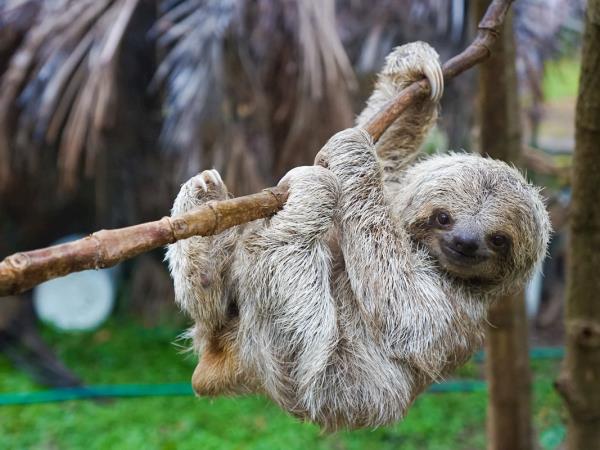
Costa Rica walking vacation
Uncover rainforests, waterfalls and wildlife in Costa Rica
From
£5349 to £7244
16 days
inc UK flights
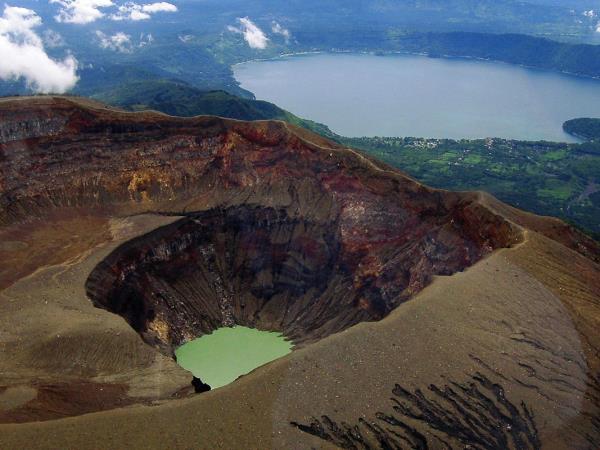
Central America guided trekking vacation
Off the beaten track volcano trekking
From
US $5800 to US $6200
21 days
ex flights


Contact Us

Call us for a chat about our vacations. We are happy to discuss your vacation and help in any way we can. No bots, queues or awful hold music.

1-866-821-6866
Call toll free
Calling from outside the USA


Popular walking routes in Costa Rica
Cahuita National Park
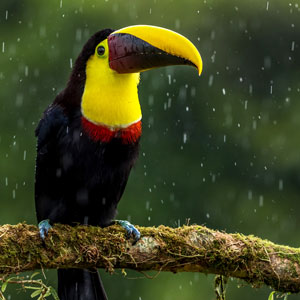
Even in a country as beautiful as Costa Rica, Cahuita National Park on the Caribbean coast is a knockout, with white sand beaches separating rainforest from coral reef. Here a 10km hiking trail takes around four hours to complete. Why so long? Because along the way you’ll be watching out for sloths, toucans and tropical frogs among the trees, and listening out for the excited screech of howler monkeys.
“In Cahuita most visitors will just go onto the beach and look around for a little while,” says Tony. “Whereas we normally take a longer walk through the forest, along the beach, on the boardwalk.”
“In Cahuita most visitors will just go onto the beach and look around for a little while,” says Tony. “Whereas we normally take a longer walk through the forest, along the beach, on the boardwalk.”
Sarapiqui
Sarapiqui is in the foothills of the Cordillera mountains, the center of a triangle made up of San Jose, Arenal and Tortuguero National Park. Here rainforest gives way to aromatic cacao plantations, and leisurely strolls are not only an opportunity to learn the importance of cacao to Costa Rican culture, but also to enjoy some tastings.
Arenal Volcano
At 7,500 years old, Arenal is a sprightly young whippersnapper in volcano terms, though it spent the second half of the 20th century in a flurry of activity. Dormant since 2010, the volcano is a fascinating place to explore on foot, with dozens of trails to choose from that lead you across dramatic lava fields. One such is the Arenal 1968 Trail, which loops for around 5km, tracking the progress of the most recent eruption which began in 1968 and lasted for decades.
Rio Celeste
The Rio Celeste is a turquoise ribbon threaded through Tenorio Volcano National Park, in northern Costa Rica. Here, the hour-long walk to a waterfall is the most popular route, but you’ll continue further on, to see where two other rivers, the Buenavista River and Sour Creek, meet to form the Celeste.
Monteverde Cloud Forest
Monteverde Cloud Forest is a high point of any trip to Costa Rica – literally, there are hiking trails here at an elevation of 1,250m. There are an astonishing 400 species of bird found here, along with vast numbers of mammals, reptiles, insects and plants. Here you can also tour a coffee plantation and learn about how the coffee industry has shaped the country’s history. Our guide to coffee tours in Costa Rica is a useful introduction.
Manuel Antonio National Park
Walking in Manuel Antonio National Park on the Pacific coast, kingfishers and iguanas are among the wildlife you might spot. “My favorite day of the trip is towards the end when we go from Monteverde down to Manuel Antonio,” says Tony. “We do what they call a ‘crocodile cruise’. The crocodiles are great. They've all got names and they've been there for years and years. But the amount of birdlife on that particular cruise is just fantastic. I tend to underplay it because everybody finds it absolutely astonishing.”
Walking in Costa Rica: practicalities
What types of trip are available?
These are relaxed walking vacations where the focus is on Costa Rica’s flora and fauna. You will be changing location every day or so, with a half or full day walk in each, and there is very little challenge involved. Our multi activity vacations may include some walking, or you can include Costa Rica as part of a much longer trek through Central America.
When is the best time for walking?
Costa Rica is a year-round walking destination, but the sunny dry season, which runs from December to April, is usually seen as the ideal time. May to November is the ‘green season’ when the foliage is lush and bursting with colour, while the heaviest rain falls in October and November which can make some trails inaccessible, and also makes wildlife viewing more difficult.
“I think late January and February is best,” advises Tony. “November can be a bit rainy and occasionally the programme has to be moved around to accommodate that. It's probably safer to go in February.”
Learn more about the best time to go to Costa Rica.
“I think late January and February is best,” advises Tony. “November can be a bit rainy and occasionally the programme has to be moved around to accommodate that. It's probably safer to go in February.”
Learn more about the best time to go to Costa Rica.
How difficult is the walking in Costa Rica?
Walking in Costa Rica is usually graded moderate. If you are a regular walker with decent fitness you will have little difficulty here – the focus is predominantly on wildlife watching, and the climate is hot and humid, so you will take your time. A typical hike might be five hours, during which you might cover up to 8km. This are particularly good walking vacations for seniors, though groups will be made up of people from a range of ages and backgrounds.
The walking trails in Costa Rica are generally well-maintained and often will follow paved paths or boardwalks. Expect the occasional ascent or descent of up to 600m, and given rain showers are not unusual here, muddy sections are possible. Walking poles may be recommended if it gets particularly wet. Itineraries may vary a little depending on weather conditions.
The walking trails in Costa Rica are generally well-maintained and often will follow paved paths or boardwalks. Expect the occasional ascent or descent of up to 600m, and given rain showers are not unusual here, muddy sections are possible. Walking poles may be recommended if it gets particularly wet. Itineraries may vary a little depending on weather conditions.
Can I book a Costa Rica walking vacation with flights included?
For convenience, our walking tour packages in Costa Rica can often include flights from the UK – the direct flight time between London and San Jose is around 12 hours.
More Costa Rica articles
You can travel at pretty much any time, but the best time to visit is revealed in our guide.
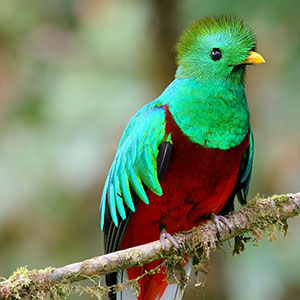
This tiny Central American country is big on biodiversity – and adventure. Find out more in our guide.
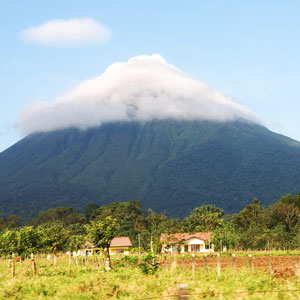
We make choosing between the national parks, coasts and hiking areas easier with our map and highlights guide.
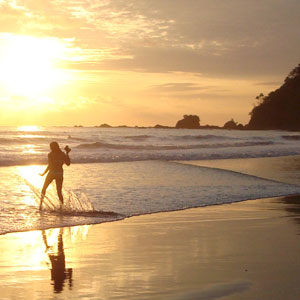
With Pacific and Caribbean coastlines, Costa Rica is not short of beaches.
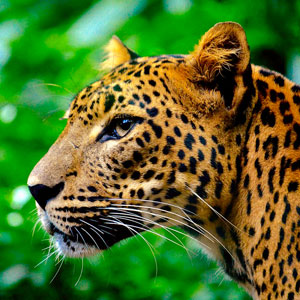
Check out the animals to watch out for on vacation, from sloths to sea turtles.

Costa Rica family vacations are easy. We reveal why we think it's the best place in Central America for active kids.
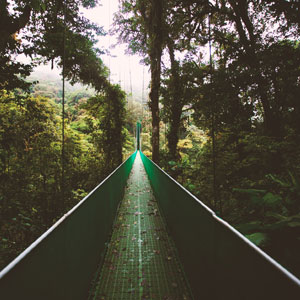
Read our guide to discover the best – and most environmentally sound – adventures.
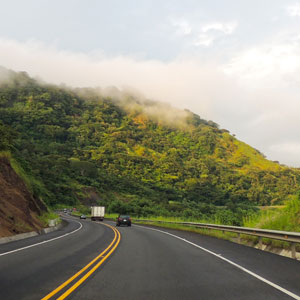
Most travelers on tailor made trips end up driving. That’s because it’s near irresistible.
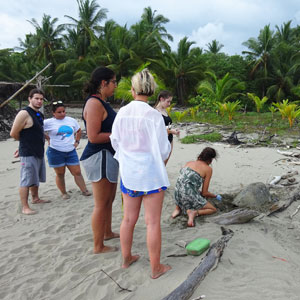
Costa Rica is an environmental hero, but that doesn’t mean it doesn’t need a helping hand.
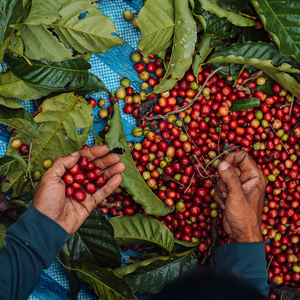
Read the best travel advice for traveling in this Central American country, as shared by our experts.
Responsible tourism is a genuine success story in Costa Rica. Find out why in our guide.
Volcanoes, rainforests, wildlife reserves, lodges... you won't run out of things to do here.

LGBTQ+ vacations are one of the fastest growing sectors of the country’s travel industry.