China first time traveler tips

I'm not really sure what I expected from China, but I know it completely exceeded my expectations in every way.![]()

China, a vast, beautiful country home to nearly 1.5 billion people, is a fascinating feast for the senses, but it’s not always easy to understand or get around for international tourists. We recommend newcomers join an organised tour, as it will help you to explore in confidence, getting your bearings and developing a sense for life here in the company of a knowledgeable local guide.
“When I was younger, my granddad visited China on a group tour and talked so highly of his trip that I was always so intrigued to see it for myself,” says Nicole Stirling of our Asia specialist partner The Dragon Trip, who travelled on our Hong Kong to Beijing tour. “The first time I went there I wasn’t really sure what I expected, but I know that it completely exceeded my expectations in every way.”
We’ve compiled some essential tips for the first-time visitor to China so that you too can enjoy a mind-blowing experience and come home with stories to inspire others.
“When I was younger, my granddad visited China on a group tour and talked so highly of his trip that I was always so intrigued to see it for myself,” says Nicole Stirling of our Asia specialist partner The Dragon Trip, who travelled on our Hong Kong to Beijing tour. “The first time I went there I wasn’t really sure what I expected, but I know that it completely exceeded my expectations in every way.”
We’ve compiled some essential tips for the first-time visitor to China so that you too can enjoy a mind-blowing experience and come home with stories to inspire others.

Do many Chinese people speak English?
Often one of the most pressing concerns for first-time visitors to China is negotiating the language barrier. Many Chinese people, especially younger generations, can speak passable English, enough to give rudimentary directions. But downloading a translation app onto your phone before you travel can be a good idea. We recommend familiarising yourself with a few key phrases in Mandarin – even knowing how to say please, thank you and good morning can earn you a friendly smile.One of the most essential tips for first time visitors to China is making mobile payments.![]()
How to pay for things
One of the most essential tips for first time visitors to China is how to make mobile (cell-phone) payments. While card payments are still accepted in many places, from hotels to supermarkets, mobile payment is the preferred mode, even in rural areas. “Most people now pay for everything by phone,” says Wendy Xue of our partner China Adventure Tours. “So about 10 days before travel we advise our guests to install an app like Alipay or WeChat that makes payments very easy. We give instructions and support on how to install and how to use them, so it’s all very smooth.”
The great thing about AliPay and WeChat is that these are ‘everything apps’ so you can also use them to order DiDi hire cars (think Uber) and takeaways, and to communicate with your tour operator and the rest of your group. If you do need cash, such as for tips (see below), then you will also find there are plenty of ATMs in Chinese cities.
The great thing about AliPay and WeChat is that these are ‘everything apps’ so you can also use them to order DiDi hire cars (think Uber) and takeaways, and to communicate with your tour operator and the rest of your group. If you do need cash, such as for tips (see below), then you will also find there are plenty of ATMs in Chinese cities.
What is the Wi-Fi coverage like?
The Wi-Fi coverage in China is usually excellent, in cities at least. However, having data is essential, whether for staying in touch with your tour group, or paying for public transport with your phone. Daily roaming rates can be steep, so connect to free Wi-Fi whenever you can.If you’re going to be in China for 10 days or more and tend to use your phone a lot, then you may find it more cost effective to purchase a local eSIM. However, if you do that then you are going to encounter what’s known as the ‘Great Firewall of China’. Online censorship is very strict, effective, and well policed, and Western social media like Facebook, Twitter and Instagram, as well as Google, are blocked. You will need to purchase a virtual private network (VPN) if you want to access them. But if you’re using your own SIM card from home, with roaming charges, then you should still be able to do your Google searches and stay in touch with friends on your regular social platforms.
What do you need to book in advance?
“I’ve been able to tick off so many bucket list moments: seeing giant pandas, visiting the Terracotta Warriors and of course walking on the Great Wall,” says Nicole. “And something that surprised me was how much I enjoyed learning about kung-fu.” Our China vacations often visit the legendary Shaolin Temple where you see the young monks give a thrilling martial arts display.The ’big experiences’ in China, like the Shaolin Temple, a night at the Beijing Opera, or visiting the pandas of Chengdu, all need to be booked in advance, especially if you are traveling in peak season (June through August). On our China vacations, our partners will make all the arrangements for you to ensure you don’t miss out.
Can you drink the tap water?
Avoid drinking tap water, or water from public fountains, in most areas of China. Ageing pipework and the presence of contaminants mean there is a risk of illness. You can stick to bottled water for safety but try to purchase larger bottles infrequently rather than lots of small ones, to reduce waste.We’d also recommend looking at reusable water filtration bottles like Water2Go, which are highly effective at removing pollutants and therefore make the tap water anywhere immediately drinkable.
Air pollution
China’s problems with air pollution have been well documented, but the situation has improved greatly. In the cities, it’s worst during the winter, December through to February, due to coal being burned in homes and factories for heating. “I think sometimes there is a perception that Chinese people do not care about the environment when in fact we care about it deeply,” says Wendy. In some parts of the country their vacations encourage you to get hands-on with tree-planting projects, while also financially supporting environmentally focused non-profit organisations.Public bathrooms
Public bathrooms in China are usually free of charge. They are a mix of squat toilets and Western-style throne toilets – in both cases it’s normal for wastepaper to be put into a bin rather than down the toilet to avoid causing blockages. Squat toilets, considered more hygienic as they’re effectively just a hole in the ground, are more common in older areas such as the hutong neighbourhoods of Beijing. In modern hotels and restaurants you can expect to find Western-style facilities.
China highlights tour, tailor made
Walk along the Great Wall and relax in the stunning Li River
From
US $3719
12 days
ex flights

China culture & hiking vacation
A wonderful experience of real China
From
US $2937 to US $3712
14 days
ex flights

China tour, Shanghai to Beijing
Discover the delights of China's north
From
US $1110 to US $1695
12 days
ex flights

Small group tour of Yunnan, China
China's most diverse & fascinating region - Yunnan Province
From
US $1620
9 days
ex flights

China 10 day vacation, food & heritage
Explore Beijing, Xi'an, Chengdu and Shanghai
From
€2791
10 days
ex flights

Rural China cultural vacation, tailor made
See traditional village life in mountainous Guizhou & Yangshuo
From
€2667
12 days
ex flights


Contact Us

Call us for a chat about our vacations. We are happy to discuss your vacation and help in any way we can. No bots, queues or awful hold music.

1-866-821-6866
Call toll free
Calling from outside the USA


Dining out
Given that it’s one of the largest countries in the world, it’s hardly surprising that China has an immensely diverse culinary scene. But broadly speaking, there are eight regional cuisines, each of which has its own favoured local ingredients, its own flavour profiles, its own methods of cooking.
One of the people from our group loved the noodle soup from Yangshuo so much that she actually went and had a tattoo done to represent it!![]()
“Be open-minded with food,” advises Nicole, “and grab the opportunity to try different things. There’s an amazing dumpling restaurant in Xi’an, which I would go back to in a heartbeat. I also took part in a cooking class in Yangshuo and learnt how to make some amazing dishes. One of the people from our group loved the noodle soup from Yangshuo so much that she actually went and had a tattoo done to represent it!”
“My favorite food is that from central China, the provinces of Chongqing and Sichuan, for its spice,” says Wendy, “whereas in Shanghai, Guangdong and Hong Kong the food is a little lighter.”
Read more in our guide to Chinese food and drink.
“My favorite food is that from central China, the provinces of Chongqing and Sichuan, for its spice,” says Wendy, “whereas in Shanghai, Guangdong and Hong Kong the food is a little lighter.”
Read more in our guide to Chinese food and drink.
Tipping
China doesn’t have a tipping culture. While they will certainly be appreciated, gratuities are not expected in restaurants or bars. But on guided tours, it’s polite to tip your guides and driver at the end of the trip as a thank you.Some hotels have robots for check-in and room service![]()
What to expect from hotels
Hotel rooms in China tend to be larger than those in Europe. In cities like Beijing and Shanghai, some upscale hotels are experimenting with robots. So if you order room service, it will be delivered inside a unit that navigates around the corridors and lifts by itself. And you may be checked in and out by a robot receptionist.
Taking the train
When traveling in China, we recommend taking the train over an internal flight. Not only does this mode of travel have a smaller carbon footprint but it’s also a more relaxed and scenic way to see the country, and a chance to meet Chinese people on their own journeys. Most signage in train stations is in English as well as Mandarin, but do arrive nice and early for your train as in big cities the stations are huge and can be a little overwhelming.China has an extensive high speed rail network, reaching speeds of up to 350km/h, that connects most cities. It can whisk you from Beijing to Xi’an in as little as four hours, or from Shanghai to Hangzhou in just 40 minutes. There are different classes of tickets, and some trains also have sleeper compartments. Sleepers are themselves divided into different classes. Second class compartments with six berths are the cheapest, while deluxe soft sleepers with just two berths are the priciest. Our guide to traveling China by train has more details.
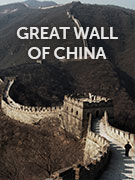
Don’t just go for the easiest section of the Great Wall
“The Great Wall was the highlight of my first tour in China,” says Nicole. “We camped overnight on the wall which was incredible, and something that not a lot of people can claim to have done! After eating a home-cooked meal we spent the evening on the wall and a couple of the guests on the tour put on their own shadow puppet show using the tent and torch light (inspired by the Sichuan opera we had watched in Chengdu.”
Most people visiting China will opt to see the remnants of the Great Wall that lie just an hour north of Beijing. But it gets very busy, so we recommend looking at some of the quieter parts of the Great Wall of China that lends themselves much better for a walk.
Most people visiting China will opt to see the remnants of the Great Wall that lie just an hour north of Beijing. But it gets very busy, so we recommend looking at some of the quieter parts of the Great Wall of China that lends themselves much better for a walk.
Cultural etiquette
Our partners ensure you are fully briefed on cultural etiquette before departure just to avoid any misunderstandings. This is particularly important when visiting minority communities, such as the Hakka people of Fujian, where you can stay in community-run ecolodges and learn about their traditional ways of living, such as their fortified earthen homes and the ‘hill songs’ they use to communicate. In places like this it’s useful to know how to greet people (with a handshake, and addressing the most senior person first), any subjects to avoid, as well as pointers like removing your shoes on entering someone’s home, and not bowing unless it’s in apology.More China articles

Our tips on the best time to visit China, month by month, with our cultural pick from the Chinese calendar.

Our China travel guide features everything from advice on food and shopping to a brief history of China.

Our China highlights include an interactive map, as well as a list of classic itineraries and travel times.

From Beijing to Chengdu, Shanghai to Xi'an, its cities offer insights into China's past, present and future.
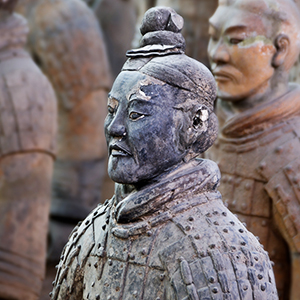
A brief history of China's terracotta army, and the best way to visit the terracotta warriors from Xi'an.

Read our guide to learn how to visit the Great Wall of China, and why the quieter bits speak loudest.

It's in scenes of local life that you’ll get a true picture of what it’s really like to live in Beijing. Find out why.
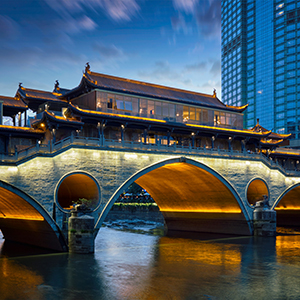
Sichuan province in China combines dramatic sights with a laid-back vibe – the perfect sort of combo for a vacation.
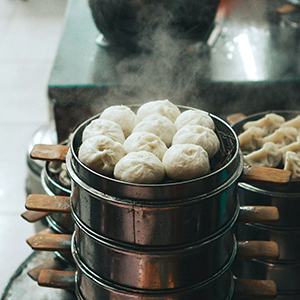
Chinese food is hard to define, because the country is so vast - every region has its own distinct cuisine.

Cycling is an important part of Chinese culture so it makes perfect sense to explore on two wheels.

Discover the joys of walking in China, including our top tips on where go on a China hiking vacation.

The best way to get the most from the Forbidden City complex is on a tour with a knowledgeable local guide.

Train travel in China is not only an easy option, but also a fantastic way to get to know the country.

Tours to rural China let you stay in local communities, to see a side of China that most visitors don’t.

From panda watching to mud baths to waterfalls, we introduce the best family activities.

Read on for advice on language and what to pack, as well as tips from our previous travelers in our guide.
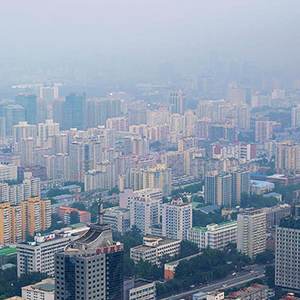
China has got tourism problems; we've got the low down on what you can do to travel better.









.jpg)