LGBTQ+ Cuba vacation advice
Cuba is one of the most open-minded Caribbean islands and is considered safe for LGBTQ+ travelers. This has not always been the case, as the island’s history of forced labour camps – as well as the many LGBTQ+ people who fled the Castro regime – demonstrate, and there is still some way to go before equality is achieved. But for now, at least, Cuba is heading in the right direction.
Cuba legalised same-sex sexual relationships in 1979. Until early 2019, the Constitution of Cuba did not recognise gay marriage or civil unions. There was a proposal in 2018 to amend the language referring to marriage being between a man and a woman, but this was rejected following objections, largely from evangelical church groups. Instead, this section was removed entirely – neither prohibiting nor promoting LGBTQ+ unions.
Cuba legalised same-sex sexual relationships in 1979. Until early 2019, the Constitution of Cuba did not recognise gay marriage or civil unions. There was a proposal in 2018 to amend the language referring to marriage being between a man and a woman, but this was rejected following objections, largely from evangelical church groups. Instead, this section was removed entirely – neither prohibiting nor promoting LGBTQ+ unions.
A historic change came in 2022, when – despite significant opposition from conservative and religious groups – Cuba voted to legalise same-sex marriage, pushed by the government and supported by about two-thirds of the population. The Family Code sets out regulations that don’t discriminate on sexual orientation, effectively legalising adoption for same-sex couples too.
Transgender people are recognised in Cuba and gender affirmation surgery has been available free of charge on Cuba’s famously excellent healthcare service since 2008. However, the transgender community doesn’t have the same clear protections as other Cubans; activists are campaigning for a separate gender identity law that clarifies their rights – and upholds them.
Keep reading to find out more about LGBTQ+ travel in Cuba. This guide is updated regularly, but do check the Cuba Solidarity Campaign or Human Rights Watch for the most up-to-date information.

History of LGBTQ+ rights in Cuba
Cuba may be politically left wing, but it is socially conservative. For all its love of the arts, of dance, of colour and beauty, this island is staunchly machista, with strongly defined gender roles. As well as its many cultural influences – European, Caribbean, Latin American, Catholicism, all of which tend to lean towards the patriarchal – Cuba has communism and its revolutionary history to contend with.
The revolt against imperialism was won in 1959 by larger-than-life characters wearing combat boots and smoking cigars that informed a vision of ‘manhood’ that became representative of Cuba’s proud national identity following La Revolución. What’s more, same-sex relationships were viewed in some circles as an example of capitalist decadence – or ‘ideological diversionism’ to use the phrase coined by Raúl Castro – that perpetuated values unpalatable in the new, Communist Cuba.
Same-sex relationships were not actually legal in pre-revolutionary Cuba. Indeed, prison sentences could be handed out to gay men who were open about their sexuality in public. However, the island’s somewhat decadent reputation drew North American visitors in search of a weekend away, or on excursions from docking cruise ships.
Along with the many visiting servicemen and sailors, these tourists created a thriving market for sex workers. A handful of gay bars existed at this time, but sex work would have been one of the most visible forms of same-sex partnerships and – as the brothels, bars and casinos that promoted it were largely controlled by US-based criminals – sex workers, gambling and organised crime were inextricably entwined.
Castro, Che and comrades were determined to overthrow Western capitalism, imperialism and all their associated ‘excesses’.
The revolt against imperialism was won in 1959 by larger-than-life characters wearing combat boots and smoking cigars that informed a vision of ‘manhood’ that became representative of Cuba’s proud national identity following La Revolución. What’s more, same-sex relationships were viewed in some circles as an example of capitalist decadence – or ‘ideological diversionism’ to use the phrase coined by Raúl Castro – that perpetuated values unpalatable in the new, Communist Cuba.
Same-sex relationships were not actually legal in pre-revolutionary Cuba. Indeed, prison sentences could be handed out to gay men who were open about their sexuality in public. However, the island’s somewhat decadent reputation drew North American visitors in search of a weekend away, or on excursions from docking cruise ships.
Along with the many visiting servicemen and sailors, these tourists created a thriving market for sex workers. A handful of gay bars existed at this time, but sex work would have been one of the most visible forms of same-sex partnerships and – as the brothels, bars and casinos that promoted it were largely controlled by US-based criminals – sex workers, gambling and organised crime were inextricably entwined.
Castro, Che and comrades were determined to overthrow Western capitalism, imperialism and all their associated ‘excesses’.
Throughout the 1960s and 1970s, gay men were widely persecuted. They lost their jobs and were expelled from the Communist Party. University students were thrown off their courses and in some cases contact with children was forbidden. Anyone who did not live up to the Party’s heteronormative vision of manhood was a target; men were arrested simply for wearing tight clothes or having long hair.
Castro once referred to gay men as ‘ agents of imperialism’. This may, ironically, have turned into a self-fulfilling prophecy. Fed up with the persecution, many LGBTQ+ Cubans did begin to work covertly against the regime, some encouraged by the CIA; this was the era of the Cold War, the Cuban Missile Crisis and the Bay of Pigs Invasion, and suspicion was high on all sides.
One of the most horrific features of this period were the so-called rehabilitation camps – effectively forced labour camps and ‘correctional’ facilities. While this wasn’t exclusively limited to LGBTQ+ people, the camps were known to target gay men as officials unleashed their homophobia on them.
Towards the end of the 1970s attitudes towards the LGBTQ+ community began to soften, and same-sex relationships were decriminalised in 1979, and defended by the Ministry of Culture in 1981. In 1988 Fidel Castro himself publicly criticised the country’s homophobic past, and the police were ordered not to harass LGBTQ+ people. It wasn’t until 2010, however, that Castro finally took full responsibility for the labour camps and their persecution of the LGBTQ+ community.
Attitudes towards the
LGBTQ+ community in Cuba
Change in Cuba moves at a glacial pace. Vintage cars continue to shudder down streets and the machista attitudes can be a bit of a shock to first-time tourists. Yet just as Wi-Fi hotspots have popped up in parks and digital TV is slowly unrolled across the country, so too are more LGBTQ+-friendly spaces beginning to open. Same-sex couples may be seen walking hand in hand down the street in the capital, there are LGBTQ+-friendly beaches, and the country’s first LGBTQ+ hotel opened in 2021.
In Havana in particular, there is a growing gay scene. It’s one consequence of Cuba’s limited internet access (read: dating apps), which means that face-to-face encounters are still very much the norm when it comes to meeting partners of any orientation. Drag supper clubs, cabarets and LGBTQ+ bars and restaurants provide welcoming spaces, while accelerating the visibility of LGBTQ+ culture in Cuban society.
In Havana in particular, there is a growing gay scene. It’s one consequence of Cuba’s limited internet access (read: dating apps), which means that face-to-face encounters are still very much the norm when it comes to meeting partners of any orientation. Drag supper clubs, cabarets and LGBTQ+ bars and restaurants provide welcoming spaces, while accelerating the visibility of LGBTQ+ culture in Cuban society.
LGBTQ+ rights also have a high-profile advocate: Mariela Castro, daughter of former president Raúl. She heads the state-run National Centre for Sex Education (CENESEX) which promotes education on sex, sexuality and gender, and campaigns for AIDS prevention. Heterosexual and married with children, Mariela supported the amendment to allow same-sex marriage, and proposed the measures which allow transgender people to receive gender affirmation surgery.
Her work has undoubtedly benefitted the LGBTQ+ community. However, some onlookers have seen Mariela’s spearheading of LGBTQ+ campaigns as an attempt by the government to take ownership of this movement.
Her work has undoubtedly benefitted the LGBTQ+ community. However, some onlookers have seen Mariela’s spearheading of LGBTQ+ campaigns as an attempt by the government to take ownership of this movement.
While the Cuban government’s policies have softened somewhat in recent years, it remains a dictatorship. It does not tolerate dissent, and after six decades of authoritarian rule, it is not accustomed to it. Placing its own candidate – and one with the surname Castro at that (about as ‘establishment’ as you can get in Cuba) – at the forefront of the LGBTQ+ rights movement can be seen as a shrewd move.
Indeed, while the country celebrates the WHO’s International Day Against Homophobia (IDAHO) each year with two weeks of parades, lectures, plays, exhibitions and concerts, it does so only through official events – organised by the government, of course. Pride Week, on the other hand, is not recognised by the government, and Cubans are not permitted to celebrate it. In 2019, activists were arrested at an unofficial Pride parade.
In recent years, the Cuban government has increasingly stamped out dissenting voices, including activists and independent journalists, fast-tracking protestors through mass trials behind closed doors. A report by the publication Foreign Policy quotes a gay Cuban who says: “We live under constant government surveillance and harassment, while at the same time being manipulated for... political purposes.”
A cynical view is that Mariela’s job is not to improve life for LGBTQ+ Cubans, but rather to improve outsiders’ perception of it. With tourism a significant source of income for the island, it’s in everyone’s favour to keep liberal-minded visitors on Cuba’s side.
“Every visitor to Cuba is, of course, very welcome here,” activist Jancel Moreno told the BBC, when asked about the new government-approved LGBTQ+ hotel – before going on to invite hotel guests to do their research about the repression local activists receive and to look beyond the tourist beaches and well-marketed hotels.
“Every visitor to Cuba is, of course, very welcome here,” activist Jancel Moreno told the BBC, when asked about the new government-approved LGBTQ+ hotel – before going on to invite hotel guests to do their research about the repression local activists receive and to look beyond the tourist beaches and well-marketed hotels.
Contact Us
Call us for a chat about our vacations. We are happy to discuss your vacation and help in any way we can. No bots, queues or awful hold music.

1-866-821-6866
Call toll free
Calling from outside the USA

LGBTQ+ travel in Cuba
While LGBTQ+ Cubans are still tiptoeing around the island’s complex relationship with their existence, LGBTQ+ tourists here should not experience discrimination or harassment. Travelers of all orientations are advised against full-on public displays of affection – and it’s worth being aware that conservative attitudes are more apparent in rural areas.
Most of our vacations in Cuba use casas particulares – rooms in private family homes. These are more intimate than hotels and guest houses, and LGBTQ+ travelers are advised to chat with their vacation company to understand their relationship with the hosts and ensure that requesting a double room will not be a problem (although in some casas only twin rooms are available anyway). Some casas are owned by LGBTQ+ hosts; if your vacation company knows any and can book you in, this can provide insight into local LGBTQ+ life as well as supporting people who have traditionally suffered from discrimination.
Most of our vacations in Cuba use casas particulares – rooms in private family homes. These are more intimate than hotels and guest houses, and LGBTQ+ travelers are advised to chat with their vacation company to understand their relationship with the hosts and ensure that requesting a double room will not be a problem (although in some casas only twin rooms are available anyway). Some casas are owned by LGBTQ+ hosts; if your vacation company knows any and can book you in, this can provide insight into local LGBTQ+ life as well as supporting people who have traditionally suffered from discrimination.
Do be aware that there is still something of a Big Brother atmosphere in Cuba, and you should never discuss sensitive subjects (including politics, religion and sexuality) in public spaces. Many Cubans will feel very uncomfortable if pressed on this. Even within your private casa, it’s advised to introduce subjects gently, and to see how comfortable your hosts are discussing them before posing too many questions. And do refrain from imposing your own views, whatever they may be.
Havana’s gay scene focuses on the Vedado neighbourhood, as well as along the Malecon; the area around Avenida 23 known as La Rampa is a particular hangout, with several LGBTQ+-friendly bars and clubs. Mi Cayito beach, a short drive north of Havana, is known as ‘the gay beach’ – ideal for couples who are worried about feeling uncomfortable elsewhere.
LGBTQ+ tours will visit gay bars and Mi Cayito, but also take you to visit CENESEX and have dinner at a restaurant featured in a well-known gay Cuban film Fresa y Chocolate.
LGBTQ+ festivals & culture in Cuba
Cuba’s biggest LGBTQ+ event is the International Day Against Homophobia, Transphobia and Biphobia. This commemorates 17 May 1990 when the World Health Organization removed same-sex attraction from its list of mental health disorders. In Cuba, events take place over a week or two either side of 17 May. There are parades, exhibitions, performances and symposiums in Havana, and each year a different province is also chosen to host commemorative events. Mariela Castro leads the proceedings.
Cuban cinema has produced several films that discuss attitudes towards its LGBTQ+ community. Most famous is Before Night Falls, an autobiographical account of the gay Cuban writer Reinaldo Arenas who was imprisoned in Cuba before escaping to the USA. His original 1992 book is worth a read.
1993’s Fresa y Chocolate (Strawberry and Chocolate) was the first Cuban film with an openly gay character. It’s a fictional account of a group of friends who explore their identities and discuss the meanings of communism and the revolution.
Frameline is a goldmine of LGBTQ+ cinema, including Gladys, a Cuban Mother (2001), a short that shares the experience of a lesbian mother living in Cuban society, Odd People Out (2004), which looks back on the first 20 years of the Cuban Revolution, Transit Havana (2016), following three Cubans in the year preceding gender affirmation surgery, and Krudas (2006), which explores the relationship of lesbian hip hop singers.
More Cuba articles
Figure out when is the best time to go with our climate guide, weather charts and festival highlights.
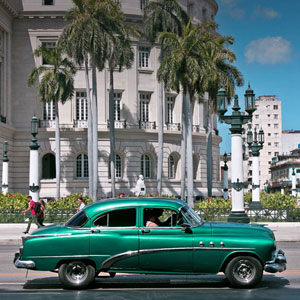
Our Cuba travel guide takes you on a trip through this incredibly mythologised Caribbean island. This is Cuba.
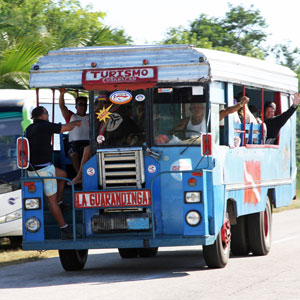
Cuba is bigger than you think. Take a look at our map and top itineraries to help you choose a route.
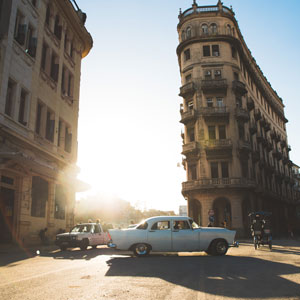
The pros and cons of public and private transport, self drive options and classic cars on your Cuba vacation.
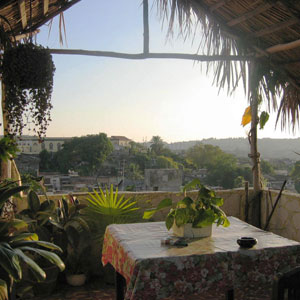
Casas particulares are the original Airbnb: homestays with Cuban families that are part of a country-wide network.
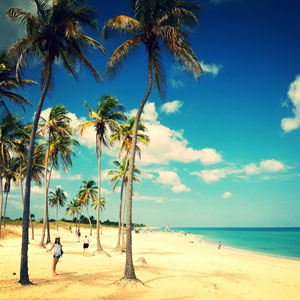
Cuba has 5,700km of coastline, so there are quiet beaches, beaches for water sports, reefs to snorkel, family-friendly facilities...
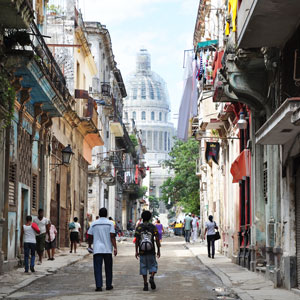
Our favorite cities include Havana, Cienfuegos and labyrinthine Camaguey, designed to confuse pirates.
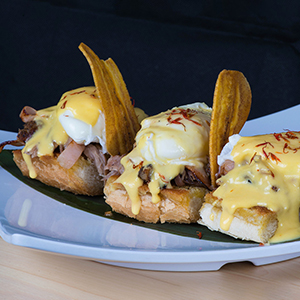
Cuban food is bad, isn’t it? Not by staying in casas particulares and eating in paladares.
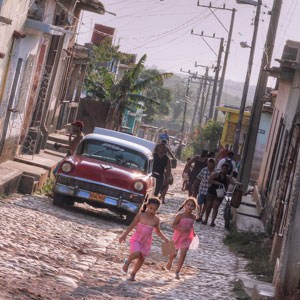
As with most Latin American countries, Cuba welcomes children with open arms. Read more in our guide.
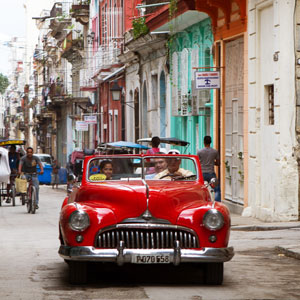
A self drive vacation in Cuba offers independence, flexibility and an extra little pinch of adventure.
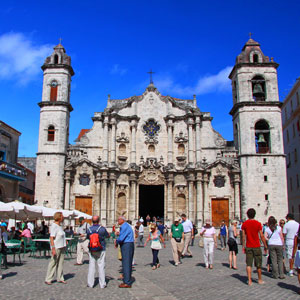
Catholicism under Communism is yet another tale worth hearing. Read on to learn more.
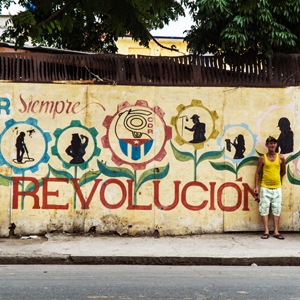
Cuba’s Revolutionary Trail traces the story of one of the 20th century’s most significant events.
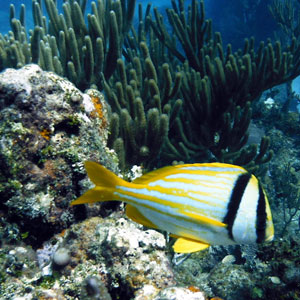
Diving reveals vistas that are as beautiful as those on land: a rainbow of fish, sponges and turtles.
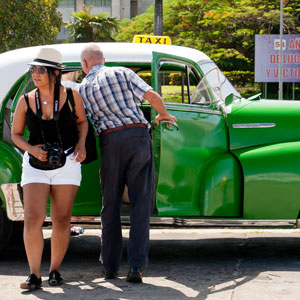
Travel to Cuba is still on for US citizens – find out more in this guide.
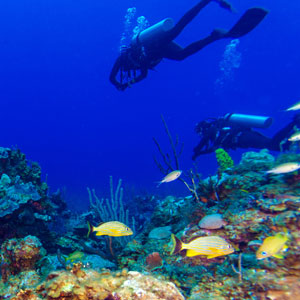
Cuba's charms are not all cultural; its natural wonders have been recognised by UNESCO, including the Valley of Vinales.
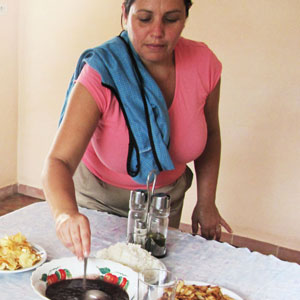
We have asked our destination experts to share their insider tips and anecdotes with us, from what to eat to what to pack.
We've explored some of the big issues facing this little island, including US-Cuba relations.
Find all of our Cuba guides in one place for different types of vacations we offer, from scuba diving to walking.