How will climate change affect vacations in Greece?
Eating aliens, electric islands, swimming with sea grass: we speak to the people on the ground in Greece who are coming up with ways to adapt to the effects of climate change.
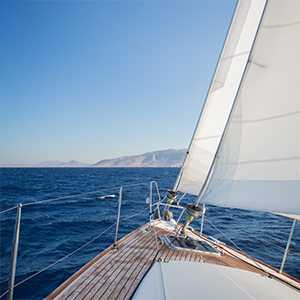
A sizzling summer on a boat in Greece: the water is so flat that our sails flap, baggy and useless on the mast. The meltemi – the common afternoon breeze – hasn’t picked up. We put the motor on just to feel the cooling wind in our hair. The useless sail stays up, and provides some shade.
When we dock, the land greets us with a crackle. My bare feet grill on the concrete. The shops blast their air conditioning over rails of kaftans.
It’s summer in Greece. There have always been heatwaves here. But the heat feels oppressive, because it reminds me that climate change is here.
A sizzling summer on a boat in Greece: the water is so flat that our sails flap, baggy and useless on the mast. The meltemi – the common afternoon breeze – hasn’t picked up. We put the motor on just to feel the cooling wind in our hair. The useless sail stays up, and provides some shade.
When we dock, the land greets us with a crackle. My bare feet grill on the concrete. The shops blast their air conditioning over rails of kaftans.
It’s summer in Greece. There have always been heatwaves here. But the heat feels oppressive, because it reminds me that climate change is here.

How climate change is affecting Greece
Greek heat is going to surpass 50 degrees by the end of the century – that’s Dubai-level temperatures, and no one vacations in Dubai in August. Every year there are heat-related deaths, including the high-profile deaths of vacationmakers – in recent years, we’ve seen tragic headlines of tourists who have gone walking in the hot sun, and failed to return.Thanks to its changing climate, Greece is also more likely to experience wildfires, floods, and have invasive species, and drought issues.
Climate change is affecting how we should vacation in Greece, but it shouldn’t be ruining our vacations – instead it should be informing them, just as it informs us to change our habits back home. It’s already influencing policy in Greece. Some islands are turning to renewable sources for their power, reviewing the way water is stored and supplied, and preparing for the more intense heat of the future.

There are pockets of sustainability and awareness but there’s also an old-fashioned kind of conservationism here, too.![]()

Heat in Crete
Iakovos, Camille and their team are based in western Crete, the island where Iakovos was born. They run Active Crete, our local partners for vacations on the island, including this popular painting vacation. They’ve seen climate change affect the island in recent years.
“In the past the weather has changed gradually, getting warmer, warmer, warmer in the summer, then cooler slower and gradually,” says Iakovos. “But now there are sudden changes. The maximum temperature one day will be 22°C, another day, the maximum is 30°C; within one day it changes five degrees. This didn’t happen at all in the past.”
The changes in weather directly affect tourists caught in heatwaves, but also indirectly, through rising food prices.
“The winters are unpredictable and that affects the agricultural production – which then has a knock-on effect on tourism,” says Camille. “Last year the olive production was down and prices shot up; that has an effect on tavernas and the prices for tourists.”
The couple live in a beautiful part of Crete, close to the town of Kissamos on the north-west coast. The area is surrounded by rare endemic Cretan wildlife; the government has recently stopped putting umbrellas on the beach, as they damage the rare lilies that grow there.
This area lies within the Natura 2000 protected areas– an EU-wide network that protects some 18 percent of land in EU member states. Climate change poses an even bigger risk to nature than tourism. “The swallow population has gone down,” says Camille. “Even five years ago they used to congregate on the telegraph wires and now there are far fewer. And we have new species in the sea – we’ve had fish from the Red Sea observed by fishermen.”
“There are pockets of sustainability and awareness but there’s also an old-fashioned kind of conservationism here, too,” the couple say. Whilst the vast majority of Greeks consider climate change to be humanity’s biggest current challenge, it’s not always reflected in local attitudes towards sustainability.
Iakovos and Camille have always operated vacations for us that are designed to protect the environment as much as possible. They do beach clean ups out of season. The vacations operate almost entirely on foot and by bus; they only bring small groups that don’t overwhelm the local community. Like many Cretan houses, their properties operate on solar power, and they’ve considered all their emissions, down to the non-polluting thinning agents they use on their painting vacations.
“In the past the weather has changed gradually, getting warmer, warmer, warmer in the summer, then cooler slower and gradually,” says Iakovos. “But now there are sudden changes. The maximum temperature one day will be 22°C, another day, the maximum is 30°C; within one day it changes five degrees. This didn’t happen at all in the past.”
The changes in weather directly affect tourists caught in heatwaves, but also indirectly, through rising food prices.
“The winters are unpredictable and that affects the agricultural production – which then has a knock-on effect on tourism,” says Camille. “Last year the olive production was down and prices shot up; that has an effect on tavernas and the prices for tourists.”
The couple live in a beautiful part of Crete, close to the town of Kissamos on the north-west coast. The area is surrounded by rare endemic Cretan wildlife; the government has recently stopped putting umbrellas on the beach, as they damage the rare lilies that grow there.
This area lies within the Natura 2000 protected areas– an EU-wide network that protects some 18 percent of land in EU member states. Climate change poses an even bigger risk to nature than tourism. “The swallow population has gone down,” says Camille. “Even five years ago they used to congregate on the telegraph wires and now there are far fewer. And we have new species in the sea – we’ve had fish from the Red Sea observed by fishermen.”
“There are pockets of sustainability and awareness but there’s also an old-fashioned kind of conservationism here, too,” the couple say. Whilst the vast majority of Greeks consider climate change to be humanity’s biggest current challenge, it’s not always reflected in local attitudes towards sustainability.
Iakovos and Camille have always operated vacations for us that are designed to protect the environment as much as possible. They do beach clean ups out of season. The vacations operate almost entirely on foot and by bus; they only bring small groups that don’t overwhelm the local community. Like many Cretan houses, their properties operate on solar power, and they’ve considered all their emissions, down to the non-polluting thinning agents they use on their painting vacations.
Adapting to climate change in Crete
The more changeable weather caused by climate change makes it harder for Iakovos and Camille to plan outdoor activities. The couple are looking at ways to adapt so that guests can continue to appreciate Crete’s natural beauty, with as light a footprint as possible.“We have to be adaptable with the unpredictable weather,” Camille says. “Most of our vacations are spent outside. If there are very strong winds and heavy rains (although these normally don’t last long) we are ready and we’ve got alternatives.”
“For the painting vacations we’ll do special tempera painting indoors – and also we can work from photographs that we’ve taken around the place.” They’ve also got indoor options for hikers, “For the walking trips we’ve got a local winery we can visit.”
These are no consolation prizes. Tempera painting is a very special Cretan tradition. “People really enjoy it,” Camille says. "The icon school of painting in the Venetian period is special to Crete.”
Moving the season
Winter isn’t a terrible time in Crete. “The weather is unpredictable, that’s it,” says Camille. They’re looking at running vacations earlier in spring and later in autumn. “April is a very nice month as things are still green. We are looking at extending our season for guests into April at the moment. If climate change continues in the same direction we will consider November and April and March.”But this decision doesn’t just depend on the Active Crete team alone. They are based in a very close-knit community that works closely together. “Our village has 40 inhabitants,” says Camille. Their trips make use of the local taverna and their suppliers are local families. “If you keep chickens, you can sell your eggs to the taverna. Or if you have too many tomatoes, you go to the village and sell them.”
For the tourist season to shift, the whole community needs to be on board and working as one. “The hotels need to be open and the tavernas need to be open. So, if the tourist season changes it will be a gradual shift,” Camille says.
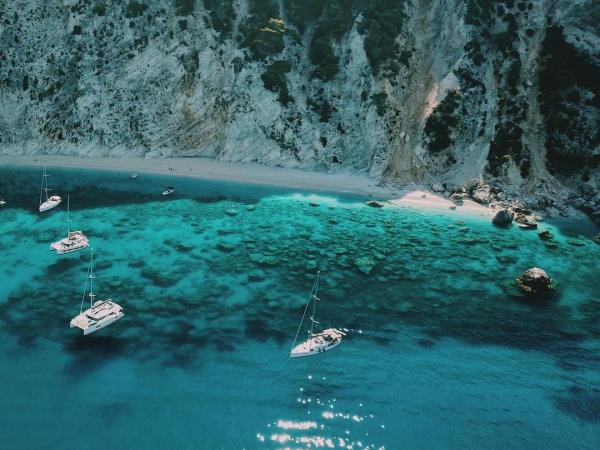
Greece sailing vacation for families
Sailing trip for families/friends in Greek islands
From
£580 to £750
7 days
ex flights
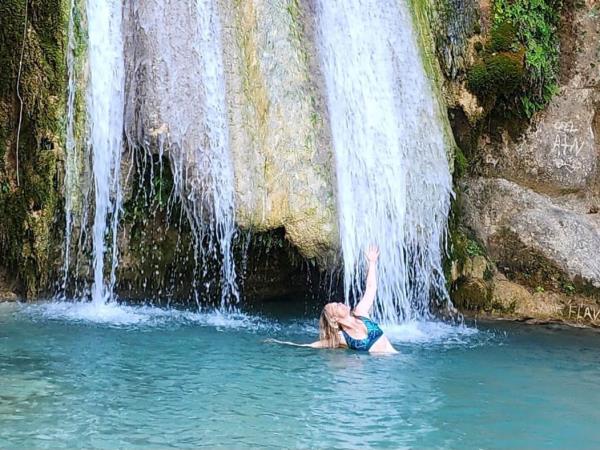
Multi activity vacation in Greece, Peloponnese
Amazing adventures and activities in the unique Peloponnese
From
£1750
8 days
ex flights
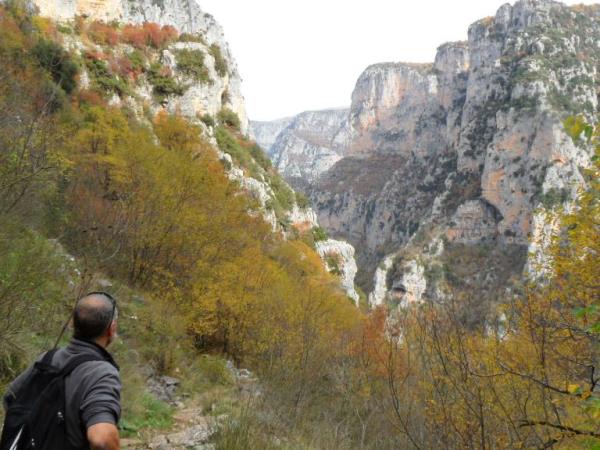
Self drive vacation in Northern Greece, hike & tour
Macedonia & Epirus - sightseeing & walking in ancient Greece
From
£575 to £795
8 days
ex flights
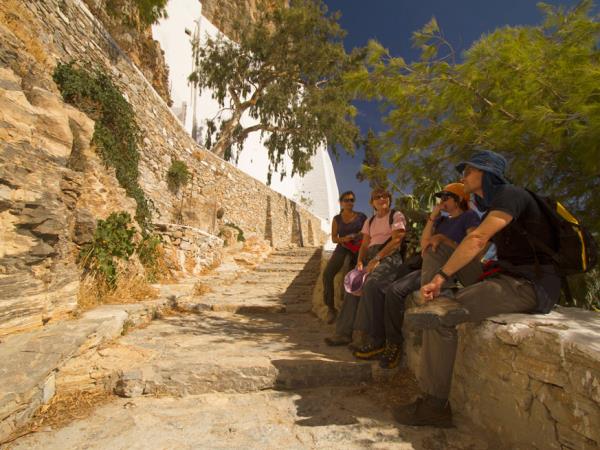
Naxos and the small Cyclades walking vacation, Greece
Walk and discover Naxos and the unspoilt Small Cyclades
From
£744 to £1097
10 days
ex flights
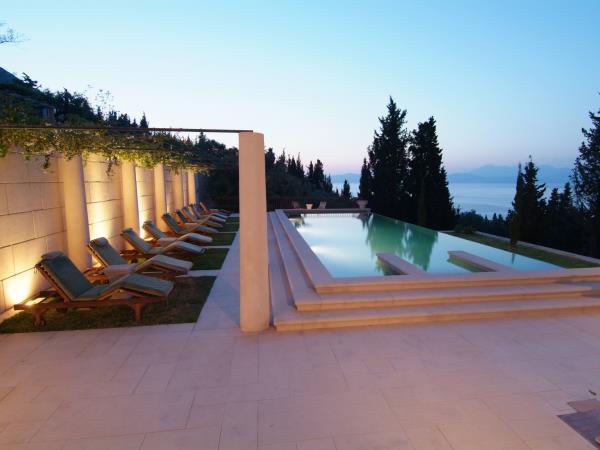
Luxury Greek Island vacation
Stunning accommodation on the Greek island of Ithaca
From
€2995 to €5575
per villa per week
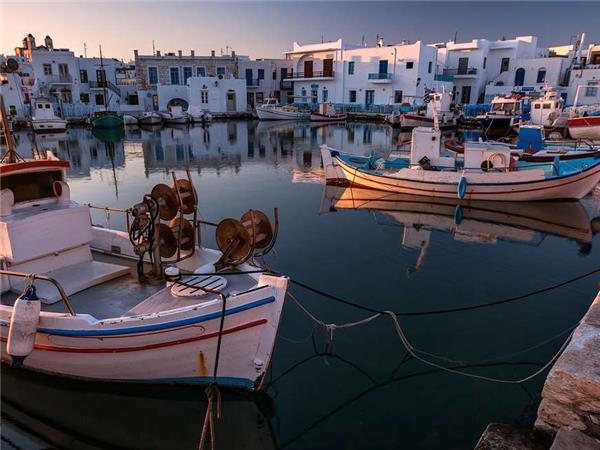
Greek Islands tour
Explore the very best of Greece with stunning scenery
From
US $2430 to US $3370
14 days
ex flights


Contact Us
Call us for a chat about our vacations. We are happy to discuss your vacation and help in any way we can. No bots, queues or awful hold music.

1-866-821-6866
Call toll free
Calling from outside the USA

Conservation challenges in the Ionian
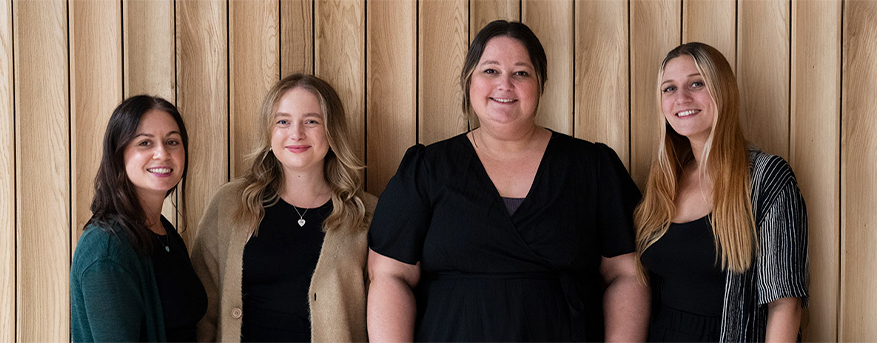
Over to the northwest, in the Ionian Sea just east of Lefkada, you’ll find the island of Kalamos sitting in Greece’s largest marine protected area, the Inner Ionian.Ted Kerfakis is founder of our partner Terra Sylvestris, an NGO that runs our conservation vacations on Kalamos. This is a family business; Ted is from the island, as is his father. His mother is a board member for the organisation.
You can come to Kalamos and have a short break in nature, looking for bats at night, and birds during the day. But they are having to adapt with the changing times.
The charity has been monitoring their natural environment since 2014. In 2019, they discovered a new colony of highly endangered Mediterranean monk seals in their area. However, in recent years there have also been reports of increasing numbers of invasive species. Some think it’s because of partial fishery collapse; new species filling the gaps left by an absence of fish after decades of overfishing. New species come up into the Mediterranean from the Suez Canal.
On the nearby island of Paxos, restaurants have added invasive lionfish, rabbitfish, cornetfish and Atlantic blue crab to their menus, as part of an ‘Eat an Alien’ campaign![]()
“The good thing about our team’s monitoring is that we get to see more than we look for – a few years back we saw a lionfish, and now they seem to be everywhere,” says Ted. On the nearby island of Paxos, restaurants have added invasive lionfish, rabbitfish, cornetfish and Atlantic blue crab to their menus, as part of an ‘Eat an Alien’ campaign by conservation organisation iSea. This encourages local people and vacationmakers to eat these invasive species, where before fishers would have had to throw them away.
Kalamos doesn’t suffer from wildfires as much as other parts of Greece. Wildfires are often started deliberately so that land can be redeveloped, but can quickly get out of control in hot, dry conditions. “No-one is really interested in starting a fire here,” says Ted, “All the land is private so if you start a fire you won’t be able to get the land.”
For volunteers, the main and most noticeable risk on Kalamos is the heat. “People believe it’s getting warmer. The heatwaves are becoming more frequent. You get these extreme events that last a lot longer – an extensive heatwave for a month – we’re not supposed to get that very often.”
Extreme heat can cause problems on volunteering vacations, where you might expect to do physical tasks. “There are times when I can’t have people doing things as the law won’t let me – there’s a ban on doing outdoor work in extreme heat. It’s very rare that they implement it, but they did it last year,” says Ted.
However, these trips have been designed to adapt to the heat whenever possible – as people have always done on the Greek islands.
“In summer I generally keep the volunteers closer to the water – so they always have somewhere cool,” Ted says. There are sites on the island that simply aren’t worked on in summer. Instead, it’s all about the water – like monitoring the island’s precious seagrass.
“We don’t do seagrass monitoring in the winter as you’d need wetsuits and the weather is bad,” says Ted. “We do more things like that in the summer and it works very well.”
Kalamos doesn’t suffer from wildfires as much as other parts of Greece. Wildfires are often started deliberately so that land can be redeveloped, but can quickly get out of control in hot, dry conditions. “No-one is really interested in starting a fire here,” says Ted, “All the land is private so if you start a fire you won’t be able to get the land.”
For volunteers, the main and most noticeable risk on Kalamos is the heat. “People believe it’s getting warmer. The heatwaves are becoming more frequent. You get these extreme events that last a lot longer – an extensive heatwave for a month – we’re not supposed to get that very often.”
Extreme heat can cause problems on volunteering vacations, where you might expect to do physical tasks. “There are times when I can’t have people doing things as the law won’t let me – there’s a ban on doing outdoor work in extreme heat. It’s very rare that they implement it, but they did it last year,” says Ted.
However, these trips have been designed to adapt to the heat whenever possible – as people have always done on the Greek islands.
“In summer I generally keep the volunteers closer to the water – so they always have somewhere cool,” Ted says. There are sites on the island that simply aren’t worked on in summer. Instead, it’s all about the water – like monitoring the island’s precious seagrass.
“We don’t do seagrass monitoring in the winter as you’d need wetsuits and the weather is bad,” says Ted. “We do more things like that in the summer and it works very well.”
Changing seasons
Already, people are reconsidering when to travel to Greece because of fear about soaring temperatures. Traveler Michelle Jackson went on our vacation, cycling in Messinia in summer. “It was very hot when we went in June,” she says. “I think the weather was particularly warm for the time of year but it may be better to do the vacation in April, May or September to avoid the hottest weather.”
Prime minister Kyriakos Mitsotakis has warned tourists that the summer in Greece could be dangerous, because of hot, dry, windy weather, and the risk of wildfires it can cause.
But, as we’ve seen in Crete, for small businesses, changing the vacation season can take time, as communities need to move as one to make changes. Vacationmakers, too, are slow to react – despite years of hot summers and wildfires, tourist boards have seen little change in summer vacation arrivals. But traveling outside summer can have a hugely positive impact.
For Ted on Kalamos, conservation volunteers come all year round, and make a special impact in the off-season. “The presence of our volunteers is very significant in winter,” he says. “When you have an island of 150 people and in the winter you have 10 people coming, that means something. And they’re young people, they’re going to go out, spend money, go to the grocery store and interact with the community, I would say it makes a lot of difference.”
Prime minister Kyriakos Mitsotakis has warned tourists that the summer in Greece could be dangerous, because of hot, dry, windy weather, and the risk of wildfires it can cause.
But, as we’ve seen in Crete, for small businesses, changing the vacation season can take time, as communities need to move as one to make changes. Vacationmakers, too, are slow to react – despite years of hot summers and wildfires, tourist boards have seen little change in summer vacation arrivals. But traveling outside summer can have a hugely positive impact.
For Ted on Kalamos, conservation volunteers come all year round, and make a special impact in the off-season. “The presence of our volunteers is very significant in winter,” he says. “When you have an island of 150 people and in the winter you have 10 people coming, that means something. And they’re young people, they’re going to go out, spend money, go to the grocery store and interact with the community, I would say it makes a lot of difference.”
Responding sustainably to climate change
Keeping every last drop
Greece has always had hot and rainless summers. Islands have always been careful to monitor water usage, especially when they have few or no natural freshwater sources. Ted’s project on Kalamos collects rainwater, “We are entirely self-sufficient on that for about four months per year,” he says. But hotter summers mean water could run out.Some islands pipe water over from the mainland, others have aquifers, and tanks that catch water from the winter rainfall, for use in the rainless summer months. “There is no crisis here as far as I know. Nobody is saying there will be lack of water on Crete,” Iakovos reports. However, this may not remain true; climate change may reduce rainfall across the country by 18 percent by 2050.
Self-sufficient islands
A number of interesting initiatives have emerged to make islands more self-sufficient, including water conservation. Rhodes Co Lab, a collaboration between local and international businesses on Rhodes, has been established to phase out fossil fuels on the island and reduce water lost in the system by 20 percent.Some Greek islands are becoming energy-autonomous, using solar and wind power for all their needs. Tilos in the Dodecanese became the first island in the Med to be self-sufficient on green energy after years of getting its power from undersea electric cables from Kos. Nearby Halki has followed with a solar park and water management plan.
On the island of Astypalaia a giant solar park powers a fleet of electric cars and scooters, part of a vehicle-sharing services for islanders and tourists provided by Volkswagen Group and the Greek government. The solar park is also set to supply 60 percent of the island’s electricity.
Power over the future
Sitting on a boat in a becalmed sea, under an unbearable sun, one can feel powerless to act in the face of climate change. But we can make a difference by supporting Greece’s move towards a more sustainable tourism model. Business initiatives are (literally) giving small Greek island communities more power over their own futures. We can give them power too, with our continued support.Learn more about how you can reduce your vacation's carbon emissions
More Greece articles
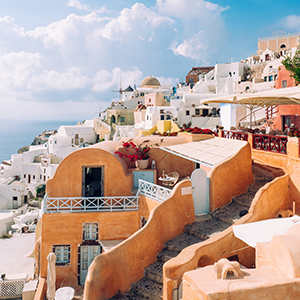
When is the best time to visit Greece? Summer (July to September) is idyllic – and we know how to help you escape the crowds.
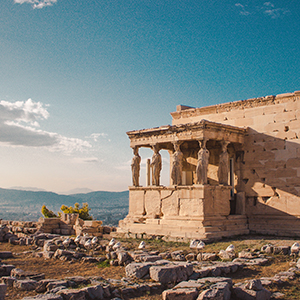
Our travel guide tries to stick to the cold hard facts - a challenge, since it's supremely easy to fall in love with Greece.
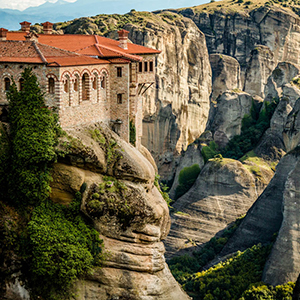
Islands or mainland? Ferry-hopping or exploring one area in depth? Find out the best places to visit, from Meteora to Mystra.
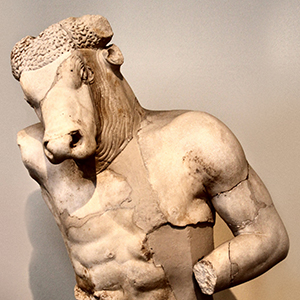
Tips based on our expert partners' years of experience of family vacations.
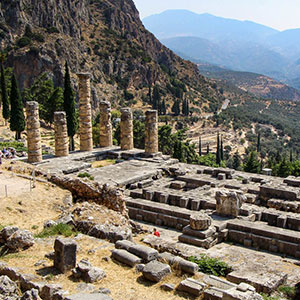
Explore the stories and sites of ancient Greece - with more than a few myths and legends thrown in, too.
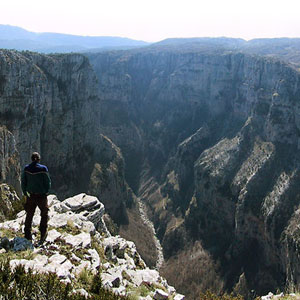
Discover epic trails in a land of myth and adventure, with our guide to walking vacations in Greece.
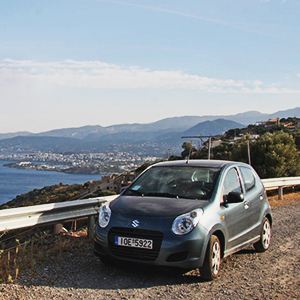
Learn how our Greece self drive vacations put you in full control of how your vacation unfolds.
Is this the best way to island hop in Greece? Whenever one bay gets busy, you can hoist the sails and find another.
Learn the delights of small ship cruising in Greece, and what to expect from your odyssey.
Athens is one of the great cradles of ancient civilization – the legendary home of gods, goddesses and philosophers.
Discover a treasure trove of culture, walking, food and beaches with our guide to Greek islands.
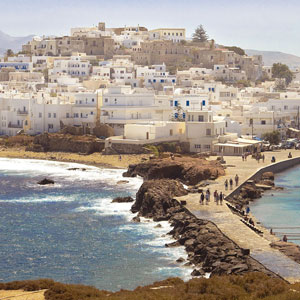
Rightfully popular and wildly beautiful, the Cyclades contains over 200 islands, many uninhabited and mountainous.
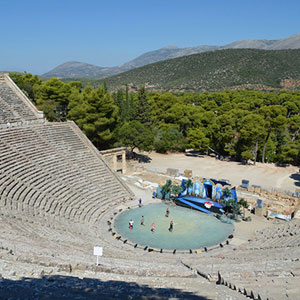
At just an hour and a half from Athens, the charms of the Peloponnese are well known to locals.
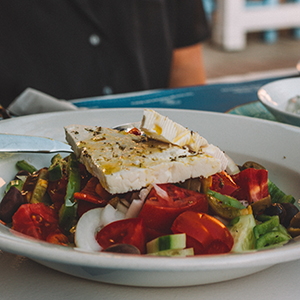
Greece is Elysium for foodies. Explore the most popular dishes of this healthy Mediterranean cuisine.
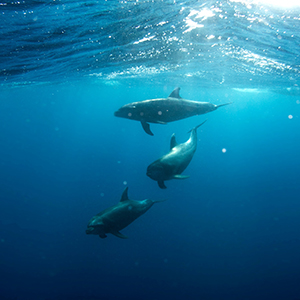
Learn where to find bears, dolphins and whales, and magnificent birdlife, in our Greece wildlife guide.
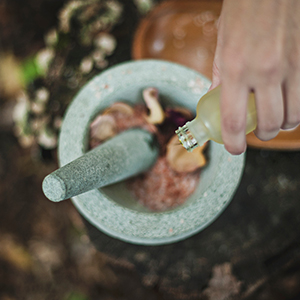
Greece wellness vacations bask in the therapeutic powers of Mediterranean sea and sunshine.
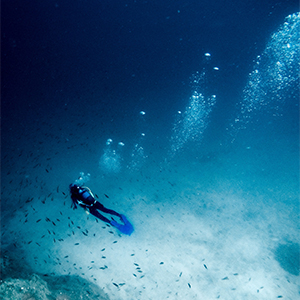
Multi activity vacations in Greece are like an epic - you'll come out the other side transformed.
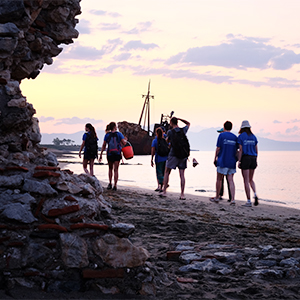
Find out what volunteer vacations in Greece involve, and the amazing projects you'll help with.
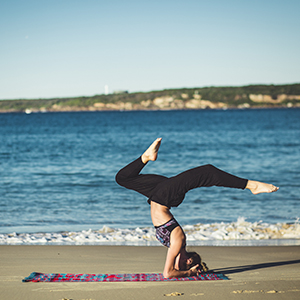
Discover the delights of yoga vacations where the sun always shines and the food is just as fresh as the Aegean breeze.
Our expert partners share their wisdom, and we've featured health and safety tips so that you can travel totally prepared.
Learn about summer wildfires, migration, and the country's large number of cats.
We've put all our informative Greece guides in one place, so you can have a great Greek getaway.